
Business
Elon Musk Critiques Waymo as Robotaxis Stall During San Francisco Blackout

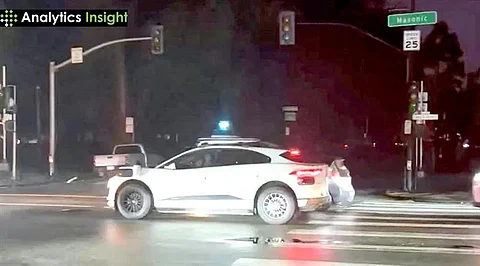
Elon Musk publicly criticized Waymo after its self-driving vehicles experienced significant disruptions during a recent power outage in San Francisco. The blackout, which occurred in October 2023, affected approximately 130,000 households and businesses, causing widespread traffic issues across the city. Musk took to the platform X to highlight that Tesla’s robotaxis were not impacted by the outage, while sharing videos of Waymo cars stalled at intersections where traffic signals were non-functional.
Waymo temporarily suspended its self-driving ride-sharing service in the Bay Area due to the blackout. Videos circulating on social media depicted Waymo vehicles halted at crosswalks, with frustrated drivers maneuvering around them as traffic came to a standstill. A spokesperson for Waymo confirmed to Fox News Digital that the service had resumed following the outage, attributing the disruption to malfunctioning traffic lights caused by the blackout.
Details of the Incident
Waymo explained that its self-driving technology is designed to treat non-operational traffic signals as four-way stops. Nonetheless, the extent of the outage resulted in some vehicles pausing longer than intended, contributing to the congestion. The company stated, “We are committed to working swiftly to integrate lessons learned from experience into our performance to respond effectively to major infrastructure incidents.”
The blackout was linked to a fire at a Pacific Gas and Electric Company (PG&E) substation located in the city’s Mission District. PG&E characterized the damage as “significant and extensive,” complicating efforts to restore power. By the morning following the incident, power had been restored to around 110,000 customers, although approximately 21,000 homes remained without electricity, primarily in the western and central areas of San Francisco.
Impact on Transportation and Public Response
The incident raised questions about the reliability of autonomous vehicle technology in emergency situations. While Tesla’s robotaxis navigated the blackout without incident, Waymo’s experience highlights the challenges faced by self-driving cars when infrastructure fails. The situation sparked discussions on social media, with many users sharing their experiences and frustrations during the traffic disruptions.
As the technology continues to evolve, both companies may face increased scrutiny regarding their systems’ resilience in real-world conditions. This incident underscores the importance of effective infrastructure management, particularly as cities increasingly rely on advanced technology for transportation solutions.
In the wake of this event, industry experts will likely analyze the implications for autonomous vehicle deployment in urban environments, particularly regarding their response to unforeseen emergencies.

Resident Evil Requiem Set for 2026: Play These 4 Games Now!

Headwaters Quilt Guild Plans January Meeting with Special Presentation

Driver Injured in Alcohol-Related Crash on U.S. Highway 52

Archaeological Study Reveals Craft Production of Arrow Points in Argentina

Eagles Face Bills in Week 17 with Key Players Missing

Israeli Political Landscape Explored in ‘A Call at 4 a.m.’

Private Equity Firms Brace for Major Portfolio Sales in 2026

$50 CPU Cooler Outperforms $150 AIO, Revolutionizes PC Cooling

Urgent High Wind Warning Issued for Northeast: Prepare Now!

University of Hawaiʻi at Mānoa Joins $25.6M AI Initiative for Disaster Monitoring

New Gel Offers Hope for Regrowing Tooth Enamel in Dentistry

ALMA Discovers Companion Orbiting Red Giant Star π 1 Gruis

Park Jung Min’s Endearing Moment with Hwasa Steals Show at Awards

IROS 2025 to Showcase Cutting-Edge Robotics Innovations in China

Stone Island’s Logo Worn by Extremists Sparks Brand Dilemma

Sampson County Celebrates Susie Faison’s 100th Birthday Milestone

Startup Liberate Bio Secures $31 Million for Next-Gen Therapies

Mary Morgan Jackson Crowned Little Miss National Peanut Festival 2025
-
Science2 months ago
University of Hawaiʻi at Mānoa Joins $25.6M AI Initiative for Disaster Monitoring
-
 Health2 months ago
New Gel Offers Hope for Regrowing Tooth Enamel in Dentistry
-
 Science1 month ago
ALMA Discovers Companion Orbiting Red Giant Star π 1 Gruis
-
 Lifestyle1 month ago
Park Jung Min’s Endearing Moment with Hwasa Steals Show at Awards
-
 Science2 months ago
IROS 2025 to Showcase Cutting-Edge Robotics Innovations in China
-
 Lifestyle2 months ago
Stone Island’s Logo Worn by Extremists Sparks Brand Dilemma
-
 Lifestyle2 months ago
Sampson County Celebrates Susie Faison’s 100th Birthday Milestone
-
 Health2 months ago
Startup Liberate Bio Secures $31 Million for Next-Gen Therapies
-
 Lifestyle2 months ago
Mary Morgan Jackson Crowned Little Miss National Peanut Festival 2025
-

 Health2 months ago
Top Hyaluronic Acid Serums for Radiant Skin in 2025
-

 Science2 months ago
Arizona State University Transforms Programming Education Approach
-
 Politics2 months ago
Judge Considers Dismissal of Chelsea Housing Case Citing AI Flaws