
Science
Trump Orders Marijuana Reclassification, Shifting to Schedule III

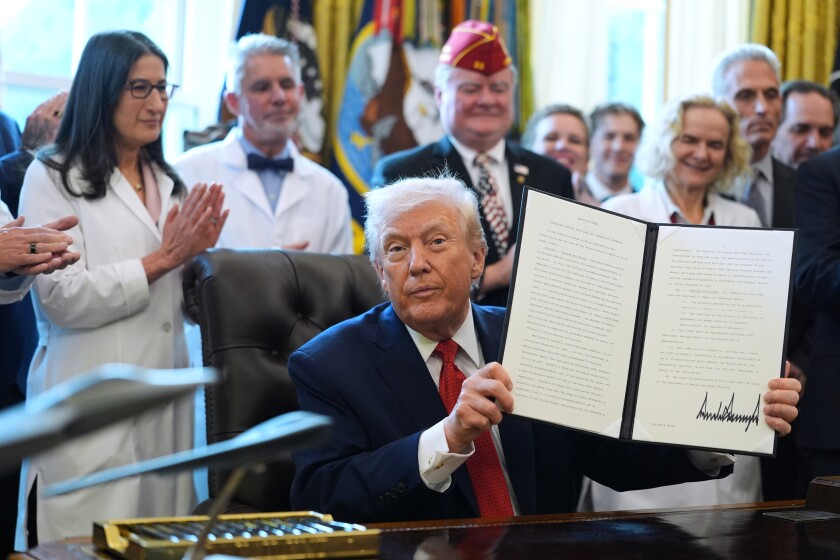
President Donald Trump has ordered the reclassification of marijuana from Schedule I to Schedule III of the Controlled Substances Act. This significant change follows nearly four decades of debate regarding the drug’s classification, which has labeled it alongside substances like heroin and LSD since 1970. The executive order aims to facilitate research and acknowledge marijuana’s potential therapeutic benefits, although it stops short of legalizing the substance.
In a landmark decision, the Drug Enforcement Administration (DEA) had listed marijuana in Schedule I, asserting that it possessed a high potential for abuse and no accepted medical applications. This classification was challenged in 1988 by Francis Young, then chief administrative law judge at the DEA, who argued that marijuana had accepted medical uses, particularly for conditions like chemotherapy-induced nausea and multiple sclerosis. Young’s findings were ultimately ignored by the DEA, which continued to uphold marijuana’s Schedule I status until now.
The recent decision stems from a review by the U.S. Department of Health and Human Services (HHS), ordered by President Joe Biden. The HHS concluded that there is “credible scientific support” for marijuana’s effectiveness in treating pain and nausea, as well as other medical conditions. The department noted that the majority of marijuana users do so safely, without leading to dangerous outcomes. HHS recommended that marijuana’s classification should reflect its medical uses, leading to the proposed shift to Schedule III.
Merrick Garland, the Attorney General at the time, accepted HHS’s recommendation in May 2024. Trump emphasized the potential benefits of this reclassification for patients suffering from chronic pain and serious medical conditions. Moving marijuana to Schedule III means it will be subject to less stringent regulations than those applied to Schedule I substances, allowing for increased opportunities for medical research.
While this change facilitates research, it does not equate to legalization. The Food and Drug Administration must still approve specific cannabis-based products as prescription medicines. Furthermore, state-licensed marijuana businesses will remain illegal under federal law, though they may experience reduced penalties due to the reclassification.
The implications for state-legal marijuana businesses could be significant. Currently, these operations face high effective tax rates due to restrictions on claiming standard deductions. The new classification may alleviate some of these financial burdens, although federal law still considers them criminal enterprises. Trump’s order did not explicitly address these benefits for businesses, despite his previous support for recreational marijuana legalization in Florida.
As of now, 40 states have legalized marijuana for medical use, with 24 allowing recreational use. This widespread acceptance conflicts with federal prohibition, a stance increasingly opposed by the public. Trump’s assertion that his order “doesn’t legalize marijuana in any way, shape or form” highlights the ongoing tension between state and federal laws regarding cannabis.
The recent reclassification indicates a shift in acknowledging the medical potential of marijuana, moving away from decades of stringent regulation. As research opportunities expand, advocates hope that this decision will ultimately lead to broader acceptance and use of cannabis in healthcare.

Trump and Petro Clash Over Colombia’s Drug Trade Impact

New York City Bids Farewell to MetroCard as OMNY Takes Over

Connecticut Theaters Embrace Innovation and Optimism in 2026

Prioritizing Eye Safety During December’s Holiday Celebrations

Amazon Offers 21% Off on Versatile Amada Sectional Couch

Trust Erodes as Society Grapples with Skepticism Post-COVID

OpenAI Seeks “Head of Preparedness” Amid Urgent Safety Concerns

14-Year-Old Founder’s Y Combinator Application Goes Viral

One in Six Adults Have Relationship ‘Backup Person’ Revealed

University of Hawaiʻi at Mānoa Joins $25.6M AI Initiative for Disaster Monitoring

New Gel Offers Hope for Regrowing Tooth Enamel in Dentistry

ALMA Discovers Companion Orbiting Red Giant Star π 1 Gruis

Park Jung Min’s Endearing Moment with Hwasa Steals Show at Awards

IROS 2025 to Showcase Cutting-Edge Robotics Innovations in China

Stone Island’s Logo Worn by Extremists Sparks Brand Dilemma

Sampson County Celebrates Susie Faison’s 100th Birthday Milestone

Mary Morgan Jackson Crowned Little Miss National Peanut Festival 2025

Startup Liberate Bio Secures $31 Million for Next-Gen Therapies
-
Science2 months ago
University of Hawaiʻi at Mānoa Joins $25.6M AI Initiative for Disaster Monitoring
-
 Health2 months ago
New Gel Offers Hope for Regrowing Tooth Enamel in Dentistry
-
 Science1 month ago
ALMA Discovers Companion Orbiting Red Giant Star π 1 Gruis
-
 Lifestyle1 month ago
Park Jung Min’s Endearing Moment with Hwasa Steals Show at Awards
-
 Science2 months ago
IROS 2025 to Showcase Cutting-Edge Robotics Innovations in China
-
 Lifestyle2 months ago
Stone Island’s Logo Worn by Extremists Sparks Brand Dilemma
-
 Lifestyle2 months ago
Sampson County Celebrates Susie Faison’s 100th Birthday Milestone
-
 Lifestyle2 months ago
Mary Morgan Jackson Crowned Little Miss National Peanut Festival 2025
-
 Health2 months ago
Startup Liberate Bio Secures $31 Million for Next-Gen Therapies
-

 Health2 months ago
Top Hyaluronic Acid Serums for Radiant Skin in 2025
-

 Science2 months ago
Arizona State University Transforms Programming Education Approach
-

 Politics2 months ago
Judge Considers Dismissal of Chelsea Housing Case Citing AI Flaws