
World
Myanmar Prepares for Controversial Elections Amid Ongoing Conflict

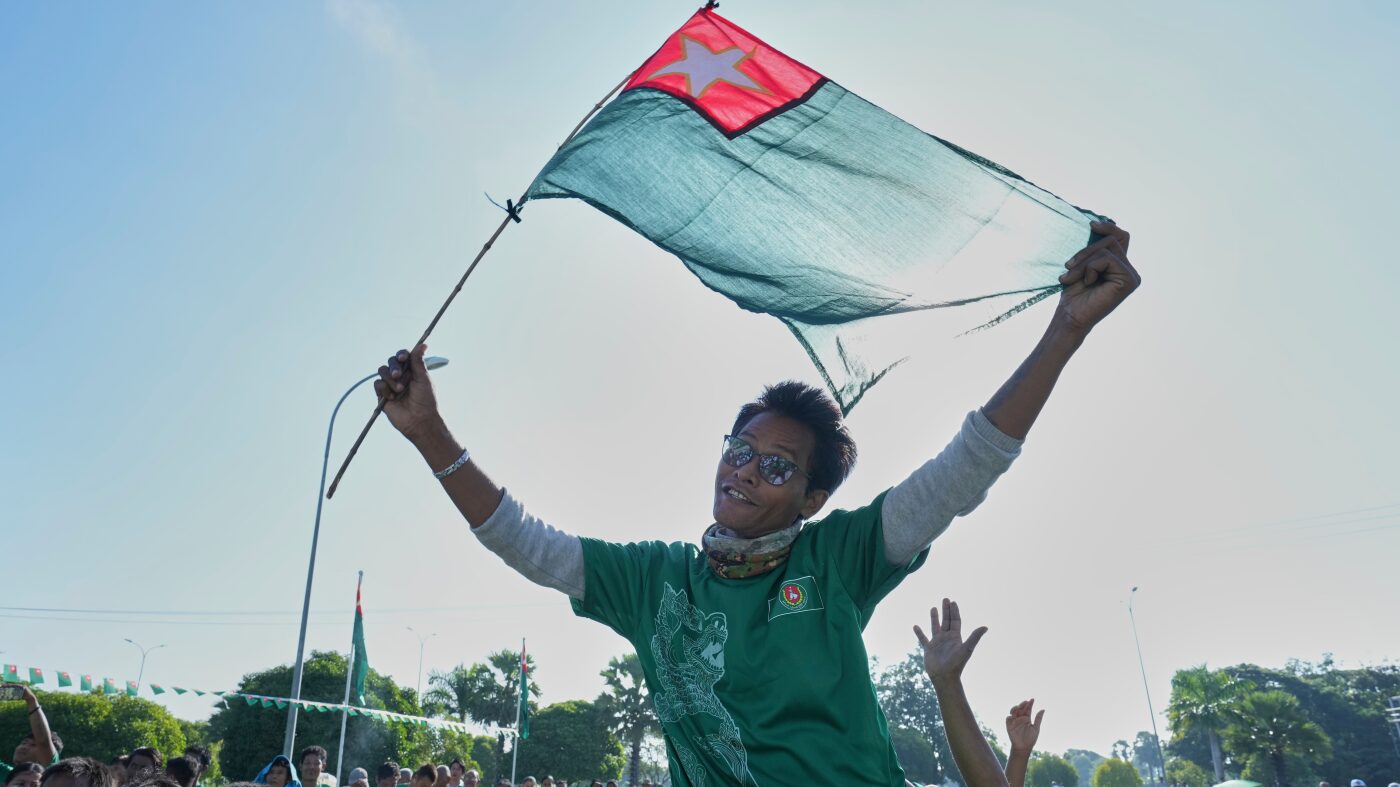
Myanmar’s military government is planning to conduct staggered general elections starting on December 28 and concluding in late January. The military rulers aim to stabilize the country and alleviate their growing diplomatic isolation. This electoral process comes despite a violent civil war that erupted following the military coup in February 2021, which has led to significant turmoil and suffering across the nation.
Since the coup, the military has employed severe measures against civilians, including indiscriminate bombings, mass incarcerations, and displacing millions. Humanitarian organizations report that over 11 million people are currently facing food insecurity, as the military attempts to regain control over territories lost to opposition forces. This backdrop raises serious questions about the legitimacy of the upcoming elections.
At a recent summit of the Association of Southeast Asian Nations in Malaysia, United Nations Secretary-General António Guterres expressed skepticism about the possibility of free and fair elections in Myanmar. He stated, “Is there anyone who believes that there will be free and fair elections in Myanmar? It is quite obvious that in the present state of conflict… the conditions for free and fair elections are not there.”
To influence the electoral outcome, the military has enacted a controversial law banning what it deems “interference” in the electoral process. Human Rights Watch reported in November that nearly 100 individuals had been detained under this law. By the following week, this number reportedly increased to over 200, with some detained for criticizing the election process on social media or even merely ‘liking’ posts that question the military’s authority. Many face lengthy prison sentences for challenging what military leader Min Aung Hlaing admits will not be a comprehensive election, as numerous contested and rebel-held areas will remain unrepresented.
Most Western governments have refrained from sending election observers, condemning the process as a “sham.” Critics argue that the military’s true objective is to establish a parliament dominated by its proxy party, the Union Solidarity and Development Party (USDP). This party suffered a significant defeat in the 2020 elections at the hands of the National League for Democracy (NLD), led by Aung San Suu Kyi, who remains incarcerated alongside other party leaders.
In recent months, the military has attempted to regain control over territory lost to opposition forces, which analysts believe could bolster its electoral prospects. Morgan Michaels, a security analyst at the International Institute for Strategic Studies (IISS) in Singapore, notes that the military has regained the initiative in several key areas, partly due to a conscription campaign and enhanced military tactics, including the use of drones.
China, one of the few countries to endorse the upcoming elections alongside Russia and India, has a vested interest in Myanmar’s stability. Yun Sun, director of the China program at the Stimson Center, explains that while China is not fond of the military regime, it prefers stability to chaos, as ongoing conflict threatens its significant infrastructure investments in Myanmar.
Sun adds, “If you think about the China-Myanmar economic corridor, the key word here is corridor. When the country is in a civil war, the China-Myanmar economic corridor leads to nothing.” Consequently, China views the military as a necessary entity to maintain order, pressuring ethnic armed organizations to relinquish territory captured from the regime.
The fragmentation among opposition groups further complicates the situation. Many of these groups are struggling to maintain cohesive strategies, and fatigue among young fighters is becoming apparent. Analyst Min Zaw Oo observes that some young recruits are leaving the armed struggle for better opportunities abroad, indicating a decline in morale.
Despite these challenges, some remain committed to resisting military rule. Rebel commander Ko Ta Mar, a former doctor turned fighter, expresses frustration at the lack of direction among opposition forces. He believes that the elections represent a temporary solution that will ultimately exacerbate the situation, stating, “If you see the crisis in the country as a disease, the election is like injecting steroids into a patient. The pain can be eased temporarily, but it will be worse in the long term.”
As the military prepares for the elections, many citizens are seeking any semblance of relief from their ongoing hardships. Longtime analyst David Mathieson suggests that the shadow National Unity Government, which succeeded the ousted government, is losing credibility among the populace. He notes, “There’s a growing sense of look, it’s not about the elections, it’s about what kind of regime, quasi-civilian government comes afterwards.”
With the second and third rounds of elections scheduled for January, the military is betting that a semblance of order might allow it to regain some legitimacy both domestically and internationally. The unfolding situation in Myanmar remains complex and fraught with uncertainty as the country approaches these pivotal elections.

Carrie Fisher’s Autopsy Reveals Drug Use at Time of Death

Providence St. Joseph Hospital Promotes Lung Cancer Screening in Humboldt

Urgent Credit Card Strategies for 2026: Rates Remain High

Trump Demands Democrats Named in Epstein Files, Calls it ‘Witch Hunt’

Trump’s Outburst Over Epstein Documents Raises Urgent Questions

Georgia Tech vs. BYU: Pop-Tarts Bowl Kicks Off Today at 3:30 PM ET

Innovative Kirigami Technique Enhances Solar Sail Maneuverability

Latter-day Saint Leader Jeffrey R. Holland Passes Away at 85

US Aviation Traffic Surges as Major Hubs Welcome Millions

New Gel Offers Hope for Regrowing Tooth Enamel in Dentistry

University of Hawaiʻi at Mānoa Joins $25.6M AI Initiative for Disaster Monitoring

ALMA Discovers Companion Orbiting Red Giant Star π 1 Gruis

Park Jung Min’s Endearing Moment with Hwasa Steals Show at Awards

IROS 2025 to Showcase Cutting-Edge Robotics Innovations in China

Stone Island’s Logo Worn by Extremists Sparks Brand Dilemma

Sampson County Celebrates Susie Faison’s 100th Birthday Milestone

Startup Liberate Bio Secures $31 Million for Next-Gen Therapies

Mary Morgan Jackson Crowned Little Miss National Peanut Festival 2025
-
 Health2 months ago
New Gel Offers Hope for Regrowing Tooth Enamel in Dentistry
-
Science2 months ago
University of Hawaiʻi at Mānoa Joins $25.6M AI Initiative for Disaster Monitoring
-
 Science1 month ago
ALMA Discovers Companion Orbiting Red Giant Star π 1 Gruis
-
 Lifestyle1 month ago
Park Jung Min’s Endearing Moment with Hwasa Steals Show at Awards
-
 Science2 months ago
IROS 2025 to Showcase Cutting-Edge Robotics Innovations in China
-
 Lifestyle2 months ago
Stone Island’s Logo Worn by Extremists Sparks Brand Dilemma
-
 Lifestyle2 months ago
Sampson County Celebrates Susie Faison’s 100th Birthday Milestone
-
 Health2 months ago
Startup Liberate Bio Secures $31 Million for Next-Gen Therapies
-
 Lifestyle2 months ago
Mary Morgan Jackson Crowned Little Miss National Peanut Festival 2025
-

 Health2 months ago
Top Hyaluronic Acid Serums for Radiant Skin in 2025
-

 Politics2 months ago
Judge Considers Dismissal of Chelsea Housing Case Citing AI Flaws
-

 World2 months ago
Bravo Company Veterans Honored with Bronze Medals After 56 Years