
Lifestyle
Experience Wilfredo Lam’s Transformative Art at MoMA

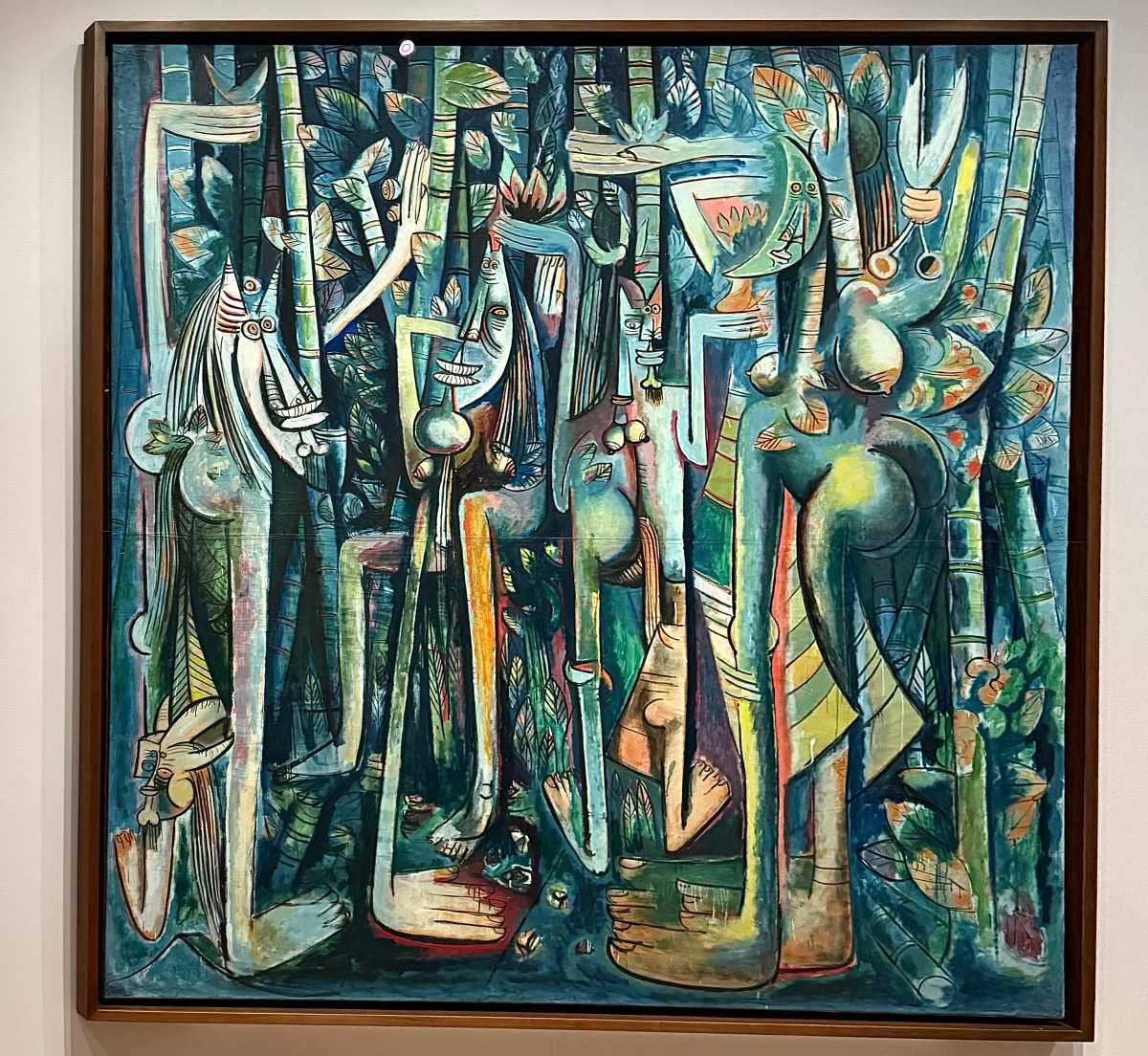
The Museum of Modern Art (MoMA) in New York City is currently showcasing the impactful works of Wilfredo Lam in an exhibition titled “When I Sleep, I Dream.” This presentation re-examines modernism through Lam’s unique lens, offering a fresh perspective rather than a traditional retrospective. The exhibition emphasizes how Lam’s artistry challenges and expands the conventional narratives of art history.
Born in 1902 in Sagua La Grande, Cuba, Lam’s heritage plays a significant role in his artistic expression. His father was a Chinese immigrant and his mother an Afro-Cuban, providing him with a rich and diverse cultural vocabulary from an early age. This background allowed Lam to create artworks that are not mere hybrids but rather profound syntheses of migration, survival, and identity.
Transforming Modernism through Abstraction
Lam’s time in Europe refined his artistic techniques, particularly as he engaged with Cubism and Surrealism. However, he refrained from simply imitating these movements. Instead, he used them as tools to critique the colonial violence and spiritual erasure that often permeated Western art. His approach was transformative; he reconstructed abstraction to convey the complexities of Black and Caribbean identities, which could not be accurately depicted through traditional Western naturalism.
Two standout pieces in the exhibition, “The Jungle” (1943) and “Je Suis” (1949), exemplify Lam’s mastery. “The Jungle” remains one of the most psychologically intense works of the 20th century. Its depiction of sugarcane stalks, which rise like vertical bars, compresses space and blurs the lines between human, plant, and spirit. This painting transcends mere representation to embody the historical trauma of plantation life, confronting viewers with its visceral impact.
In contrast, “Je Suis” employs a different emotional register. The title, meaning “I Am” in French, functions as a powerful declaration of existence amid postwar erasure. The figures in the painting, while abstracted, assert their sovereignty without pleading for recognition. The disciplined palette of muted colors invites contemplation, contrasting the urgent themes presented in “The Jungle.”
The Importance of Lam’s Representation
The significance of showcasing Lam’s work at a prestigious institution like MoMA cannot be overstated. His presence challenges the notion that modernism is exclusively a European phenomenon. Instead, it highlights its diasporic nature and its entanglement with issues of power. Lam’s art does not merely adorn the museum; it reshapes the narrative of modernism itself.
Visitors to the exhibition will find that it demands active engagement. It encourages viewers to grapple with complex ideas while simultaneously invoking emotional responses. Art of this caliber does more than reflect history; it redefines how history is understood and experienced.
In conclusion, experiencing Wilfredo Lam’s art at MoMA offers an invaluable opportunity to engage with transformative ideas that resonate deeply on both personal and historical levels. The exhibition serves as a reminder of the critical role art plays in shaping consciousness. Those interested in exploring this profound impact are encouraged to visit and immerse themselves in Lam’s works. For more information, visit MoMA.org.

5 Timeless Video Games Celebrate 15 Years of Mastery in 2025

JD Vance Faces MAGA Backlash Over Comments on Voter Fraud

Urgent Call to Action: Families Struggle with Phone Addiction

Major Films of 2025 Highlight Distrust in Billionaires

Nephrologist Chieh-Li Wang Shares Weight Loss Journey and Triumph

Siblings Transform Vermont Fixer-Upper into Cherished Retreat

Texas Lawmaker Bob Hall Discusses Toll Road Reform Failures

Innovative Jetting Technique Revives Lake Erie Trout Habitat

North Carolina Tar Heels Dominate December with Stellar Defense

University of Hawaiʻi at Mānoa Joins $25.6M AI Initiative for Disaster Monitoring

New Gel Offers Hope for Regrowing Tooth Enamel in Dentistry

ALMA Discovers Companion Orbiting Red Giant Star π 1 Gruis

Park Jung Min’s Endearing Moment with Hwasa Steals Show at Awards

IROS 2025 to Showcase Cutting-Edge Robotics Innovations in China

Stone Island’s Logo Worn by Extremists Sparks Brand Dilemma

Sampson County Celebrates Susie Faison’s 100th Birthday Milestone

Mary Morgan Jackson Crowned Little Miss National Peanut Festival 2025

Startup Liberate Bio Secures $31 Million for Next-Gen Therapies
-
Science2 months ago
University of Hawaiʻi at Mānoa Joins $25.6M AI Initiative for Disaster Monitoring
-
 Health2 months ago
New Gel Offers Hope for Regrowing Tooth Enamel in Dentistry
-
 Science1 month ago
ALMA Discovers Companion Orbiting Red Giant Star π 1 Gruis
-
 Lifestyle1 month ago
Park Jung Min’s Endearing Moment with Hwasa Steals Show at Awards
-
 Science2 months ago
IROS 2025 to Showcase Cutting-Edge Robotics Innovations in China
-
 Lifestyle2 months ago
Stone Island’s Logo Worn by Extremists Sparks Brand Dilemma
-
 Lifestyle2 months ago
Sampson County Celebrates Susie Faison’s 100th Birthday Milestone
-
 Lifestyle2 months ago
Mary Morgan Jackson Crowned Little Miss National Peanut Festival 2025
-
 Health2 months ago
Startup Liberate Bio Secures $31 Million for Next-Gen Therapies
-

 Health2 months ago
Top Hyaluronic Acid Serums for Radiant Skin in 2025
-

 Science2 months ago
Arizona State University Transforms Programming Education Approach
-

 Politics2 months ago
Judge Considers Dismissal of Chelsea Housing Case Citing AI Flaws