
Politics
Arundhati Roy Discusses New Memoir and Global Authoritarianism

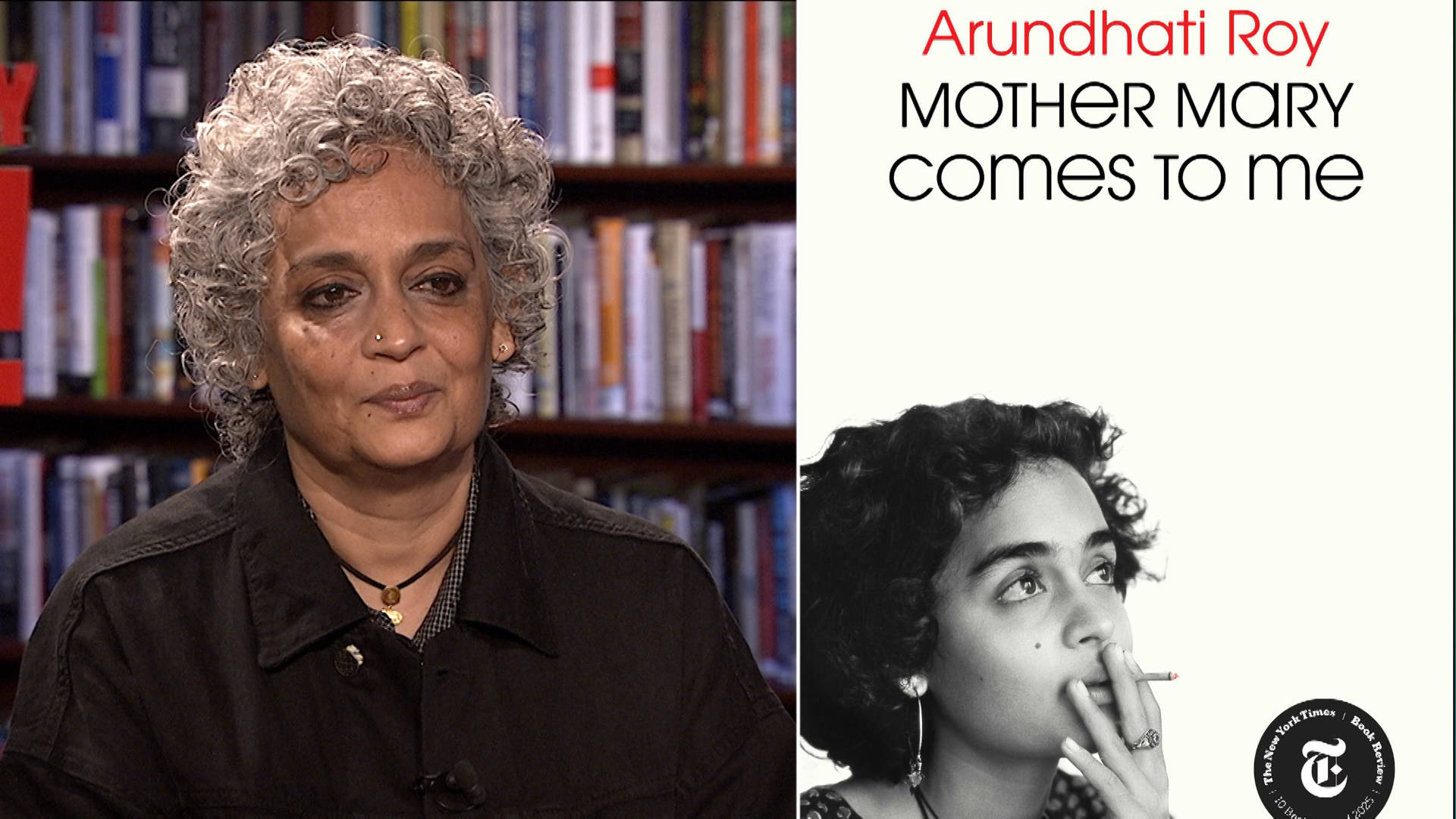
Renowned Indian author Arundhati Roy recently discussed her memoir, Mother Mary Comes to Me, in an interview on the program Democracy Now!. The book explores the complex relationship she had with her mother, Mary Roy, highlighting her mother’s dual role as both an inspiration and a source of fear. The conversation also addressed broader themes, including the rise of authoritarianism globally, particularly drawing parallels between developments in India and the United States.
Memoir Reflects on a Complex Legacy
In Mother Mary Comes to Me, Roy delves into her mother’s life, a celebrated educator who fought for women’s rights in India. The memoir has received critical acclaim for its balance of humor and stark honesty. The New York Times describes it as an “unsparing yet darkly funny memoir,” capturing the essence of a woman who shaped Roy’s identity as a writer and activist.
During the interview, Roy explained the significance of the book’s title, which is inspired by lyrics from The Beatles. She noted that music played an essential role in her life, providing the courage to leave home at a young age. “The title, I think it chose me,” she said, recalling how Paul McCartney’s song gave her strength as she prepared to embark on her journey of independence.
Roy’s relationship with her mother was fraught with tension, marked by moments of profound love and harsh discipline. She recounted a painful memory of witnessing her mother punish her brother for poor grades while praising her, a dynamic that left lasting emotional scars. “Even now, I feel that if ever I’m celebrated, there’s someone quiet being beaten in the other room,” she reflected, articulating how these experiences shaped her worldview and commitment to activism.
Authoritarianism’s Grip on Society
In addition to personal reflections, Roy voiced concerns about the increasing authoritarianism permeating societies around the world. She drew a direct correlation between the events of January 6, 2021, in the United States and the political climate in India under Prime Minister Narendra Modi. “The attempted coup of January 6th over here succeeded in India,” she stated, highlighting how extremist ideologies have taken root and normalized violence against marginalized communities.
Roy’s activism has made her a target for the Indian government, particularly for her outspoken criticism of Modi and the ruling Bharatiya Janata Party (BJP). She described how dissenting voices are increasingly silenced, and freedoms are curtailed. The recent banning of her collection of essays, Azadi: Freedom. Fascism. Fiction, in Indian-occupied Kashmir exemplifies this trend.
Addressing the humanitarian crisis in Gaza, Roy expressed her outrage over the violence against civilians and the indifference of world leaders. “We are able to reach for an image of a child starving or a person being blown up in Gaza easier than reaching for a glass of water,” she lamented, emphasizing the moral responsibility of those in power to intervene.
Arundhati Roy’s memoir serves as a poignant reminder of the complexities of familial love and the weight of societal expectations. Her insights into the intersections of personal and political struggles resonate deeply, urging readers to confront uncomfortable truths about power, resistance, and the human condition. As authoritarianism rises globally, her voice remains a crucial part of the discourse on justice and equality.

Carrie Fisher’s Autopsy Reveals Drug Use at Time of Death

Providence St. Joseph Hospital Promotes Lung Cancer Screening in Humboldt

Urgent Credit Card Strategies for 2026: Rates Remain High

Trump Demands Democrats Named in Epstein Files, Calls it ‘Witch Hunt’

Trump’s Outburst Over Epstein Documents Raises Urgent Questions

Georgia Tech vs. BYU: Pop-Tarts Bowl Kicks Off Today at 3:30 PM ET

Innovative Kirigami Technique Enhances Solar Sail Maneuverability

Latter-day Saint Leader Jeffrey R. Holland Passes Away at 85

US Aviation Traffic Surges as Major Hubs Welcome Millions

New Gel Offers Hope for Regrowing Tooth Enamel in Dentistry

University of Hawaiʻi at Mānoa Joins $25.6M AI Initiative for Disaster Monitoring

ALMA Discovers Companion Orbiting Red Giant Star π 1 Gruis

Park Jung Min’s Endearing Moment with Hwasa Steals Show at Awards

IROS 2025 to Showcase Cutting-Edge Robotics Innovations in China

Stone Island’s Logo Worn by Extremists Sparks Brand Dilemma

Sampson County Celebrates Susie Faison’s 100th Birthday Milestone

Startup Liberate Bio Secures $31 Million for Next-Gen Therapies

Mary Morgan Jackson Crowned Little Miss National Peanut Festival 2025
-
 Health2 months ago
New Gel Offers Hope for Regrowing Tooth Enamel in Dentistry
-
Science2 months ago
University of Hawaiʻi at Mānoa Joins $25.6M AI Initiative for Disaster Monitoring
-
 Science1 month ago
ALMA Discovers Companion Orbiting Red Giant Star π 1 Gruis
-
 Lifestyle1 month ago
Park Jung Min’s Endearing Moment with Hwasa Steals Show at Awards
-
 Science2 months ago
IROS 2025 to Showcase Cutting-Edge Robotics Innovations in China
-
 Lifestyle2 months ago
Stone Island’s Logo Worn by Extremists Sparks Brand Dilemma
-
 Lifestyle2 months ago
Sampson County Celebrates Susie Faison’s 100th Birthday Milestone
-
 Health2 months ago
Startup Liberate Bio Secures $31 Million for Next-Gen Therapies
-
 Lifestyle2 months ago
Mary Morgan Jackson Crowned Little Miss National Peanut Festival 2025
-

 Health2 months ago
Top Hyaluronic Acid Serums for Radiant Skin in 2025
-

 Politics2 months ago
Judge Considers Dismissal of Chelsea Housing Case Citing AI Flaws
-

 World2 months ago
Bravo Company Veterans Honored with Bronze Medals After 56 Years