
Science
Researchers Explore Axions as Dark Matter Candidates Using Old Stars

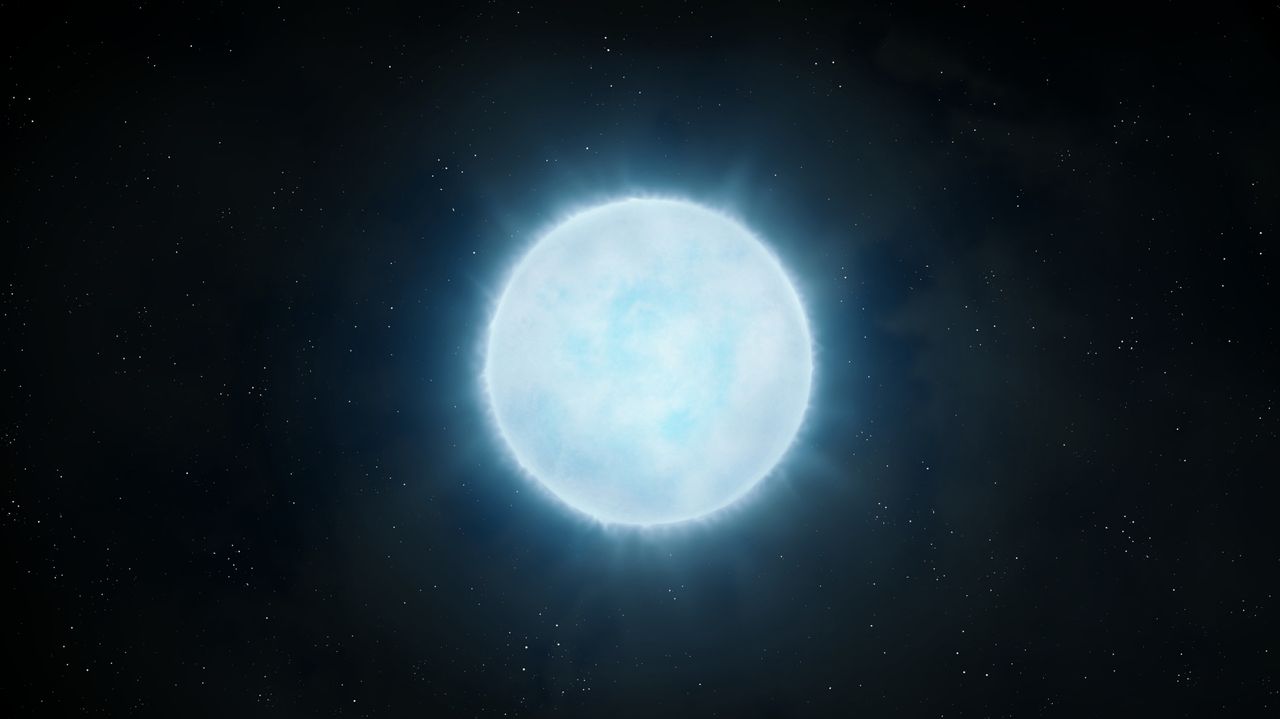
Astronomers are employing data from the past in their quest to understand dark matter, focusing on a theoretical particle known as the axion. This particle, proposed decades ago to address a challenge with the strong nuclear force, has resurfaced as a potential explanation for dark matter. A recent study published in November 2025 utilized archival data from the Hubble Space Telescope to investigate the behavior of axions in relation to white dwarfs, the dense remnants of dead stars.
The research aims to understand how axions could influence the cooling of white dwarfs. These stellar objects pack the mass of the sun into a space smaller than Earth, creating extreme conditions where quantum mechanics plays a vital role. White dwarfs maintain stability through a mechanism called electron degeneracy pressure, where a sea of electrons prevents collapse by resisting the same quantum state.
The researchers posited that axions could be generated by fast-moving electrons within white dwarfs. As these electrons dart around at nearly the speed of light, they might create axions, which would then escape, causing the white dwarf to cool more rapidly than expected. This cooling phenomenon could provide a detectable signature of axion presence.
To explore this hypothesis, the team developed a model incorporating axion cooling into a sophisticated simulation framework. This allowed them to predict the typical temperature of a white dwarf over time, comparing scenarios with and without axion influences. The focus of their analysis was on the globular cluster 47 Tucanae, where all white dwarfs formed around the same time, providing a valuable sample for study.
After analyzing the data, the researchers found no evidence of axion cooling among the white dwarfs. Instead, their findings established new limitations on how efficiently electrons can produce axions, indicating it occurs at a rate of no more than once every trillion chances. While this result does not entirely eliminate the possibility of axions, it suggests a weaker interaction between electrons and axions than previously thought.
The implications of this study are significant for the ongoing search for dark matter candidates. As scientists continue to investigate the nature of axions, they will need to refine their detection methods and explore alternative avenues to uncover these elusive particles. The research highlights the importance of using archival data to shed light on fundamental questions in astrophysics, emphasizing that even the remnants of old stars can provide critical insights into the universe.

German Tourist Dies After Ski Lift Collision in Montenegro

Gold Prices Surge to Record Highs, Raising Economic Questions

Tom Cruise and Ana de Armas Split Over Family Plans

STAAR Surgical and Spotlight Innovation: A Comparative Stock Analysis

Shoppers Embrace Post-Christmas Sales with Gift Cards in Hand

Retired Air Force Sergeant Critiques GOP’s Direction Amid Controversy

New Findings: Why 6000MHz RAM is the ‘Sweet Spot’ for Users

Trump and Zelenskyy Meet in Florida to Forge Ukraine Peace Plan

Historic UFO Encounters Resurface as Reports Surge in 2025

University of Hawaiʻi at Mānoa Joins $25.6M AI Initiative for Disaster Monitoring

New Gel Offers Hope for Regrowing Tooth Enamel in Dentistry

ALMA Discovers Companion Orbiting Red Giant Star π 1 Gruis

Park Jung Min’s Endearing Moment with Hwasa Steals Show at Awards

IROS 2025 to Showcase Cutting-Edge Robotics Innovations in China

Stone Island’s Logo Worn by Extremists Sparks Brand Dilemma

Sampson County Celebrates Susie Faison’s 100th Birthday Milestone

Mary Morgan Jackson Crowned Little Miss National Peanut Festival 2025

Startup Liberate Bio Secures $31 Million for Next-Gen Therapies
-
Science2 months ago
University of Hawaiʻi at Mānoa Joins $25.6M AI Initiative for Disaster Monitoring
-
 Health2 months ago
New Gel Offers Hope for Regrowing Tooth Enamel in Dentistry
-
 Science1 month ago
ALMA Discovers Companion Orbiting Red Giant Star π 1 Gruis
-
 Lifestyle1 month ago
Park Jung Min’s Endearing Moment with Hwasa Steals Show at Awards
-
 Science2 months ago
IROS 2025 to Showcase Cutting-Edge Robotics Innovations in China
-
 Lifestyle2 months ago
Stone Island’s Logo Worn by Extremists Sparks Brand Dilemma
-
 Lifestyle2 months ago
Sampson County Celebrates Susie Faison’s 100th Birthday Milestone
-
 Lifestyle2 months ago
Mary Morgan Jackson Crowned Little Miss National Peanut Festival 2025
-
 Health2 months ago
Startup Liberate Bio Secures $31 Million for Next-Gen Therapies
-

 Health2 months ago
Top Hyaluronic Acid Serums for Radiant Skin in 2025
-

 Science2 months ago
Arizona State University Transforms Programming Education Approach
-

 Politics2 months ago
Judge Considers Dismissal of Chelsea Housing Case Citing AI Flaws