
World
Libyan Military Chief and Seven Others Killed in Plane Crash

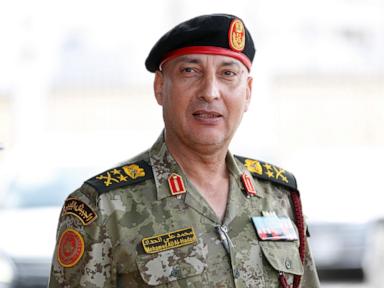
Search and recovery teams are intensifying efforts at the site of a plane crash in Turkey that claimed the lives of Libya’s military chief, Gen. Muhammad Ali Ahmad al-Haddad, and seven others. The crash occurred on the night of March 12, 2024, shortly after the private jet took off from Ankara, where the Libyan delegation had been engaged in high-level defense discussions.
The aircraft, a Falcon 50 business jet, lost contact with air traffic control approximately 40 minutes after takeoff. It had reported an electrical fault and requested an emergency landing back at Esenboga Airport. Unfortunately, the plane disappeared from radar while attempting to descend for this landing. The wreckage was subsequently located near the village of Kesikkavak, approximately 70 kilometers south of Ankara.
Libyan Prime Minister Abdul-Hamid Dbeibah confirmed the tragedy, referring to it as a “tragic accident” that represents a “great loss” for Libya. The delegation was returning to Tripoli after discussions aimed at enhancing military cooperation between Libya and Turkey. Alongside General al-Haddad, the crash also claimed the lives of four other military officers and three crew members, whose identities have yet to be released.
Authorities Respond to the Crash
In the aftermath of the incident, Turkish authorities have set up a mobile coordination center at the crash site, with gendarmerie police securing the area. The Turkish disaster management agency, AFAD, deployed specialized vehicles to navigate the challenging terrain resulting from heavy rain and mud. Reports indicate that Turkish Interior Minister Ali Yerlikaya plans to visit the site, accompanied by prosecutors responsible for investigating the crash.
The Libyan government is also expected to send a team to collaborate with Turkish officials as they probe the circumstances surrounding the crash. The Turkish presidential communications office stated that preparations for an emergency landing had been underway when the plane went missing.
Impact on Libyan Military Structure
General al-Haddad was a pivotal figure in Libya’s military landscape, serving as the top military commander in the western region of the country. His efforts were crucial in the ongoing United Nations-brokered initiatives aimed at unifying Libya’s fragmented military forces. The other officers who lost their lives include Gen. Al-Fitouri Ghraibil, head of Libya’s ground forces; Brig. Gen. Mahmoud Al-Qatawi, who led the military manufacturing authority; Mohammed Al-Asawi Diab, advisor to the chief of staff; and Mohammed Omar Ahmed Mahjoub, a military photographer.
Libya has been embroiled in chaos since the 2011 uprising that resulted in the toppling of longtime ruler Moammar Gadhafi. The country remains divided, with rival administrations in the east and west and various militias vying for power. Turkey has historically aligned with the western-backed Libyan government but has recently taken steps to improve relations with eastern factions as well.
Just prior to the crash, Turkey’s parliament approved an extension of the mandate for Turkish troops stationed in Libya for an additional two years, further demonstrating the ongoing military ties between the two nations.

Google’s Antigravity Surges Ahead as Developers Abandon VS Code

One Dead as Two Helicopters Collide in Hammonton, NJ

Top Makeup Artists Share Essential Beauty Tips for New Year’s Eve

ICE Plans to Renovate Warehouses for 80,000 Immigrant Detainees

Affordable IVF Alternative Revives Hope for Infertile Couples

Giants and Raiders Face Off: NFL Week 17 Showdown Impacts Draft

Gold Prices Surge as Global Debt Concerns Drive Demand

Urgent Arrest Made in Christmas Day Kidnapping of Teen in Texas

5 Timeless Video Games Celebrate 15 Years of Mastery in 2025

University of Hawaiʻi at Mānoa Joins $25.6M AI Initiative for Disaster Monitoring

New Gel Offers Hope for Regrowing Tooth Enamel in Dentistry

ALMA Discovers Companion Orbiting Red Giant Star π 1 Gruis

Park Jung Min’s Endearing Moment with Hwasa Steals Show at Awards

IROS 2025 to Showcase Cutting-Edge Robotics Innovations in China

Stone Island’s Logo Worn by Extremists Sparks Brand Dilemma

Sampson County Celebrates Susie Faison’s 100th Birthday Milestone

Mary Morgan Jackson Crowned Little Miss National Peanut Festival 2025

Startup Liberate Bio Secures $31 Million for Next-Gen Therapies
-
Science2 months ago
University of Hawaiʻi at Mānoa Joins $25.6M AI Initiative for Disaster Monitoring
-
 Health2 months ago
New Gel Offers Hope for Regrowing Tooth Enamel in Dentistry
-
 Science1 month ago
ALMA Discovers Companion Orbiting Red Giant Star π 1 Gruis
-
 Lifestyle1 month ago
Park Jung Min’s Endearing Moment with Hwasa Steals Show at Awards
-
 Science2 months ago
IROS 2025 to Showcase Cutting-Edge Robotics Innovations in China
-
 Lifestyle2 months ago
Stone Island’s Logo Worn by Extremists Sparks Brand Dilemma
-
 Lifestyle2 months ago
Sampson County Celebrates Susie Faison’s 100th Birthday Milestone
-
 Lifestyle2 months ago
Mary Morgan Jackson Crowned Little Miss National Peanut Festival 2025
-
 Health2 months ago
Startup Liberate Bio Secures $31 Million for Next-Gen Therapies
-

 Health2 months ago
Top Hyaluronic Acid Serums for Radiant Skin in 2025
-

 Science2 months ago
Arizona State University Transforms Programming Education Approach
-

 Politics2 months ago
Judge Considers Dismissal of Chelsea Housing Case Citing AI Flaws