
World
F-15 Eagle vs. F-35 Lightning II: A Clash of Fighter Jets

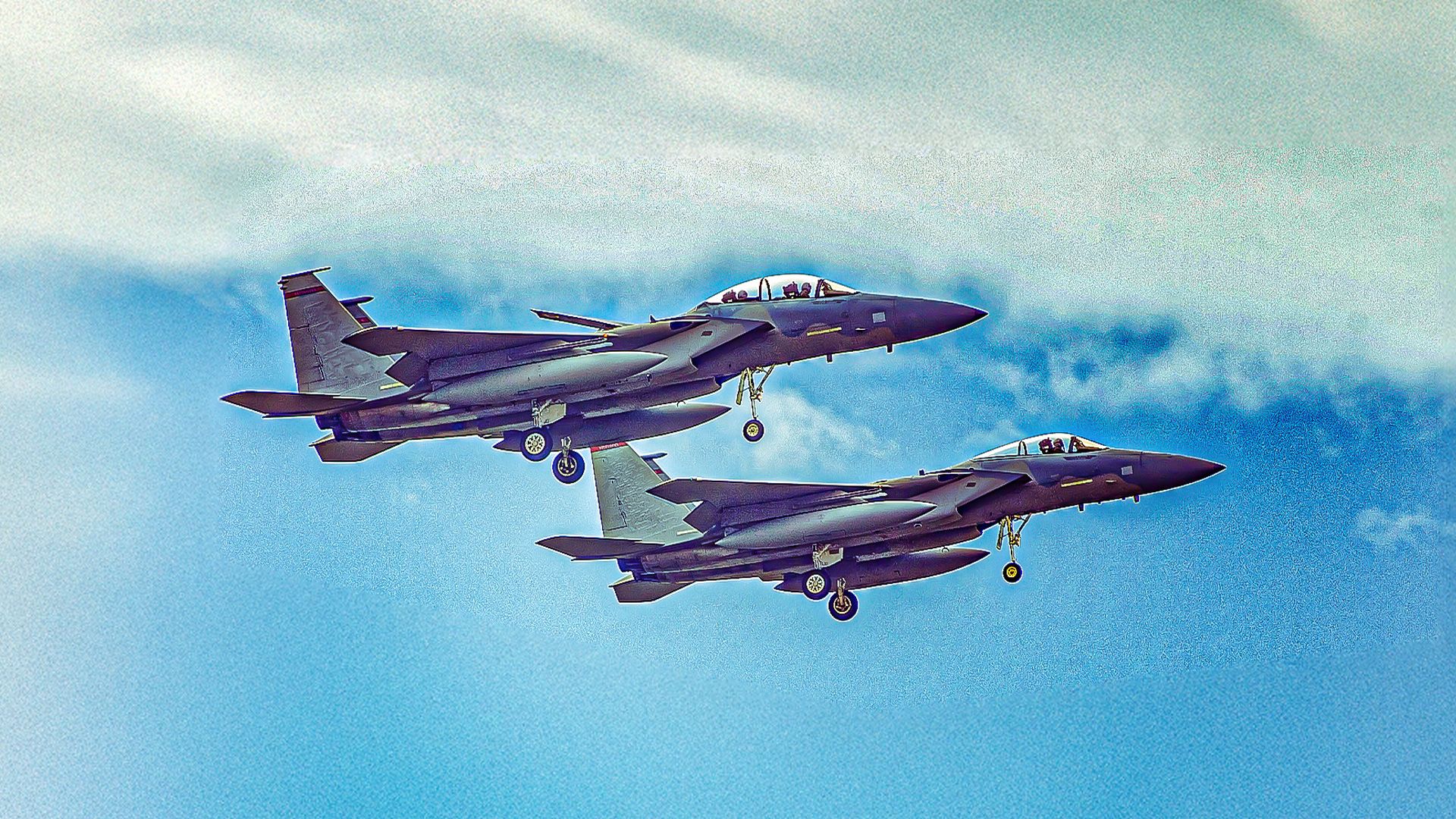
Fighter jets are a cornerstone of modern military aviation, and the competition between the F-15 Eagle and the F-35 Lightning II exemplifies the evolution of air combat technology. While the F-15 boasts a higher maximum speed, the F-35 emphasizes stealth and advanced capabilities suited for a new era of warfare. Understanding the differences between these two aircraft reveals a lot about their design priorities and operational roles.
Speed and Performance: A Comparative Analysis
The F-15 Eagle, developed by McDonnell Douglas, can reach maximum speeds of approximately 1,875 miles per hour (3,017 km/h), translating to around Mach 2.5 at altitude. In contrast, the F-35 Lightning II, built by Lockheed Martin, has a top speed of about 1,200 miles per hour (1,931 km/h), or Mach 1.6. The significant speed advantage of the F-15 reflects its design as a 1970s-era air superiority fighter, built for high-speed interception and engagement.
Despite the clear numerical difference, the air force employs both jets differently. The F-35 is not primarily designed for speed but rather for stealth and versatility. Its shape and internal weapon systems minimize radar signatures, making it more difficult to detect. This design choice indicates a trade-off where speed is sacrificed for survivability and situational awareness.
Capabilities Beyond Speed
While speed is a crucial factor, it cannot solely define the effectiveness of a fighter aircraft. The F-15 has a service ceiling of 65,000 feet (19,812 meters), allowing it to operate at high altitudes effectively. Its climb rate is exceptional, which enhances its performance in combat scenarios. The F-35, conversely, operates at a slightly lower ceiling of 50,000 feet (15,240 meters), yet it remains capable of engaging in long-range operations with modern missile systems.
Both aircraft also share advanced data-sharing capabilities, enabling them to operate in synergy with other military assets. The F-35‘s emphasis on stealth allows it to approach targets undetected, making it a valuable asset in modern warfare where first detection often determines the outcome of engagements.
The engines powering these aircraft also contribute to their performance attributes. The F-15 utilizes two Pratt & Whitney F100 engines, which provide a combined thrust exceeding 58,000 pounds (258 kN). In contrast, the F-35 features a single Pratt & Whitney F135 engine, delivering about 40,000 pounds (178 kN) of thrust. While this makes the F-35 capable in various combat scenarios, it cannot match the raw power of the F-15.
Ultimately, both jets rarely operate at their maximum speeds during combat missions. Pilots typically fly at high-subsonic speeds (Mach 0.8-0.9), prioritizing fuel efficiency and sensor employment over sheer velocity. The F-15‘s high-speed capabilities shine when intercepting threats or executing rapid maneuvers, while the F-35 focuses on stealth and networked operations to gain an advantage without being detected.
In summary, the F-15 Eagle surpasses the F-35 Lightning II in top speed and climbing ability, reflecting its design as a classic air superiority fighter. However, the F-35 offers advanced capabilities crucial for modern multirole operations, emphasizing stealth and situational awareness. The choice between these two aircraft ultimately depends on mission requirements, highlighting the evolution of fighter jet technology in contemporary military strategy.

OpenAI Seeks “Head of Preparedness” Amid Urgent Safety Concerns

14-Year-Old Founder’s Y Combinator Application Goes Viral

One in Six Adults Have Relationship ‘Backup Person’ Revealed

Food Safety Experts Urge: Avoid These 5 Foods When Dining Out

Scientists Unravel Mystery Behind Blinding Blue Flashes in Space

Steelers Face Browns in Crucial AFC North Showdown Today

Black Ice Causes Nationwide Accidents and Overcrowded ERs in Germany

Atlas Copco Sees 70% Jump in Short Interest, Analysts React

Malachi Barton Rises to Fame as 2025’s Most Searched Actor

University of Hawaiʻi at Mānoa Joins $25.6M AI Initiative for Disaster Monitoring

New Gel Offers Hope for Regrowing Tooth Enamel in Dentistry

ALMA Discovers Companion Orbiting Red Giant Star π 1 Gruis

Park Jung Min’s Endearing Moment with Hwasa Steals Show at Awards

IROS 2025 to Showcase Cutting-Edge Robotics Innovations in China

Stone Island’s Logo Worn by Extremists Sparks Brand Dilemma

Sampson County Celebrates Susie Faison’s 100th Birthday Milestone

Startup Liberate Bio Secures $31 Million for Next-Gen Therapies

Mary Morgan Jackson Crowned Little Miss National Peanut Festival 2025
-
Science2 months ago
University of Hawaiʻi at Mānoa Joins $25.6M AI Initiative for Disaster Monitoring
-
 Health2 months ago
New Gel Offers Hope for Regrowing Tooth Enamel in Dentistry
-
 Science1 month ago
ALMA Discovers Companion Orbiting Red Giant Star π 1 Gruis
-
 Lifestyle1 month ago
Park Jung Min’s Endearing Moment with Hwasa Steals Show at Awards
-
 Science2 months ago
IROS 2025 to Showcase Cutting-Edge Robotics Innovations in China
-
 Lifestyle2 months ago
Stone Island’s Logo Worn by Extremists Sparks Brand Dilemma
-
 Lifestyle2 months ago
Sampson County Celebrates Susie Faison’s 100th Birthday Milestone
-
 Health2 months ago
Startup Liberate Bio Secures $31 Million for Next-Gen Therapies
-
 Lifestyle2 months ago
Mary Morgan Jackson Crowned Little Miss National Peanut Festival 2025
-

 Health2 months ago
Top Hyaluronic Acid Serums for Radiant Skin in 2025
-

 Science2 months ago
Arizona State University Transforms Programming Education Approach
-

 Politics2 months ago
Judge Considers Dismissal of Chelsea Housing Case Citing AI Flaws