
World
China to Surpass Coal with Solar Power Capacity in 2026

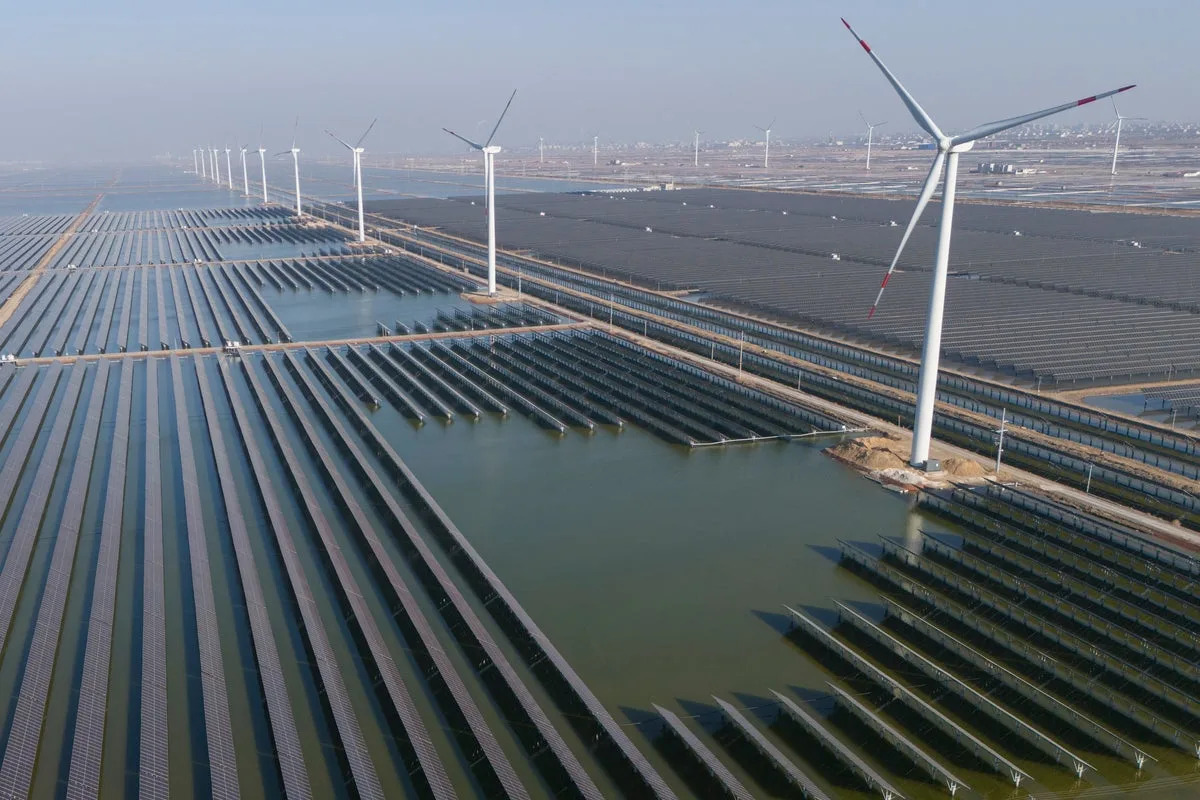
China is set to achieve a significant milestone in its energy transition as solar power capacity is projected to exceed that of coal for the first time in 2026. This shift, highlighted by new data from the China Electricity Council, reflects the rapid growth of the solar market, which has established China as the global leader in solar energy development. Despite this progress, the country remains reliant on coal for energy security.
By the end of 2026, wind and solar energy together are expected to constitute approximately half of China’s total installed power capacity, while coal’s share declines to around one-third. This marks a notable change in the country’s energy landscape, although it does not immediately imply that solar power will generate more electricity than coal. Installed capacity indicates potential power generation under optimal conditions, whereas coal plants have the advantage of continuous operation, unlike solar energy, which fluctuates based on daylight and weather conditions.
Current Energy Landscape and Future Projections
As of late 2025, China’s solar capacity is estimated at around 1,200 gigawatts, growing at an average rate of approximately 270 gigawatts per year over the past three years. In contrast, coal capacity is anticipated to reach 1,333 gigawatts by the end of 2026. Total generating capacity across all energy sources is forecasted to increase by more than 400 gigawatts this year, aligning with the rising demand for electricity.
The expansion of renewable energy sources in nations such as China and India is beginning to reshape global electricity production. Recent analyses indicate that coal-fired power generation in both countries decreased in 2025, marking the first simultaneous decline in this sector in 50 years. This reduction follows record additions of renewable energy capacity that have been sufficient to meet the growth in demand.
Despite the rapid increase in renewable energy, China continues to add coal capacity at a troubling rate. In 2025, the country commissioned 78 gigawatts of new coal power capacity, a response to past power shortages and rolling blackouts that heightened concerns about supply reliability.
Shifts in Energy Policy and Future Challenges
Experts caution against interpreting the projected capacity crossover as a definitive shift away from coal. Lauri Myllyvirta, an energy analyst at the Centre for Research on Energy and Clean Air, emphasizes that while the figures are symbolically important, they do not reflect the reality of energy generation. He notes that the average capacity factor for solar power in China is approximately 14 percent, compared to 50 percent for coal, meaning coal plants still produce about 3.5 times more electricity than solar plants.
Biqing Yang, an energy analyst at Ember, states that coal’s role in China’s power system is evolving from a primary electricity provider to a source of flexibility and system regulation. She highlights that China is also at the forefront of global battery energy storage deployment, which is crucial for accommodating the transition to a cleaner energy framework.
Despite these advancements, the construction and approval of new coal projects continue, reflecting a policy that views coal as a backup during periods of low wind, solar, or hydropower output. Critics argue that this approach risks prolonging the life of coal plants, potentially delaying emission reductions, even as cleaner energy sources expand.
Andreas Sieber, head of political strategy at 350.org, suggests that the ongoing expansion of coal capacity contradicts the progress made in renewable energy. He asserts that the coal industry is racing to secure assets before regulatory windows close, while official projections indicate that coal’s share in China’s power fleet will continue to decline. By the end of 2026, total installed capacity is expected to reach around 4.3 billion kilowatts, with non-fossil sources accounting for roughly 63 percent and coal dropping to about 31 percent.
In closing, Sieber emphasizes that Beijing faces a critical decision: to halt the expansion of coal and facilitate a manageable transition to cleaner energy, or to entrench unnecessary assets that could complicate the already successful shift towards renewable energy.

Robinhood Stock Surges 2.5% Today Amid Tech Market Recovery

Philadelphia’s Earth Month Kicks Off with Free Events in Parks

GSK’s Inhaler Decision Sparks Health Concerns for Children

Bradford’s Fish Fry Fridays Offer Community Spirit and Flavor

Speculation Rises on Shutdowns During Trump’s Potential Presidency

Samsung Galaxy Watch 9 to Feature Larger Battery, Report Reveals

Inventors Find New Purpose Through Unconventional Paths

UConn Huskies Aim for Back-to-Back Titles in 2026 NCAA Tournament

U.S. Mine Countermeasure Ships Dock in Malaysia for Logistics Stop

University of Hawaiʻi at Mānoa Joins $25.6M AI Initiative for Disaster Monitoring

$2.2 Million Boost for Cancer Research and Training in Hawaiʻi

ALMA Discovers Companion Orbiting Red Giant Star π 1 Gruis

Sacituzumab Govitecan Shows Promise for HR+/HER2− Breast Cancer

币安人生 Sees $15.92 Million in Trading Volume Amid Market Fluctuations

New Gel Offers Hope for Regrowing Tooth Enamel in Dentistry

CAVA Group Shares Surge 5.1% Amid Mixed Analyst Ratings

Christian Bale in Talks to Join Leonardo DiCaprio in Heat 2

Supreme Court to Review Birthright Citizenship for Children of Immigrants
-
Science9 months ago
University of Hawaiʻi at Mānoa Joins $25.6M AI Initiative for Disaster Monitoring
-
 Health7 months ago
$2.2 Million Boost for Cancer Research and Training in Hawaiʻi
-
 Science8 months ago
ALMA Discovers Companion Orbiting Red Giant Star π 1 Gruis
-
 Health7 months ago
Sacituzumab Govitecan Shows Promise for HR+/HER2− Breast Cancer
-
Politics5 months ago
币安人生 Sees $15.92 Million in Trading Volume Amid Market Fluctuations
-
 Health9 months ago
New Gel Offers Hope for Regrowing Tooth Enamel in Dentistry
-
 Business7 months ago
CAVA Group Shares Surge 5.1% Amid Mixed Analyst Ratings
-
 Entertainment8 months ago
Christian Bale in Talks to Join Leonardo DiCaprio in Heat 2
-
 Politics7 months ago
Supreme Court to Review Birthright Citizenship for Children of Immigrants
-

 Lifestyle8 months ago
Art Deco and Traditional Designs Set to Transform Homes in 2026
-

 Lifestyle7 months ago
Fernando Mendoza Secures Maxwell and O’Brien Awards Ahead of Heisman
-

 World8 months ago
Swiss Residents Reject 50% Inheritance Tax on Wealthy