
Health
Viking Skull Unveils Evidence of Early Brain Surgery Practices

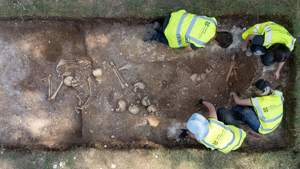
A recent discovery in Denmark has provided significant insights into ancient medical practices, specifically those used by Vikings. Archaeologists unearthed a male skull dating back over a thousand years, revealing a large hole indicative of a procedure known as trepanation. This ancient surgical technique, which involves drilling or scraping a hole in the skull, is believed to have been employed to alleviate conditions such as migraines or seizures.
The skull, part of an archaeological excavation at a site in southern Denmark, demonstrates the advanced understanding of human anatomy possessed by these early practitioners. According to researchers from the University of Southern Denmark, the findings suggest that the Vikings may have engaged in complex medical interventions much earlier than previously thought.
Understanding Trepanation in Ancient Cultures
Trepanation is one of the oldest surgical practices known to humanity, with evidence dating back to prehistoric times. The process typically involved creating an opening in the skull to relieve pressure or treat various ailments. In this case, the skull’s condition implies that the individual may have suffered from chronic pain or neurological issues.
The excavation site has yielded several other artifacts that highlight the medical practices of the time, including tools that could have been used during surgical procedures. The presence of these items indicates that the Vikings had a rudimentary yet effective approach to medicine, utilizing both surgical and possibly herbal remedies.
Research into the skull and other findings is ongoing, with archaeologists working to piece together the medical knowledge of the Viking era. The results shed light on how ancient societies approached health and treatment, challenging modern assumptions about their capabilities.
The Significance of the Find
This discovery not only adds to the understanding of Viking culture but also has broader implications for the study of ancient medicine. The evidence of trepanation suggests that early humans possessed a sophisticated understanding of the human body and the potential for surgical intervention.
The implications extend beyond just historical curiosity; understanding these ancient practices can inform modern medical approaches and cultural perspectives on health. The findings will be presented in an upcoming publication by the University of Southern Denmark, marking a significant contribution to the fields of archaeology and medical history.
As research continues, scholars anticipate that more discoveries will emerge from the excavation site, further enriching the narrative of Viking medical practices and their impact on contemporary understanding of surgery. The unearthing of this skull is not only a glimpse into the past but also a reminder of the enduring quest for knowledge that characterizes human innovation throughout history.

Unlock Your Best Years: Four Pillars for a Fulfilling Retirement

Torrey Pines Claims Victory Over La Costa Canyon, 3-1

New Method Predicts Glacier Surges by Analyzing Ecosystem Tipping Points

Urgent Memo Rips Mayor Johnson’s Immigration Investigation Order

Lehigh Valley Motorcycle Expo Thrills Attendees with Races and Vendors

Toheeb Jimoh Discusses His Role in ‘Industry’ Season Four

Ocasio-Cortez Endorses Hochul for Reelection, Shifts Political Strategy

Massachusetts Mother Sues Tesla After Son Dies in Car Fire

Bad Bunny Set to Make Super Bowl LX History with Halftime Show

University of Hawaiʻi at Mānoa Joins $25.6M AI Initiative for Disaster Monitoring

ALMA Discovers Companion Orbiting Red Giant Star π 1 Gruis

New Gel Offers Hope for Regrowing Tooth Enamel in Dentistry

$2.2 Million Boost for Cancer Research and Training in Hawaiʻi

Park Jung Min’s Endearing Moment with Hwasa Steals Show at Awards

Sacituzumab Govitecan Shows Promise for HR+/HER2− Breast Cancer

Sampson County Celebrates Susie Faison’s 100th Birthday Milestone

IROS 2025 to Showcase Cutting-Edge Robotics Innovations in China

Interstellar Comet 3I/ATLAS Approaches Sun, No Threat to Earth
-
Science3 months ago
University of Hawaiʻi at Mānoa Joins $25.6M AI Initiative for Disaster Monitoring
-
 Science3 months ago
ALMA Discovers Companion Orbiting Red Giant Star π 1 Gruis
-
 Health3 months ago
New Gel Offers Hope for Regrowing Tooth Enamel in Dentistry
-
 Health2 months ago
$2.2 Million Boost for Cancer Research and Training in Hawaiʻi
-
 Lifestyle3 months ago
Park Jung Min’s Endearing Moment with Hwasa Steals Show at Awards
-
 Health1 month ago
Sacituzumab Govitecan Shows Promise for HR+/HER2− Breast Cancer
-
 Lifestyle3 months ago
Sampson County Celebrates Susie Faison’s 100th Birthday Milestone
-
 Science4 months ago
IROS 2025 to Showcase Cutting-Edge Robotics Innovations in China
-
 Science3 months ago
Interstellar Comet 3I/ATLAS Approaches Sun, No Threat to Earth
-

 Lifestyle4 months ago
Stone Island’s Logo Worn by Extremists Sparks Brand Dilemma
-

 Lifestyle4 months ago
Mary Morgan Jackson Crowned Little Miss National Peanut Festival 2025
-

 Health4 months ago
Startup Liberate Bio Secures $31 Million for Next-Gen Therapies