
Science
UMass Chan Medical School Faces Dramatic Drop in PhD Admissions

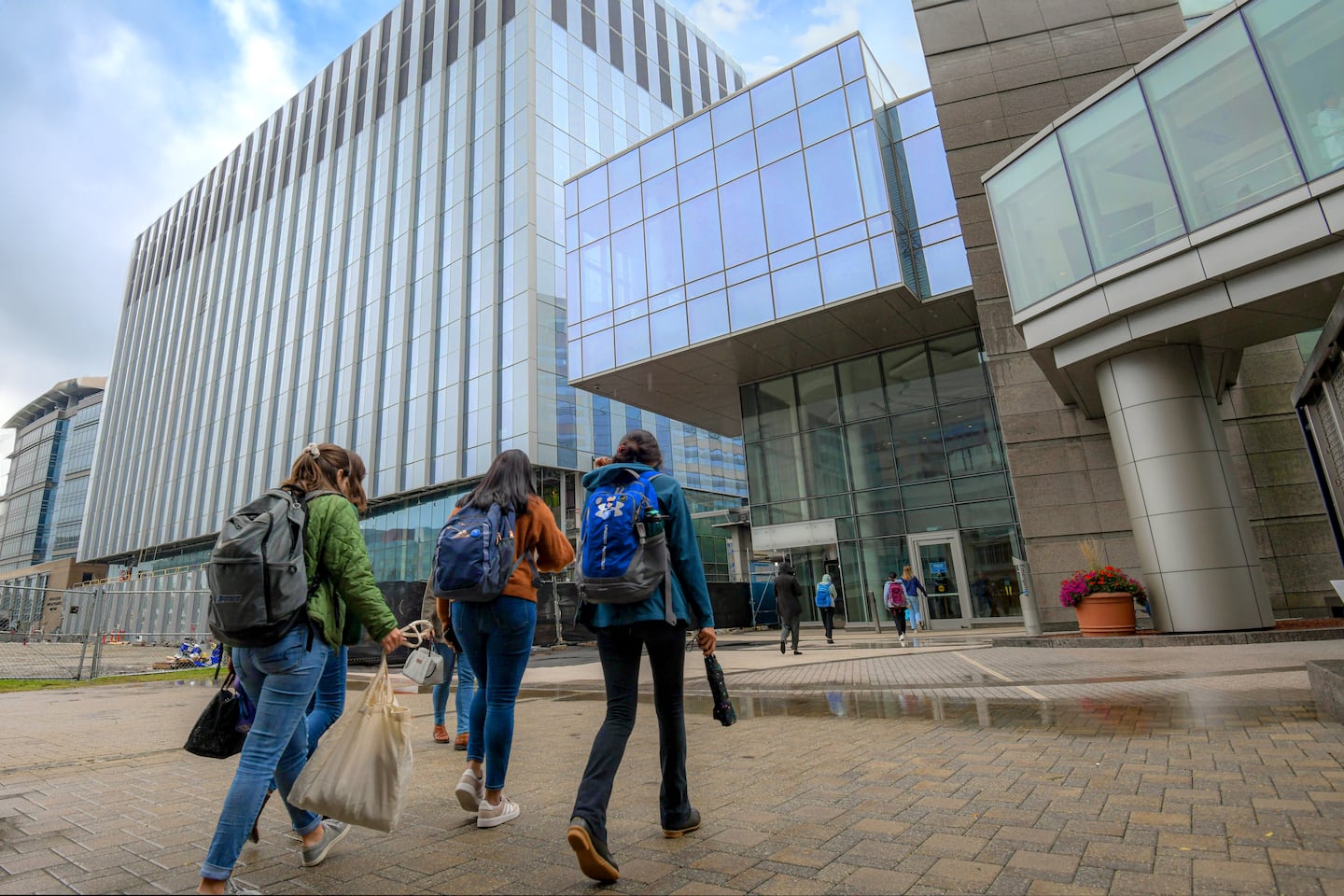
The UMass Chan Medical School has experienced a significant decline in its PhD admissions, with only 13 students accepted this academic year compared to 73 the previous year. This sharp reduction raises concerns about the future of research and innovation within the biomedical sciences, particularly in critical fields like cancer biology, immunology, and neuroscience.
The drop in admissions at UMass Chan is indicative of broader challenges facing academic institutions nationwide. The school initially planned to offer places to between 60 and 80 PhD candidates for the 2025 academic year but withdrew nearly all offers due to anticipated cuts in federal funding. Michael Nietzel, president emeritus of Missouri State University, emphasized the importance of nurturing young scientists, stating, “It’s your future talent in science, engineering, and for the academic workforce.”
This decline in PhD candidates could pose a serious threat to the United States’ competitive edge in science and technology. As UMass Chan’s Chancellor Michael Collins pointed out, fewer admissions may limit opportunities for aspiring researchers, potentially driving talent to other countries or sectors. In fiscal 2025, the school reported receiving a total of $190.4 million from the National Institutes of Health (NIH), marking the fewest awards in five years. While this figure represents only a $3 million decrease from the previous year, changes in grant distribution under the Trump administration have restricted access to $13.2 million of that funding.
Implications of Funding Cuts on Doctoral Programs
The recent passage of a spending bill by Congress rejected proposed cuts to the NIH. However, the long-term impact on individual institutions remains uncertain. Collins anticipates that next year’s PhD class will be larger than this year’s but still below typical levels, reflecting ongoing declines in federal grant money. “If fewer labs are funded, there are fewer opportunities for graduate students,” he noted.
Nationally, the National Student Clearinghouse Research Center reported a decrease of 2,122 doctoral students in fall 2025 compared to the previous year, a 0.3 percent decline. This marks the first significant drop in doctoral student enrollment since 2020. The overall decline can be attributed to a loss of nearly 10,000 international students, although specific data on doctoral programs is not provided. Interestingly, Massachusetts saw a 1.4 percent increase in graduate student enrollment during the same period.
Different universities in the Boston area are experiencing varying trends in doctoral admissions. Harvard reported a decrease from 4,166 to 4,061 doctoral students, while the Massachusetts Institute of Technology (MIT) saw an increase from 4,083 to 4,107. Nonetheless, MIT admitted 96 fewer graduate students overall this year, particularly in its engineering and science departments. MIT President Sally Kornbluth highlighted the challenges of having to turn away talented individuals: “Having to turn away superb young talent is a striking loss for the institution.”
The Future of Doctoral Education Amidst Challenges
In contrast, Brown University has announced plans to reduce its PhD admissions by 20 percent for the next academic year in response to funding pressures. The institution has already paused admissions in six departments, including classics and anthropology, indicating a strategic approach to address budget constraints.
While some argue that funding cuts could compel universities to reassess their programs and limit admissions in fields with low job prospects, there is concern that cuts may also impact vital research areas. Richard Larson, a professor at MIT, noted that the increase in PhD graduates has outpaced available academic positions, exacerbating the issue of unemployment among doctoral holders. “We’re producing more PhD students than there are [academic] openings for them,” he stated.
Finding the right balance in admissions is politically challenging for university administrators. Phillip Levine, an economics professor at Wellesley College, remarked that targeting specific programs for cuts is often more difficult than implementing broad reductions. Nevertheless, universities must make difficult decisions to retain talent, as reduced opportunities for doctoral students may lead them to pursue careers outside academia.
In contrast to the U.S., the Canadian government announced a significant investment of $1.7 billion over 12 years to attract international researchers, which includes $133.6 million over three years dedicated to recruiting doctoral students and post-doctoral researchers. This proactive approach underscores the importance of investing in talent to bolster research and innovation.
The overarching solution lies in reversing the funding cuts that have hindered research and education. In the interim, American institutions must strive to retain promising young scientists and ensure that necessary resources are available. The long-term consequences of reduced doctoral programs could impede the nation’s ability to foster innovation and recover from these losses in the future.

Lehigh Valley Motorcycle Expo Thrills Attendees with Races and Vendors

Toheeb Jimoh Discusses His Role in ‘Industry’ Season Four

Ocasio-Cortez Endorses Hochul for Reelection, Shifts Political Strategy

Massachusetts Mother Sues Tesla After Son Dies in Car Fire

Bad Bunny Set to Make Super Bowl LX History with Halftime Show

Researchers Discover Method to Resensitize Chemo-Resistant Cancer Cells

GUESS JEANS Unveils Sustainable Flagship Store in Los Angeles

Minnesota DOC Disputes DHS Claims on ICE Detainers with New Data

Researchers Innovate Greener Amide Synthesis for Drug Production

University of Hawaiʻi at Mānoa Joins $25.6M AI Initiative for Disaster Monitoring

ALMA Discovers Companion Orbiting Red Giant Star π 1 Gruis

New Gel Offers Hope for Regrowing Tooth Enamel in Dentistry

$2.2 Million Boost for Cancer Research and Training in Hawaiʻi

Park Jung Min’s Endearing Moment with Hwasa Steals Show at Awards

Sacituzumab Govitecan Shows Promise for HR+/HER2− Breast Cancer

Sampson County Celebrates Susie Faison’s 100th Birthday Milestone

IROS 2025 to Showcase Cutting-Edge Robotics Innovations in China

Interstellar Comet 3I/ATLAS Approaches Sun, No Threat to Earth
-
Science3 months ago
University of Hawaiʻi at Mānoa Joins $25.6M AI Initiative for Disaster Monitoring
-
 Science3 months ago
ALMA Discovers Companion Orbiting Red Giant Star π 1 Gruis
-
 Health3 months ago
New Gel Offers Hope for Regrowing Tooth Enamel in Dentistry
-
 Health2 months ago
$2.2 Million Boost for Cancer Research and Training in Hawaiʻi
-
 Lifestyle3 months ago
Park Jung Min’s Endearing Moment with Hwasa Steals Show at Awards
-
 Health1 month ago
Sacituzumab Govitecan Shows Promise for HR+/HER2− Breast Cancer
-
 Lifestyle3 months ago
Sampson County Celebrates Susie Faison’s 100th Birthday Milestone
-
 Science4 months ago
IROS 2025 to Showcase Cutting-Edge Robotics Innovations in China
-
 Science3 months ago
Interstellar Comet 3I/ATLAS Approaches Sun, No Threat to Earth
-

 Lifestyle4 months ago
Stone Island’s Logo Worn by Extremists Sparks Brand Dilemma
-

 Lifestyle4 months ago
Mary Morgan Jackson Crowned Little Miss National Peanut Festival 2025
-

 Health4 months ago
Startup Liberate Bio Secures $31 Million for Next-Gen Therapies