
World
GA-ASI Revolutionizes Airpower Strategies in the Indo-Pacific

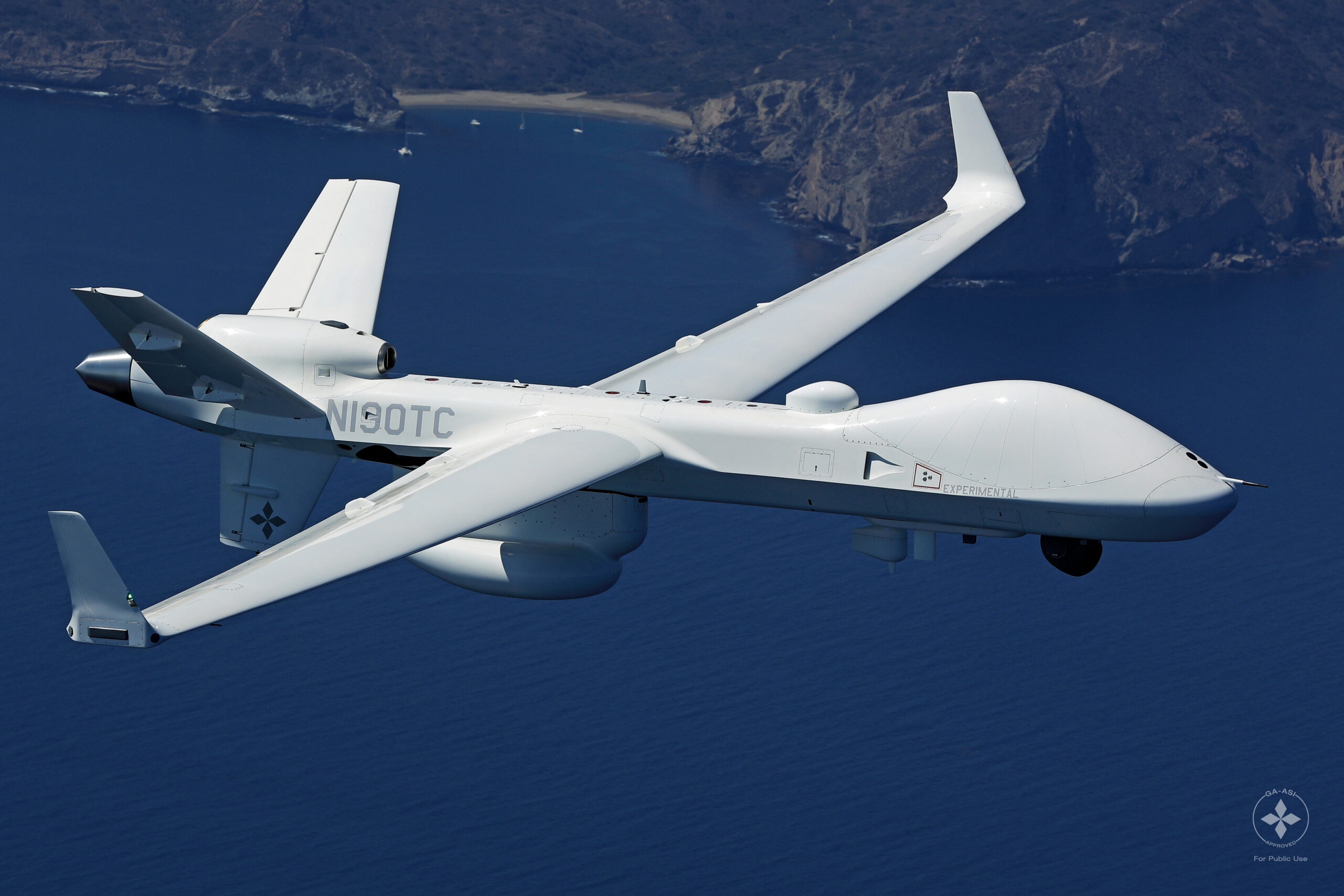
As military forces worldwide adapt to evolving security dynamics, the importance of Uncrewed Aerial Systems (UAS) has become undeniable. This shift is particularly evident in the Indo-Pacific region, where vast maritime domains and a complex geopolitical environment necessitate advanced airpower solutions. General Atomics Aeronautical Systems, Inc. (GA-ASI) has been a pioneer in the UAS field for over three decades, continually innovating to meet the challenges of modern warfare.
Addressing Strategic Priorities in the Indo-Pacific
The Indo-Pacific nations face a myriad of security challenges, including technological advancements, power competition, and ongoing instability. These factors are driving a fundamental rethinking of military strategies, with UAS emerging as critical components for operational superiority. GA-ASI’s platforms, such as the MQ-9B SkyGuardian and its maritime variant, the SeaGuardian, along with the Mojave Short Takeoff and Landing (STOL) aircraft and the Gambit Series of autonomous modular aircraft, are reshaping airpower in the 21st century.
These systems are designed for specific missions but share a unified objective: to provide enduring capabilities that combine adaptability, autonomy, and cost-effectiveness. They enable nations to confront complex threats across multiple operational domains.
The MQ-9B SkyGuardian and SeaGuardian
The MQ-9B SkyGuardian and SeaGuardian are leading innovations in Intelligence, Surveillance, and Reconnaissance (ISR). With unmatched endurance exceeding 30 hours, these platforms are gaining traction with countries worldwide, including Japan, India, Poland, Canada, Belgium, Germany, and Qatar. Their capabilities allow for critical intelligence collection across land and sea, even in high-stakes environments.
Key features of these systems include:
- Endurance and Adaptability: The MQ-9B offers extended operational durations and flexible payload configurations for diverse missions.
- Advanced Sensors: Equipped with multi-intelligence capabilities such as maritime radar and electro-optical/infrared cameras, these platforms enhance situational awareness.
- Payload Capacity: With nine external hardpoints and an internal payload capacity of 363 kilograms, they can integrate advanced sensors and kinetic payloads.
- Specialized Maritime Capabilities: The SeaGuardian excels in anti-submarine warfare, leveraging integrated sonobuoy systems and a 360-degree maritime radar.
- Airspace Certification: Designed for operation in national airspace without special accommodations, facilitating both military and civilian applications.
With an open architecture design, the MQ-9B can integrate sovereign payloads and mission systems to respond to emerging threats effectively.
Enhancing Airborne Early Warning Capabilities
The increasing prevalence of stealthy cruise missiles and advanced drone technology has created an urgent demand for Airborne Early Warning (AEW) systems. GA-ASI is addressing this need with the upcoming MQ-9B Airborne Early Warning and Control (AEW&C) mission package, developed in collaboration with Saab. This system will enhance detection and tracking capabilities for various threats, from high-altitude aircraft to low-flying drones.
Advantages of the MQ-9B AEW&C mission package include:
- Cost-Effectiveness: By integrating proven technologies into a ready platform, the MQ-9B reduces costs and deployment time compared to traditional AEW platforms.
- Interoperability: Fully compatible with U.S. and coalition systems, it enhances regional defense capabilities.
- Scalable Design: The AEW&C package offers an affordable alternative for nations with smaller defense budgets.
Set to debut in 2026, the MQ-9B AEW&C package aims to transform airborne early warning capabilities for Indo-Pacific nations and beyond.
Mojave STOL: Flexible Operations for Diverse Missions
The Mojave STOL platform is designed for flexibility in the Indo-Pacific Theater, where operational demands often require innovative solutions. By enabling operations from unimproved surfaces, the Mojave STOL can operate from roads, beaches, and even flight-deck-equipped ships.
Key advantages include:
- Runway Independence: This capability allows for unparalleled mission flexibility.
- Maritime Versatility: It enhances naval operations by enabling missions from smaller warships.
- Payload Capacity: The Mojave can carry advanced sensors, weapons, and multi-mission packages tailored for ISR and precision targeting.
- Cost-Effectiveness: By sharing components with the MQ-1C Gray Eagle, production costs and technical risks are reduced.
These unique capabilities position the Mojave STOL as a vital asset for defense strategies in the Indo-Pacific, empowering nations to respond effectively to evolving threats.
Collaborative Combat with the Gambit Series
The Gambit Series represents the next generation of tactical airpower, combining semi-autonomous uncrewed aircraft with crewed fighters. The latest variant, Gambit 6, offers advanced precision-strike capabilities for air-to-ground missions.
Each Gambit variant is designed to meet specific mission requirements:
- Gambit 1: Focused on long-endurance ISR missions in contested airspace.
- Gambit 2: Engaged in air-to-air combat with advanced weapon systems.
- Gambit 3: Designed for adversary air roles to provide cost-effective training.
- Gambit 4: Specializes in stealth reconnaissance for high-risk missions.
- Gambit 5: Tailored for carrier-based operations.
- Gambit 6: Supports air-to-ground roles, including electronic warfare and precision strikes.
The Gambit Series underscores GA-ASI’s commitment to delivering tailored solutions that enhance operational efficiency and survivability in modern combat scenarios.
In conclusion, while the MQ-9B, Mojave STOL, and Gambit Series are distinct in their designs, they are engineered to function cohesively. This integrated approach defines GA-ASI’s vision for 21st-century airpower, prioritizing innovation, adaptability, and cost efficiency. By providing complementary capabilities, GA-ASI empowers nations to navigate the complexities of modern warfare, safeguarding their strategic interests in the Indo-Pacific region and beyond.

Unlock Your Best Years: Four Pillars for a Fulfilling Retirement

Torrey Pines Claims Victory Over La Costa Canyon, 3-1

New Method Predicts Glacier Surges by Analyzing Ecosystem Tipping Points

Urgent Memo Rips Mayor Johnson’s Immigration Investigation Order

Lehigh Valley Motorcycle Expo Thrills Attendees with Races and Vendors

Toheeb Jimoh Discusses His Role in ‘Industry’ Season Four

Ocasio-Cortez Endorses Hochul for Reelection, Shifts Political Strategy

Massachusetts Mother Sues Tesla After Son Dies in Car Fire

Bad Bunny Set to Make Super Bowl LX History with Halftime Show

University of Hawaiʻi at Mānoa Joins $25.6M AI Initiative for Disaster Monitoring

ALMA Discovers Companion Orbiting Red Giant Star π 1 Gruis

New Gel Offers Hope for Regrowing Tooth Enamel in Dentistry

$2.2 Million Boost for Cancer Research and Training in Hawaiʻi

Park Jung Min’s Endearing Moment with Hwasa Steals Show at Awards

Sacituzumab Govitecan Shows Promise for HR+/HER2− Breast Cancer

Sampson County Celebrates Susie Faison’s 100th Birthday Milestone

IROS 2025 to Showcase Cutting-Edge Robotics Innovations in China

Interstellar Comet 3I/ATLAS Approaches Sun, No Threat to Earth
-
Science3 months ago
University of Hawaiʻi at Mānoa Joins $25.6M AI Initiative for Disaster Monitoring
-
 Science3 months ago
ALMA Discovers Companion Orbiting Red Giant Star π 1 Gruis
-
 Health3 months ago
New Gel Offers Hope for Regrowing Tooth Enamel in Dentistry
-
 Health2 months ago
$2.2 Million Boost for Cancer Research and Training in Hawaiʻi
-
 Lifestyle3 months ago
Park Jung Min’s Endearing Moment with Hwasa Steals Show at Awards
-
 Health1 month ago
Sacituzumab Govitecan Shows Promise for HR+/HER2− Breast Cancer
-
 Lifestyle3 months ago
Sampson County Celebrates Susie Faison’s 100th Birthday Milestone
-
 Science4 months ago
IROS 2025 to Showcase Cutting-Edge Robotics Innovations in China
-
 Science3 months ago
Interstellar Comet 3I/ATLAS Approaches Sun, No Threat to Earth
-

 Lifestyle4 months ago
Stone Island’s Logo Worn by Extremists Sparks Brand Dilemma
-

 Lifestyle4 months ago
Mary Morgan Jackson Crowned Little Miss National Peanut Festival 2025
-

 Health4 months ago
Startup Liberate Bio Secures $31 Million for Next-Gen Therapies