
Top Stories
Muslim Group Demands UC Berkeley Transparency on Antisemitism Probe

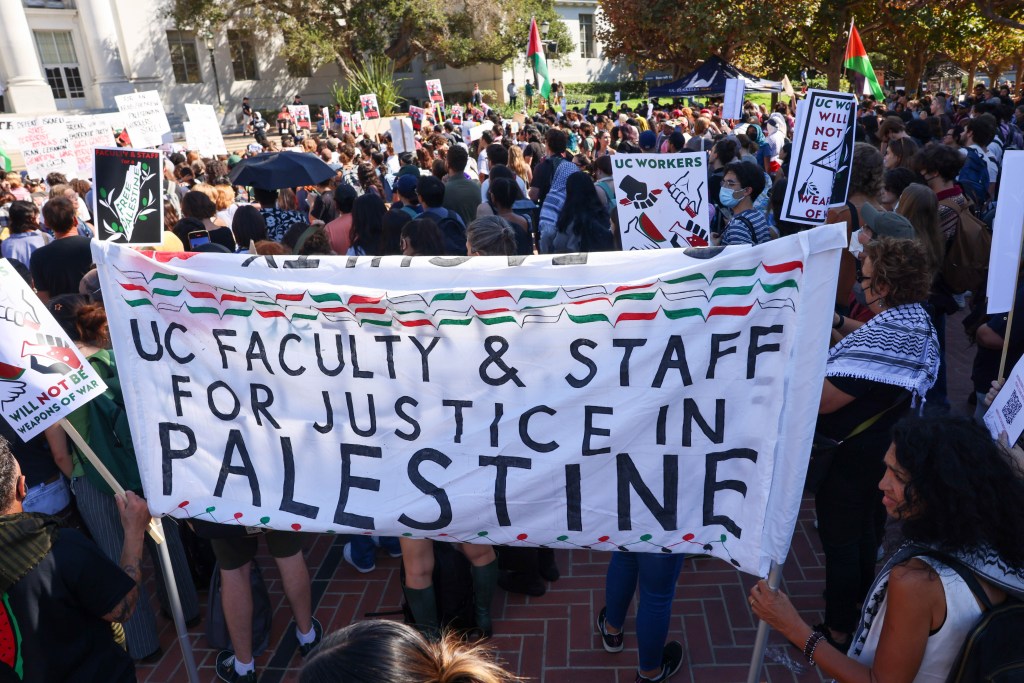
URGENT UPDATE: A national Muslim civil liberties organization has just filed a Public Records Act request with the University of California, Berkeley, demanding transparency regarding its cooperation with a federal investigation into antisemitism on campus. The Council on American-Islamic Relations (CAIR) submitted the request on November 21, 2023, following revelations that UC Berkeley shared the names of 160 students, staff, and faculty with federal authorities.
WHY THIS MATTERS NOW: The situation raises serious concerns about the privacy and rights of individuals within the university community, particularly in light of the current political climate. “UC Berkeley’s decision to hand personal information about its own community members to the federal government is a grave breach of trust,” stated Jeffrey Wang, CAIR’s civil rights managing attorney.
The U.S. Department of Education and Department of Justice have been investigating UC Berkeley since early 2025 to assess allegations of discrimination against students and faculty amid rising antisemitism on campuses nationwide. This scrutiny follows widespread protests demanding universities sever ties with Israel, spurred by the ongoing Israel-Hamas war that has claimed nearly 70,000 Palestinian and 1,200 Israeli lives, according to reports from the Associated Press.
The university’s decision to comply with federal authorities has been met with backlash from the academic community. Janet Gilmore, a university spokesperson, previously noted that the compliance was a legal obligation determined by the University of California’s systemwide Office of the General Counsel. Documents were shared with federal agencies in August, and affected individuals were informed in a September email.
In response to the records request, CAIR seeks clarity on what specific documents were handed over to the government, the legal rationale behind the sharing, and who authorized the cooperation. “Students and faculty should not have to wonder whether their university is quietly feeding their names into federal investigations because of what they believe, what they teach, or what protests they attended,” Wang emphasized.
The controversy has also sparked a strong response from student and faculty advocacy groups, including UC Berkeley Students for Justice in Palestine, alongside hundreds of academics globally who have expressed their concerns in a letter addressed to University of California President James Milliken and UC Berkeley Chancellor Richard Lyons.
As this situation continues to unfold, the demand for transparency from UC Berkeley highlights the urgent need for public institutions to respect the rights of their communities. The implications of this investigation could set a precedent for how universities handle sensitive information in politically charged environments.
WHAT’S NEXT: Stakeholders are closely watching how UC Berkeley responds to CAIR’s request and whether further actions will be taken by students and faculty in the wake of this investigation. The outcome could have lasting effects on student rights and institutional trust across the nation.
Stay tuned for more updates as this story develops.

Urgent Fire Erupts at NW OKC Apartments, Residents Describe Panic

Arlene Hartman, Beloved Community Member, Passes Away at 87

Urgent: Vehicle Fire Closes Two Lanes on I-215 in Salt Lake City

Knicks Dominate Raptors 116-94, Extend Home Win Streak to 10-1

New Hallmark Holiday Film ‘Christmas at the Catnip Café’ Debuts

Millville Woman Arrested After Threatening U-Haul Worker with Baton

Japan’s PM Takaichi Confirms Ongoing Fiscal Management Strategy

Bitcoin Plummets Below $88K Amid Tether Concerns, Urgent Warning

Tottenville Falls Short in PSAL 4A Title Bid Against Erasmus Hall

University of Hawaiʻi at Mānoa Joins $25.6M AI Initiative for Disaster Monitoring

IROS 2025 to Showcase Cutting-Edge Robotics Innovations in China

ALMA Discovers Companion Orbiting Red Giant Star π 1 Gruis

Stone Island’s Logo Worn by Extremists Sparks Brand Dilemma

Startup Liberate Bio Secures $31 Million for Next-Gen Therapies

Bravo Company Veterans Honored with Bronze Medals After 56 Years

Mary Morgan Jackson Crowned Little Miss National Peanut Festival 2025

Judge Considers Dismissal of Chelsea Housing Case Citing AI Flaws

Top Hyaluronic Acid Serums for Radiant Skin in 2025
-
Science4 weeks ago
University of Hawaiʻi at Mānoa Joins $25.6M AI Initiative for Disaster Monitoring
-
 Science2 months ago
IROS 2025 to Showcase Cutting-Edge Robotics Innovations in China
-
 Science2 weeks ago
ALMA Discovers Companion Orbiting Red Giant Star π 1 Gruis
-
 Lifestyle2 months ago
Stone Island’s Logo Worn by Extremists Sparks Brand Dilemma
-
 Health2 months ago
Startup Liberate Bio Secures $31 Million for Next-Gen Therapies
-
 World2 months ago
Bravo Company Veterans Honored with Bronze Medals After 56 Years
-
 Lifestyle2 months ago
Mary Morgan Jackson Crowned Little Miss National Peanut Festival 2025
-
 Politics2 months ago
Judge Considers Dismissal of Chelsea Housing Case Citing AI Flaws
-
 Health2 months ago
Top Hyaluronic Acid Serums for Radiant Skin in 2025
-

 Science2 months ago
Arizona State University Transforms Programming Education Approach
-

 Sports2 months ago
Yamamoto’s Mastery Leads Dodgers to 5-1 Victory in NLCS Game 2
-

 Sports2 months ago
Mel Kiper Jr. Reveals Top 25 Prospects for 2026 NFL Draft