
Top Stories
Breakthrough Coating Technology Triples Electrode Lifespan NOW

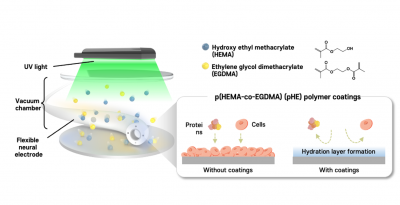
BREAKING: Researchers have just announced a groundbreaking coating technology that extends the lifespan of implanted electrodes from 1 month to over 3 months. This innovative development, led by Dr. Hyejeong Seong at the Korea Institute of Science and Technology (KIST), marks a significant leap forward in brain signal recording technology.
This urgent breakthrough was revealed in collaboration with Prof. Seongjun Park of Seoul National University, highlighting a major advancement in neuroscience. The new coating effectively prolongs the functionality of electrodes, paving the way for enhanced brain-computer interface applications and potential treatments for neurological disorders.
Why does this matter RIGHT NOW? Currently, implanted electrodes have a limited lifespan, often leading to premature failures that hinder critical research and treatment options. The ability to extend this duration can dramatically improve the quality of life for patients needing long-term monitoring and therapy.
The research team emphasizes that this technology could revolutionize how we approach brain signal recordings, allowing for more extensive and accurate data collection over time. This could lead to advancements in understanding brain functions and developing new therapies for conditions such as epilepsy, Parkinson’s disease, and other neurological disorders.
Developing: The findings are expected to have far-reaching implications for medical devices and brain research. As the team continues to refine this technology, further studies are anticipated in the coming months, making it a critical area to watch.
Officials from KIST, under President Sang-Rok Oh, and Seoul National University, led by President Hong-Lim Ryu, are optimistic about the potential applications of this advancement. The research was conducted at the Brain Convergence Research Division, emphasizing South Korea’s commitment to leading in innovative medical technologies.
Stay tuned for more updates on this urgent development that promises to reshape our understanding of brain science and improve patient care globally. The excitement surrounding this announcement is palpable, and experts urge the community to share this significant news widely.

Zelenskyy Meets Trump Sunday to Push for Urgent Peace Deal

Cam Thomas Returns with 30 Points, Nets Triumph Over Timberwolves

New Evidence Emerges in 2016 Death of Barbara Kendhammer

Remembering the 1983 Buffalo Explosion: 5 Firefighters, 2 Civilians Lost

North Texas Secures Historic Bowl Win Over San Diego State, 49-47

Rising Star Choo Young Woo Shares Heartfelt Memories of First Love

Natural Gas Leak Shuts Down 5 Freeway in Castaic, Urgent Response Underway

Derrick Jones Jr. Set to Return Sunday for Clippers vs. Pistons

BYU Triumphs in Pop Tarts Bowl, Surges to Historic 12-Game Win

New Gel Offers Hope for Regrowing Tooth Enamel in Dentistry

University of Hawaiʻi at Mānoa Joins $25.6M AI Initiative for Disaster Monitoring

ALMA Discovers Companion Orbiting Red Giant Star π 1 Gruis

Park Jung Min’s Endearing Moment with Hwasa Steals Show at Awards

IROS 2025 to Showcase Cutting-Edge Robotics Innovations in China

Stone Island’s Logo Worn by Extremists Sparks Brand Dilemma

Sampson County Celebrates Susie Faison’s 100th Birthday Milestone

Mary Morgan Jackson Crowned Little Miss National Peanut Festival 2025

Startup Liberate Bio Secures $31 Million for Next-Gen Therapies
-
 Health2 months ago
New Gel Offers Hope for Regrowing Tooth Enamel in Dentistry
-
Science2 months ago
University of Hawaiʻi at Mānoa Joins $25.6M AI Initiative for Disaster Monitoring
-
 Science1 month ago
ALMA Discovers Companion Orbiting Red Giant Star π 1 Gruis
-
 Lifestyle1 month ago
Park Jung Min’s Endearing Moment with Hwasa Steals Show at Awards
-
 Science2 months ago
IROS 2025 to Showcase Cutting-Edge Robotics Innovations in China
-
 Lifestyle2 months ago
Stone Island’s Logo Worn by Extremists Sparks Brand Dilemma
-
 Lifestyle2 months ago
Sampson County Celebrates Susie Faison’s 100th Birthday Milestone
-
 Lifestyle2 months ago
Mary Morgan Jackson Crowned Little Miss National Peanut Festival 2025
-
 Health2 months ago
Startup Liberate Bio Secures $31 Million for Next-Gen Therapies
-

 Health2 months ago
Top Hyaluronic Acid Serums for Radiant Skin in 2025
-

 Politics2 months ago
Judge Considers Dismissal of Chelsea Housing Case Citing AI Flaws
-

 Science2 months ago
Arizona State University Transforms Programming Education Approach