
Politics
Protests Erupt Over Academic Freedom Crisis at City St George’s

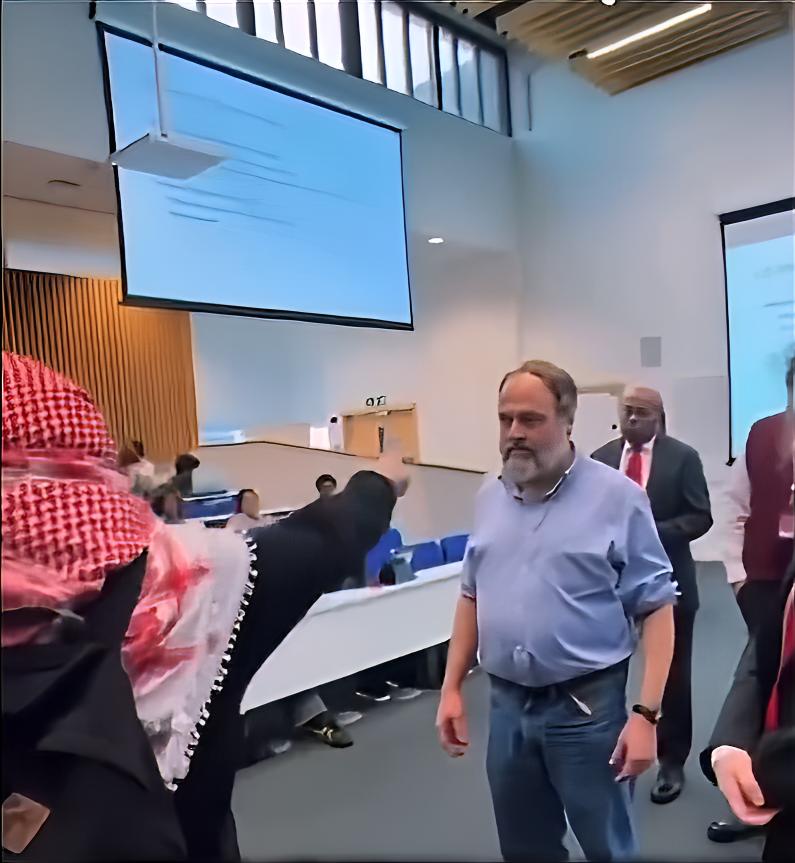
A significant protest unfolded outside City St George’s, University of London, targeting Professor Michael Ben-Gad, a prominent economist. The demonstration, organized by a group named “City Action for Palestine,” follows a series of escalating campaigns against Ben-Gad, primarily linked to his service in the Israel Defense Forces (IDF) during the early 1980s. This service is a common requirement for Jewish Israelis, yet it has become a focal point for criticism.
The protest gained international attention after Iranian and Turkish state television broadcast high-quality footage of disturbances during one of Ben-Gad’s lectures. Protestors, some masked, accused him of being a terrorist and a war criminal, citing his academic background, including his education at the Hebrew University of Jerusalem and prior lecturing at the University of Haifa. These claims have raised alarms about the state of academic freedom in the UK.
Ben-Gad, whose family suffered during the Holocaust, expressed pride in his military service and has resisted calls for his resignation. He declined an offer of paid leave, insisting on his right to continue teaching and fulfilling his university obligations. The protest coincided with attempts—backed by the Feminist Society—to cancel a debate at the London School of Economics concerning Hamas’s violence against Israeli civilians, which occurred on October 7, 2023.
The swift response from Sir Anthony Finkelstein, President of City St George’s, was commendable. Upon learning of the protests, he promptly expressed his support for Ben-Gad and reached out to other Israeli academics at the university. This proactive stance has been recognized as a model for university leadership in times of crisis.
Discussions among fellow advocates for academic freedom, including Alice Sullivan, Abhishek Saha, and Michelle Shipworth, revealed concerns that the situation could escalate similarly to the campaign that led to the departure of academic Kathleen Stock from the University of Sussex over her gender-critical views. The incidents involving Ben-Gad and Stock highlight a troubling trend in UK academia.
Reports over the past decade, particularly following the events of October 7, have indicated rising levels of antisemitism on UK campuses. While Ben-Gad notes that most students, including many Muslims, do not share the protestors’ sentiments, it appears a vocal minority among academic staff and student unions drives the hostility. This group is often characterized by activist-oriented agendas that challenge established academic norms.
The ongoing campaign against Ben-Gad raises questions about the broader environment within UK universities. The atmosphere has been described as one in which rational inquiry is stifled by ideological dogma. This climate has been exacerbated by calls to “decolonise the curriculum” and the rise of bureaucratic systems focused on equity and diversity that can sometimes limit open debate.
In response to these issues, the Higher Education (Freedom of Speech) Act 2023 was enacted to safeguard free speech within academic settings. The legislation aims to address political discrimination in hiring and promotion practices, recognizing that advancement in academia often depends on conforming to prevailing ideologies.
While not all academic disciplines face the same pressures, there is evidence that leading journals and funding bodies in certain fields, particularly in the arts and social sciences, may favor specific ideological positions. Reports of academics adjusting their views to align with dominant narratives for career survival underscore the challenges faced by those who express dissenting opinions.
The situation surrounding Michael Ben-Gad serves as a critical case study in the ongoing debate over academic freedom and the increasing polarization within academic institutions. As universities grapple with these challenges, the need for a cultural shift that promotes genuine discourse over ideological conformity becomes ever more urgent. The outcome of this situation may set important precedents for the future of academic freedom in the UK and beyond.

Church Members Rally Together After Thanksgiving Day Fire

Trump Promises to Release MRI Results from October Scan

U.S. Investors Boost Canadian Oil Firms Despite Falling Prices

Nick Jonas Unveils Solo Album Title and Release Date at Las Vegas Brunch

Researchers Call for Low-Alcohol Drink Label Changes for Pregnant Women

Community Aims for Record in World’s Largest Christmas Cookie Exchange

Mayor Appoints Alan Wong to District 4 Supervisor Position

Mayor Names Alan Wong as New District 4 Supervisor Amid Controversy

South Korea Takes Urgent Action to Stabilize FX Market

University of Hawaiʻi at Mānoa Joins $25.6M AI Initiative for Disaster Monitoring

IROS 2025 to Showcase Cutting-Edge Robotics Innovations in China

ALMA Discovers Companion Orbiting Red Giant Star π 1 Gruis

Stone Island’s Logo Worn by Extremists Sparks Brand Dilemma

Startup Liberate Bio Secures $31 Million for Next-Gen Therapies

Mary Morgan Jackson Crowned Little Miss National Peanut Festival 2025

Bravo Company Veterans Honored with Bronze Medals After 56 Years

Judge Considers Dismissal of Chelsea Housing Case Citing AI Flaws

Top Hyaluronic Acid Serums for Radiant Skin in 2025
-
Science4 weeks ago
University of Hawaiʻi at Mānoa Joins $25.6M AI Initiative for Disaster Monitoring
-
 Science2 months ago
IROS 2025 to Showcase Cutting-Edge Robotics Innovations in China
-
 Science2 weeks ago
ALMA Discovers Companion Orbiting Red Giant Star π 1 Gruis
-
 Lifestyle2 months ago
Stone Island’s Logo Worn by Extremists Sparks Brand Dilemma
-
 Health2 months ago
Startup Liberate Bio Secures $31 Million for Next-Gen Therapies
-
 Lifestyle2 months ago
Mary Morgan Jackson Crowned Little Miss National Peanut Festival 2025
-
 World2 months ago
Bravo Company Veterans Honored with Bronze Medals After 56 Years
-
 Politics2 months ago
Judge Considers Dismissal of Chelsea Housing Case Citing AI Flaws
-
 Health2 months ago
Top Hyaluronic Acid Serums for Radiant Skin in 2025
-

 Science2 months ago
Arizona State University Transforms Programming Education Approach
-

 Sports2 months ago
Yamamoto’s Mastery Leads Dodgers to 5-1 Victory in NLCS Game 2
-

 Business2 months ago
Truist Financial Increases Stake in Global X Variable Rate ETF