
Science
Understanding Free Radicals: Harmful Agents or Essential Allies?

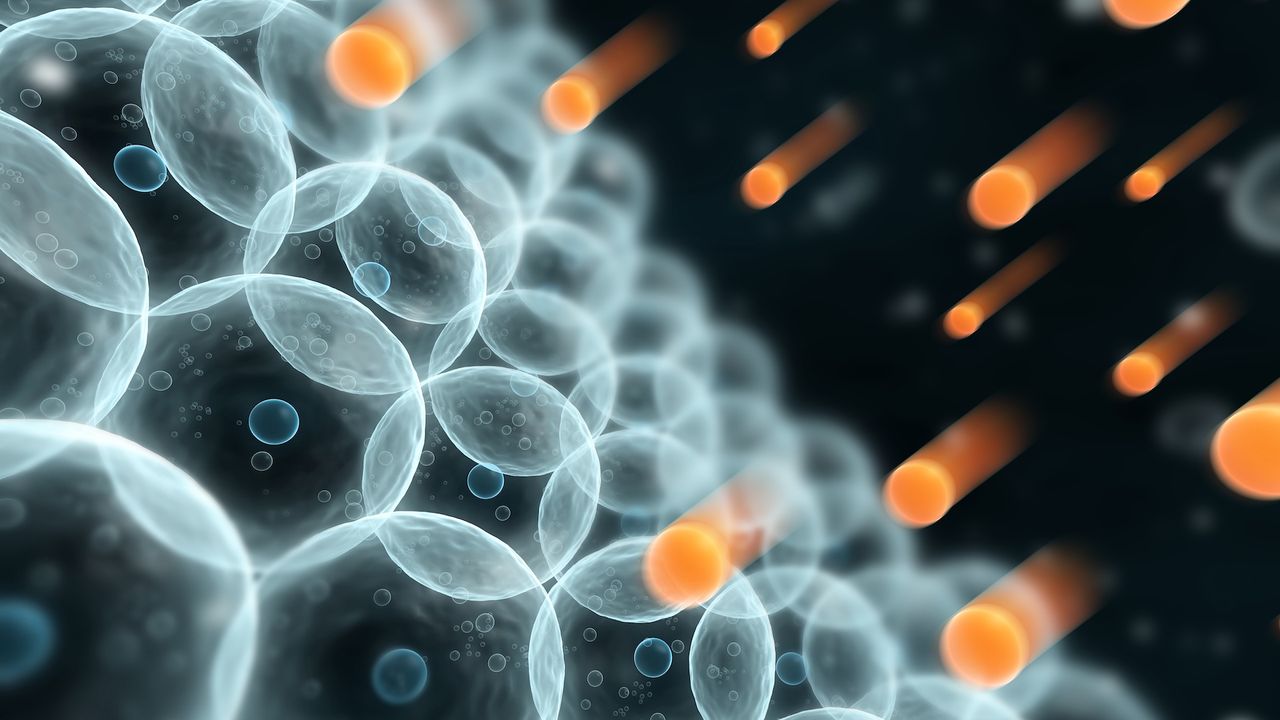
Free radicals, often vilified for their role in health issues, are not entirely detrimental. These reactive molecules, known as reactive oxygen species (ROS), have been linked to cancer, aging, and degenerative diseases such as Alzheimer’s. Yet, the human body continuously produces free radicals through essential processes like respiration and immune defense. This raises the question: are free radicals harmful, or do they have unrecognized benefits?
At excessive levels, free radicals can indeed pose significant risks. They contain an unpaired electron that seeks stability by stealing from nearby molecules, which can damage cell membranes, proteins, and DNA. Michael Murphy, a mitochondrial biologist at the University of Cambridge, explains, “If a radical rips away an electron, it leaves an unpaired electron behind, and that will react on further. So you often end up with a nasty chain reaction.”
Despite their potential for harm, free radicals also play critical roles in the body. For instance, the immune system utilizes them to combat pathogens, and certain single-electron species like nitric oxide (NO) function as signaling molecules between cells. Murphy states, “Some enzymes use free radical chemistry inside their active sites because that gives them the ability to do chemistry that’s more difficult.” Thus, free radicals are integral to fundamental biological processes, including respiration and oxygen transport.
Around 90% of the free radicals in the body are produced by mitochondria, the powerhouse of cells. Michael Ristow, a longevity researcher at Charité University Medicine Berlin, notes that during respiration, which breaks down glucose and oxygen to release energy, a small amount of radicals is released due to electron leakage. “Electrons come off these enzymes and react with oxygen to form an oxygen free radical called superoxide,” Murphy elaborates. This radical can lead to the formation of hydrogen peroxide, which in turn can produce the highly reactive hydroxyl radical.
The dangers of free radicals become pronounced only when their levels exceed the body’s natural defensive capabilities. Ristow emphasizes that the body has evolved numerous mechanisms to mitigate the effects of free radicals. Antioxidants found in a healthy diet, such as vitamins C and E, can neutralize these reactive particles. Additionally, dedicated enzymes convert free radicals into less harmful substances, and the glutathione system acts as a sponge, absorbing excess radicals before being recycled.
Certain lifestyle and environmental factors can elevate free radical production. For example, exposure to ultraviolet (UV) light can lead to increased radical levels through a complex chemical reaction. Murphy explains, “The UV can react with what are called photosensitizers… then it will transfer that energy often to oxygen.” This can create more reactive forms of oxygen that negatively impact cellular structures, leading to tissue damage and increasing the risk of diseases such as cancer.
Interestingly, emerging evidence suggests that controlled levels of free radicals can be beneficial, a concept known as hormesis. Ristow states, “The response to exposure to free radicals on a systemic level is typically increased response capacity against free radicals.” This concept suggests that exposure to certain stressors, including free radicals, can enhance the body’s overall resilience to various forms of damage.
Exercise serves as an excellent example of how free radicals can be advantageous. Ristow points out that if antioxidants are taken before or during exercise, the beneficial effects of the workout on health parameters such as endurance and muscle gain can be significantly diminished. “The entire human body is then better prepared, not only against free radicals, but also toxic food components, UV exposure and other sources of damage,” he explains.
The relationship between free radicals and health is complex and nuanced. While they can cause significant harm when present in excess, their roles in cellular processes and potential benefits should not be overlooked. Ristow concludes, “It’s a balance. But if ROS really were only damaging, then evolution would have ruled them out!” Understanding this balance is crucial for a holistic view of health and disease management.
This article is for informational purposes only and is not intended to provide medical or dietary advice.

Bitcoin Plummets Below $88K Amid Tether Concerns, Urgent Warning

Tottenville Falls Short in PSAL 4A Title Bid Against Erasmus Hall

Urgent Study Reveals Shark Teeth Insights to Combat Extinction

Church Members Rally Together After Thanksgiving Day Fire

Trump Promises to Release MRI Results from October Scan

U.S. Investors Boost Canadian Oil Firms Despite Falling Prices

Nick Jonas Unveils Solo Album Title and Release Date at Las Vegas Brunch

Researchers Call for Low-Alcohol Drink Label Changes for Pregnant Women

Community Aims for Record in World’s Largest Christmas Cookie Exchange

University of Hawaiʻi at Mānoa Joins $25.6M AI Initiative for Disaster Monitoring

IROS 2025 to Showcase Cutting-Edge Robotics Innovations in China

ALMA Discovers Companion Orbiting Red Giant Star π 1 Gruis

Stone Island’s Logo Worn by Extremists Sparks Brand Dilemma

Startup Liberate Bio Secures $31 Million for Next-Gen Therapies

Bravo Company Veterans Honored with Bronze Medals After 56 Years

Mary Morgan Jackson Crowned Little Miss National Peanut Festival 2025

Judge Considers Dismissal of Chelsea Housing Case Citing AI Flaws

Top Hyaluronic Acid Serums for Radiant Skin in 2025
-
Science4 weeks ago
University of Hawaiʻi at Mānoa Joins $25.6M AI Initiative for Disaster Monitoring
-
 Science2 months ago
IROS 2025 to Showcase Cutting-Edge Robotics Innovations in China
-
 Science2 weeks ago
ALMA Discovers Companion Orbiting Red Giant Star π 1 Gruis
-
 Lifestyle2 months ago
Stone Island’s Logo Worn by Extremists Sparks Brand Dilemma
-
 Health2 months ago
Startup Liberate Bio Secures $31 Million for Next-Gen Therapies
-
 World2 months ago
Bravo Company Veterans Honored with Bronze Medals After 56 Years
-
 Lifestyle2 months ago
Mary Morgan Jackson Crowned Little Miss National Peanut Festival 2025
-
 Politics2 months ago
Judge Considers Dismissal of Chelsea Housing Case Citing AI Flaws
-
 Health2 months ago
Top Hyaluronic Acid Serums for Radiant Skin in 2025
-

 Sports2 months ago
Yamamoto’s Mastery Leads Dodgers to 5-1 Victory in NLCS Game 2
-

 Science2 months ago
Arizona State University Transforms Programming Education Approach
-

 Sports2 months ago
Mel Kiper Jr. Reveals Top 25 Prospects for 2026 NFL Draft