
Politics
Johnson Sworn in as President; Supreme Court Faces Change

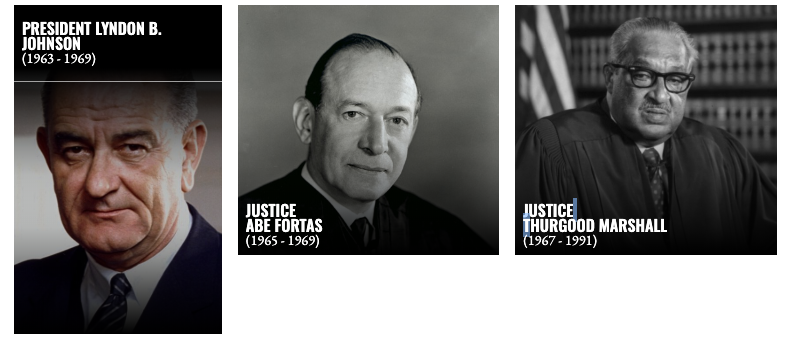
On November 22, 1963, Lyndon B. Johnson was sworn in as President of the United States following the assassination of John F. Kennedy. This pivotal moment not only marked a significant transition in national leadership but also set the stage for changes within the United States Supreme Court. Over his tenure, President Johnson would appoint two influential Justices: Abe Fortas and Thurgood Marshall.
The events of that day unfolded in the backdrop of a national tragedy. As the country mourned the loss of President Kennedy, Johnson’s ascension to the presidency came with the immediate need for stability and direction. His first actions included not only addressing the nation but also contemplating crucial appointments to the Supreme Court, which plays a vital role in interpreting the Constitution and shaping American law.
Impact on the Supreme Court
Johnson’s appointments would have lasting implications for the judicial landscape of the United States. Abe Fortas, a former law partner of Johnson and a close adviser, was appointed to the Supreme Court in 1965. His judicial philosophy leaned towards a more liberal interpretation of the law, particularly in matters concerning civil rights and individual liberties.
The appointment of Thurgood Marshall in 1967 marked a historic milestone. Marshall became the first African American Justice on the Supreme Court. His appointment symbolized a significant step towards racial equality in the United States, reflecting the broader civil rights movement of the era. Johnson’s decision to appoint Marshall was as much about justice as it was about representation, showcasing a commitment to diversity within the highest court.
These appointments occurred during a period of profound social change in the United States. The Supreme Court, under the influence of Johnson’s choices, would later deliver landmark rulings that addressed civil rights, voting rights, and the rights of the accused.
Legacy of Johnson’s Presidency
President Johnson’s legacy is often intertwined with his domestic agenda known as the “Great Society,” which aimed to eliminate poverty and racial injustice. His Supreme Court appointments were a crucial part of this vision, as they helped to solidify a judiciary that reflected the values of equality and justice.
As the nation reflects on the events of November 22, 1963, it is essential to recognize the profound impact of Johnson’s presidency on the Supreme Court. The appointments of Abe Fortas and Thurgood Marshall not only altered the composition of the Court but also influenced the trajectory of American law and civil rights for decades to come.
In conclusion, the swearing-in of Lyndon B. Johnson on that fateful day marked a critical juncture in American history, setting into motion a series of changes that would shape the future of the Supreme Court and the nation itself.

Robinhood Stock Surges 2.5% Today Amid Tech Market Recovery

Philadelphia’s Earth Month Kicks Off with Free Events in Parks

GSK’s Inhaler Decision Sparks Health Concerns for Children

Bradford’s Fish Fry Fridays Offer Community Spirit and Flavor

Speculation Rises on Shutdowns During Trump’s Potential Presidency

Samsung Galaxy Watch 9 to Feature Larger Battery, Report Reveals

Inventors Find New Purpose Through Unconventional Paths

UConn Huskies Aim for Back-to-Back Titles in 2026 NCAA Tournament

U.S. Mine Countermeasure Ships Dock in Malaysia for Logistics Stop

University of Hawaiʻi at Mānoa Joins $25.6M AI Initiative for Disaster Monitoring

$2.2 Million Boost for Cancer Research and Training in Hawaiʻi

ALMA Discovers Companion Orbiting Red Giant Star π 1 Gruis

Sacituzumab Govitecan Shows Promise for HR+/HER2− Breast Cancer

币安人生 Sees $15.92 Million in Trading Volume Amid Market Fluctuations

New Gel Offers Hope for Regrowing Tooth Enamel in Dentistry

CAVA Group Shares Surge 5.1% Amid Mixed Analyst Ratings

Christian Bale in Talks to Join Leonardo DiCaprio in Heat 2

Supreme Court to Review Birthright Citizenship for Children of Immigrants
-
Science9 months ago
University of Hawaiʻi at Mānoa Joins $25.6M AI Initiative for Disaster Monitoring
-
 Health8 months ago
$2.2 Million Boost for Cancer Research and Training in Hawaiʻi
-
 Science9 months ago
ALMA Discovers Companion Orbiting Red Giant Star π 1 Gruis
-
 Health7 months ago
Sacituzumab Govitecan Shows Promise for HR+/HER2− Breast Cancer
-
Politics5 months ago
币安人生 Sees $15.92 Million in Trading Volume Amid Market Fluctuations
-
 Health9 months ago
New Gel Offers Hope for Regrowing Tooth Enamel in Dentistry
-
 Business8 months ago
CAVA Group Shares Surge 5.1% Amid Mixed Analyst Ratings
-
 Entertainment9 months ago
Christian Bale in Talks to Join Leonardo DiCaprio in Heat 2
-
 Politics8 months ago
Supreme Court to Review Birthright Citizenship for Children of Immigrants
-

 Lifestyle9 months ago
Art Deco and Traditional Designs Set to Transform Homes in 2026
-

 Lifestyle8 months ago
Fernando Mendoza Secures Maxwell and O’Brien Awards Ahead of Heisman
-

 World8 months ago
Swiss Residents Reject 50% Inheritance Tax on Wealthy