
Science
Scholars Challenge Long-Held Beliefs About Vikings and Norse Mythology

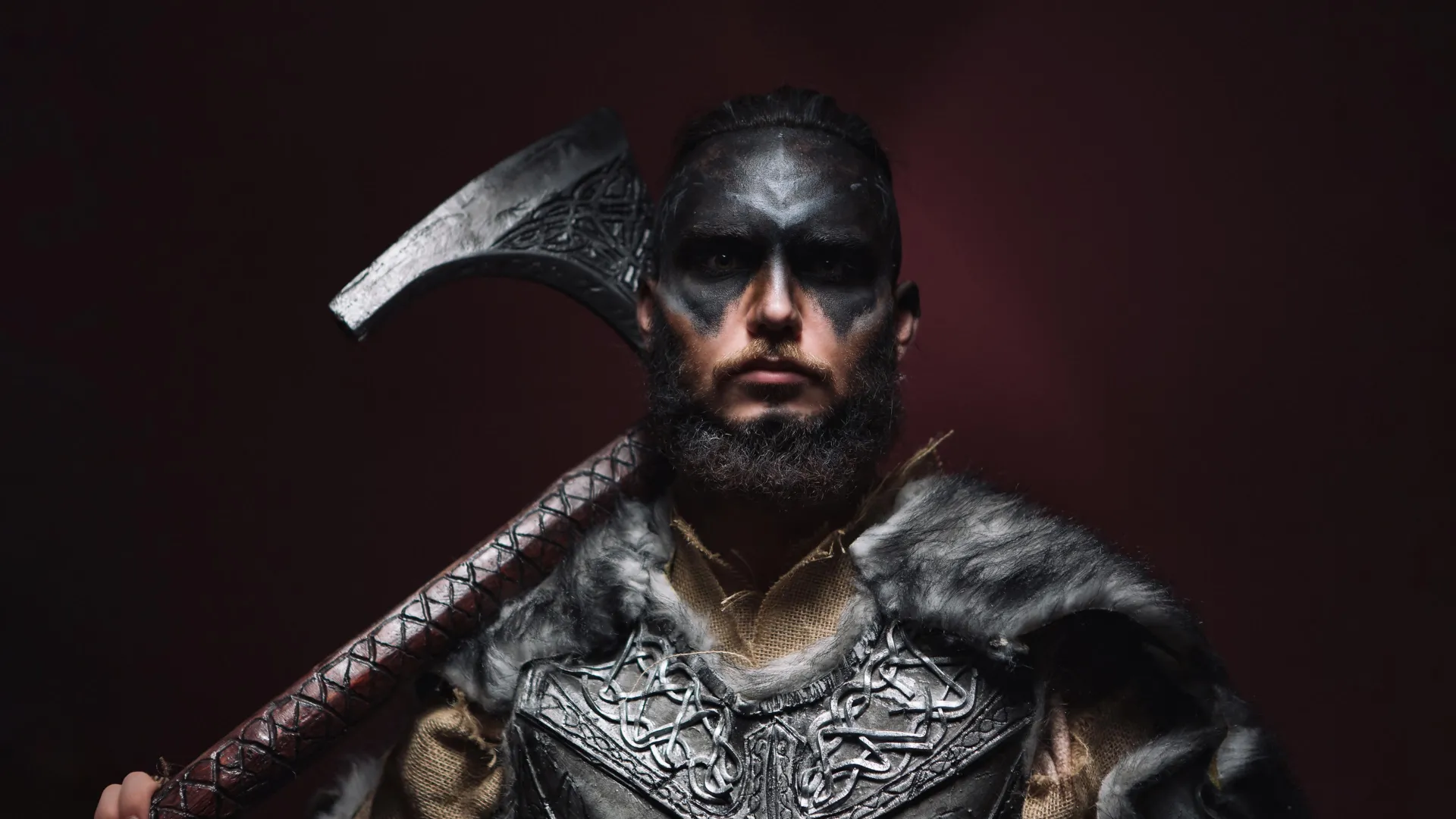
Recent research from scholars at the University of Münster reveals that many commonly accepted beliefs about Vikings and their culture are not supported by concrete historical evidence. The findings suggest that our understanding of Vikings and Norse mythology has been significantly shaped by later medieval sources, which often reflect contemporary worldviews rather than the realities of the Viking Age.
According to Roland Scheel, a scholar involved in the research at the Cluster of Excellence “Religion and Politics,” most narratives about Vikings derive from Christian scholars who documented these cultures over a century after the Viking Age, which spanned from the 8th to the 11th century. He explains, “Besides brief runic inscriptions, no written texts from the original period have been preserved.”
The image of Vikings as fearless adventurers and skilled seafarers has become ingrained in popular culture through films, television series, and video games. Yet, Scheel emphasizes that the historical record presents a far more complex picture. He notes that many narratives presented in museums and media often overlook that the surviving texts represent a “memorialized history” rather than an accurate account of Viking life.
The modern perception of Vikings has led to a largely positive association with pre-Christian Scandinavian society, which is often credited with having a unique warrior culture and a relatively favorable position for women. This idealized view continues to shape contemporary identity formation, particularly among neo-pagan groups who see themselves as living embodiments of Scandinavian paganism.
“These groups often contrast their beliefs with monotheistic religions, such as Christianity,” Scheel points out. Yet, he cautions that this interpretation frequently glosses over the violence associated with Viking raids. The romanticized view of Vikings starkly contrasts with modern perceptions of other historical events, such as the Crusades, which are now widely linked to coercion and brutality.
The influence of Viking narratives extends into various spheres, including political projects. For example, the Council of Europe has established the Viking Cultural Route, highlighting numerous historical sites and presenting Viking heritage as a unifying element of European identity.
In examining these themes, Scheel and his colleague, Simon Hauke, are investigating how interpretations of “pagan North” have evolved. Their research spans centuries, from the 13th-century “Edda” by Icelandic scholar Snorri Sturluson to references made by political figures such as Otto von Bismarck, who used the “Edda” in speeches to the Reichstag.
The researchers assert that understanding how different eras imagined Scandinavian paganism reveals much about their goals and societal contexts. “Our research allows us to peek behind the scenes of our own knowledge,” Scheel adds, highlighting the political misuse of Norse mythology at various points in history, including the exploitation by the Volk movement and the National Socialists to support racial ideologies.
Despite lingering connections to right-wing extremism, contemporary interpretations of Norse mythology are diverse. The cultural legacy of these myths continues to inspire a wide range of artistic expressions. For instance, Richard Wagner’s opera “The Ring of the Nibelung” has significantly influenced modern perceptions of Norse mythology, particularly the character of the Valkyrie, who is often depicted as a feminine warrior.
Hauke emphasizes that the depiction of Valkyries in Wagner’s work simplifies their roles as described in Old Norse texts. “Valkyries in these sources serve various functions, including selecting fallen warriors and even acting as barmaids in the afterlife,” he notes. The complex nature of these characters is often overshadowed by contemporary interpretations that focus solely on their warrior aspects.
The ongoing research project, titled “Paganisations: Memorialised Paganism as an Element of Scandinavian and European Identities,” aims to explore the long history of Scandinavian paganism and its interpretations. A forthcoming conference, “Imagining Nordic Paganism: Cultural Memories and Scholarly Thought Since the Middle Ages,” will feature international experts discussing topics such as gender relations within paganism and the role of paganism in shaping modern identities.
As scholars continue to unravel the intricate layers of Viking history and mythology, their work sheds light on how historical narratives shape cultural identity and influence contemporary society.

Tottenville Falls Short in PSAL 4A Title Bid Against Erasmus Hall

Urgent Study Reveals Shark Teeth Insights to Combat Extinction

Church Members Rally Together After Thanksgiving Day Fire

Trump Promises to Release MRI Results from October Scan

U.S. Investors Boost Canadian Oil Firms Despite Falling Prices

Nick Jonas Unveils Solo Album Title and Release Date at Las Vegas Brunch

Researchers Call for Low-Alcohol Drink Label Changes for Pregnant Women

Community Aims for Record in World’s Largest Christmas Cookie Exchange

Mayor Appoints Alan Wong to District 4 Supervisor Position

University of Hawaiʻi at Mānoa Joins $25.6M AI Initiative for Disaster Monitoring

IROS 2025 to Showcase Cutting-Edge Robotics Innovations in China

ALMA Discovers Companion Orbiting Red Giant Star π 1 Gruis

Stone Island’s Logo Worn by Extremists Sparks Brand Dilemma

Startup Liberate Bio Secures $31 Million for Next-Gen Therapies

Bravo Company Veterans Honored with Bronze Medals After 56 Years

Mary Morgan Jackson Crowned Little Miss National Peanut Festival 2025

Judge Considers Dismissal of Chelsea Housing Case Citing AI Flaws

Top Hyaluronic Acid Serums for Radiant Skin in 2025
-
Science4 weeks ago
University of Hawaiʻi at Mānoa Joins $25.6M AI Initiative for Disaster Monitoring
-
 Science2 months ago
IROS 2025 to Showcase Cutting-Edge Robotics Innovations in China
-
 Science2 weeks ago
ALMA Discovers Companion Orbiting Red Giant Star π 1 Gruis
-
 Lifestyle2 months ago
Stone Island’s Logo Worn by Extremists Sparks Brand Dilemma
-
 Health2 months ago
Startup Liberate Bio Secures $31 Million for Next-Gen Therapies
-
 World2 months ago
Bravo Company Veterans Honored with Bronze Medals After 56 Years
-
 Lifestyle2 months ago
Mary Morgan Jackson Crowned Little Miss National Peanut Festival 2025
-
 Politics2 months ago
Judge Considers Dismissal of Chelsea Housing Case Citing AI Flaws
-
 Health2 months ago
Top Hyaluronic Acid Serums for Radiant Skin in 2025
-

 Sports2 months ago
Yamamoto’s Mastery Leads Dodgers to 5-1 Victory in NLCS Game 2
-

 Science2 months ago
Arizona State University Transforms Programming Education Approach
-

 Sports2 months ago
Mel Kiper Jr. Reveals Top 25 Prospects for 2026 NFL Draft