
World
Los Angeles Startup Inversion Aims to Revolutionize Orbital Transport

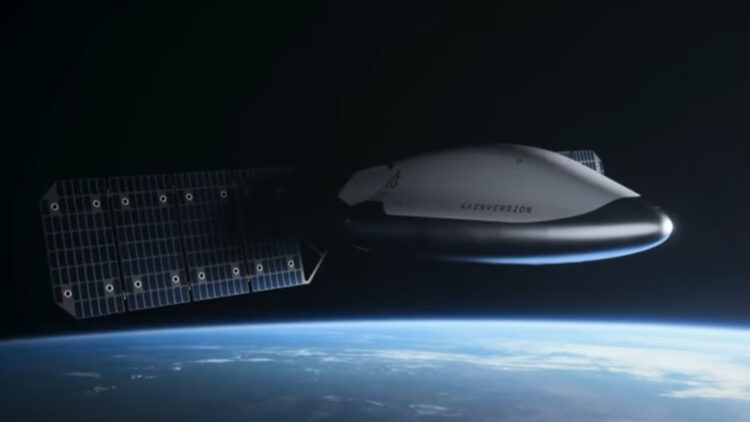
A small aerospace startup based in Los Angeles, called Inversion, is working on an innovative spacecraft named Arc that aims to transport cargo anywhere on Earth in approximately one hour. This ambitious project seeks to position itself as a competitive alternative to established players in the space industry, including Elon Musk. By leveraging advancements in robotics, machine learning, and artificial intelligence, Inversion envisions a new era in logistics that capitalizes on orbital transport technology.
The Arc spacecraft is designed as a compact delivery system, measuring about 8 feet tall and 4 feet wide. Unlike traditional aircraft, Arc will remain in orbit as a standby delivery capsule, poised for rapid deployment. Upon activation, it will re-enter the atmosphere and land safely using a parachute, capable of touching down on solid ground, water, or snow without compromising its cargo.
Inversion’s primary focus is on speed, particularly for high-stakes deliveries that cannot afford delays. This need arises in contexts of conflict, humanitarian crises, or natural disasters, where conventional shipping routes may be inaccessible or too slow. The startup aims to provide a solution for urgent deliveries that traditional logistics cannot efficiently handle. By potentially reaching any location on Earth in less than an hour, Arc could redefine how essential goods are transported globally.
Transforming Logistics with Orbital Infrastructure
According to Inversion, the Arc spacecraft represents the dawn of a logistics model centered around orbital infrastructure. The initiative seeks to establish a network of small spacecraft capable of quick global travel, descending into the atmosphere only when necessary. If successful, this system could complement existing transportation methods, providing an alternative when ships, trucks, and airplanes fall short.
Currently, Inversion operates with a modest team of 25 employees, all of whom possess a strong background in space engineering. The company officially launched in October 2025 after several years of development, during which the team created an earlier prototype, known as Ray. The prototype was developed for approximately $1 million, a relatively low investment for a space project, which Inversion believes demonstrates the potential for affordable advanced orbital transport systems.
Plans are already in place for testing the Arc spacecraft in 2026. These tests will be critical in assessing whether Arc can withstand the complete mission profile, including launch, orbital maintenance, atmospheric re-entry, and precise landing while carrying cargo.
Challenges Ahead for Inversion
Despite the promising technology, Inversion faces numerous hurdles, including flight tests and regulatory approvals. Potential clients will weigh factors such as cost, reliability, and safety when deciding whether to adopt Arc over traditional cargo transport options.
The excitement surrounding the project is palpable, and many are eager to see if 2026 will mark the entry of a revolutionary orbital transport system into the cargo industry. Inversion’s success could reshape the logistics landscape, offering new possibilities for delivering goods in a world where time is often of the essence.

Church Members Rally Together After Thanksgiving Day Fire

Trump Promises to Release MRI Results from October Scan

U.S. Investors Boost Canadian Oil Firms Despite Falling Prices

Nick Jonas Unveils Solo Album Title and Release Date at Las Vegas Brunch

Researchers Call for Low-Alcohol Drink Label Changes for Pregnant Women

Community Aims for Record in World’s Largest Christmas Cookie Exchange

Mayor Appoints Alan Wong to District 4 Supervisor Position

Mayor Names Alan Wong as New District 4 Supervisor Amid Controversy

South Korea Takes Urgent Action to Stabilize FX Market

University of Hawaiʻi at Mānoa Joins $25.6M AI Initiative for Disaster Monitoring

IROS 2025 to Showcase Cutting-Edge Robotics Innovations in China

ALMA Discovers Companion Orbiting Red Giant Star π 1 Gruis

Stone Island’s Logo Worn by Extremists Sparks Brand Dilemma

Startup Liberate Bio Secures $31 Million for Next-Gen Therapies

Bravo Company Veterans Honored with Bronze Medals After 56 Years

Mary Morgan Jackson Crowned Little Miss National Peanut Festival 2025

Judge Considers Dismissal of Chelsea Housing Case Citing AI Flaws

Top Hyaluronic Acid Serums for Radiant Skin in 2025
-
Science4 weeks ago
University of Hawaiʻi at Mānoa Joins $25.6M AI Initiative for Disaster Monitoring
-
 Science2 months ago
IROS 2025 to Showcase Cutting-Edge Robotics Innovations in China
-
 Science2 weeks ago
ALMA Discovers Companion Orbiting Red Giant Star π 1 Gruis
-
 Lifestyle2 months ago
Stone Island’s Logo Worn by Extremists Sparks Brand Dilemma
-
 Health2 months ago
Startup Liberate Bio Secures $31 Million for Next-Gen Therapies
-
 World2 months ago
Bravo Company Veterans Honored with Bronze Medals After 56 Years
-
 Lifestyle2 months ago
Mary Morgan Jackson Crowned Little Miss National Peanut Festival 2025
-
 Politics2 months ago
Judge Considers Dismissal of Chelsea Housing Case Citing AI Flaws
-
 Health2 months ago
Top Hyaluronic Acid Serums for Radiant Skin in 2025
-

 Sports2 months ago
Yamamoto’s Mastery Leads Dodgers to 5-1 Victory in NLCS Game 2
-

 Science2 months ago
Arizona State University Transforms Programming Education Approach
-

 Sports2 months ago
Mel Kiper Jr. Reveals Top 25 Prospects for 2026 NFL Draft