
Science
Innovative Device Uses Gyroscopes to Measure Earth’s Rotation

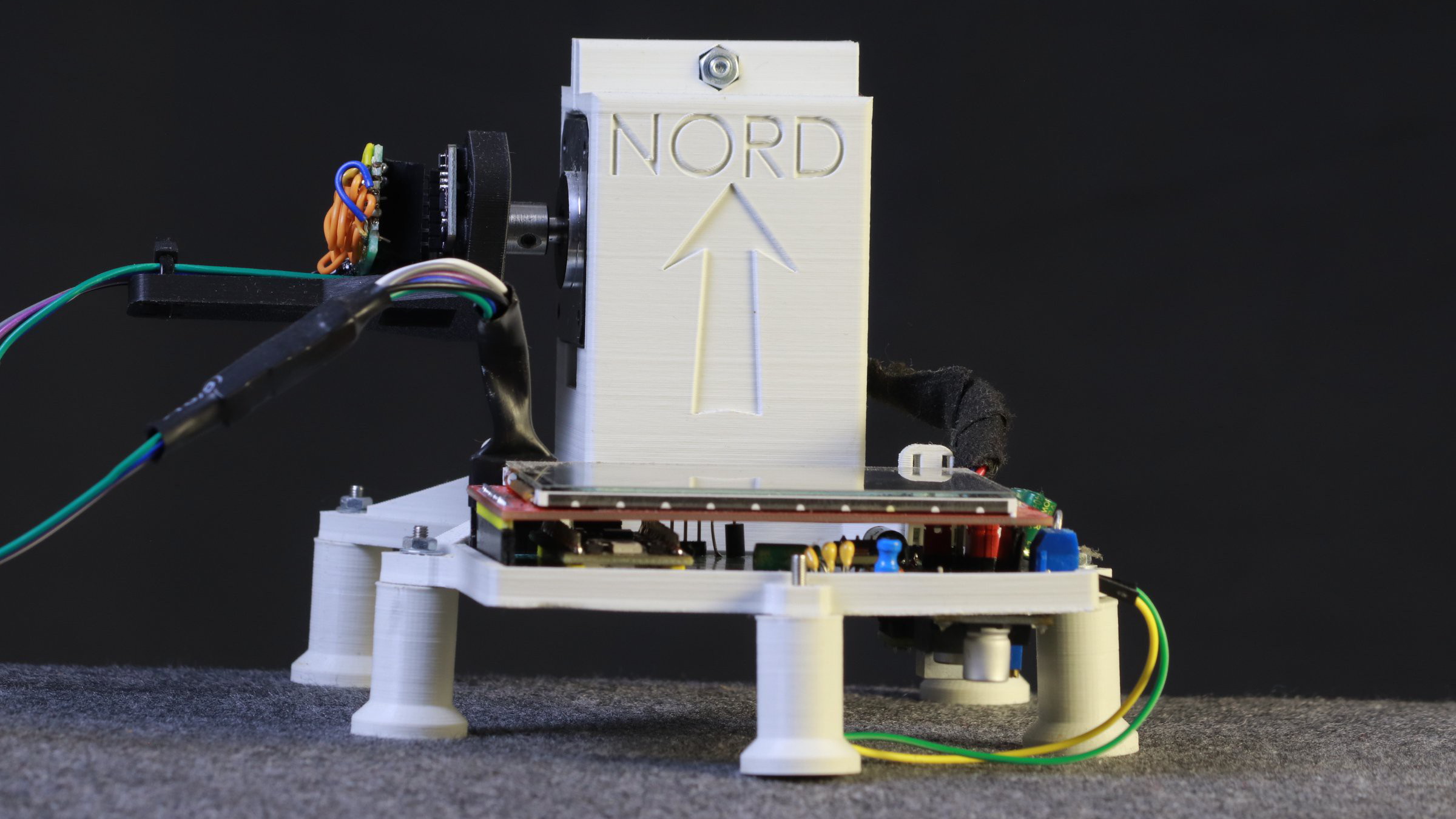
A conversation with a flat-earth believer has inspired an innovative device that measures the Earth’s rotation using two gyroscopes. Developed by Bertrand Selva, this apparatus simplifies the detection of Earth’s rotation and demonstrates a practical application of gyroscopic technology.
How the Device Works
The device is built around a pair of BMI160 MEMS gyroscopes, which are capable of detecting angular velocity with a minimum significant bit of 0.0038 degrees per second. In comparison, the Earth rotates at approximately 0.00416 degrees per second. To isolate the subtle signal of Earth’s rotation from background noise, Selva’s device employs a clever methodology involving measurements from four different sensor positions. This approach helps to negate sensor bias and the effects of gravity.
Before conducting tests, Selva aligns the sensors toward true north. A stepper motor then cycles the sensors through their four positions. During this process, a Raspberry Pi Pico records 128 measurements at each position. The cycle can repeat up to 200 times, with accuracy improving as the number of cycles increases.
Data processing is accomplished using a Kalman filter, which refines the raw data and extracts the rotational signal. The results showed that the measurements came within two percent of the true rotational velocity. Notably, Selva discovered that the accuracy of the readings was highly dependent on the alignment with true north, to the extent that this device could also function as a compass.
Implications and Broader Applications
While Selva’s device has not convinced his neighbor of the Earth’s rotation, it stands as a significant achievement in the realm of gyroscopic measurement. The simplicity of this design allows for a practical demonstration of scientific principles without the need for bulky equipment, such as a Foucault pendulum.
For those interested in alternative methods, it is worth noting that it’s also possible to measure the Earth’s rotation using a PlayStation. Such innovations highlight the potential for everyday technology to contribute to scientific education and understanding.
As this project illustrates, advancements in technology can provide engaging ways to explore fundamental scientific concepts. Selva’s device not only showcases the ingenuity of using gyroscopic sensors but also opens the door for further exploration into how we measure and understand our planet’s dynamic nature.

Urgent Study Reveals Shark Teeth Insights to Combat Extinction

Church Members Rally Together After Thanksgiving Day Fire

Trump Promises to Release MRI Results from October Scan

U.S. Investors Boost Canadian Oil Firms Despite Falling Prices

Nick Jonas Unveils Solo Album Title and Release Date at Las Vegas Brunch

Researchers Call for Low-Alcohol Drink Label Changes for Pregnant Women

Community Aims for Record in World’s Largest Christmas Cookie Exchange

Mayor Appoints Alan Wong to District 4 Supervisor Position

Mayor Names Alan Wong as New District 4 Supervisor Amid Controversy

University of Hawaiʻi at Mānoa Joins $25.6M AI Initiative for Disaster Monitoring

IROS 2025 to Showcase Cutting-Edge Robotics Innovations in China

ALMA Discovers Companion Orbiting Red Giant Star π 1 Gruis

Stone Island’s Logo Worn by Extremists Sparks Brand Dilemma

Startup Liberate Bio Secures $31 Million for Next-Gen Therapies

Mary Morgan Jackson Crowned Little Miss National Peanut Festival 2025

Bravo Company Veterans Honored with Bronze Medals After 56 Years

Judge Considers Dismissal of Chelsea Housing Case Citing AI Flaws

Top Hyaluronic Acid Serums for Radiant Skin in 2025
-
Science4 weeks ago
University of Hawaiʻi at Mānoa Joins $25.6M AI Initiative for Disaster Monitoring
-
 Science2 months ago
IROS 2025 to Showcase Cutting-Edge Robotics Innovations in China
-
 Science2 weeks ago
ALMA Discovers Companion Orbiting Red Giant Star π 1 Gruis
-
 Lifestyle2 months ago
Stone Island’s Logo Worn by Extremists Sparks Brand Dilemma
-
 Health2 months ago
Startup Liberate Bio Secures $31 Million for Next-Gen Therapies
-
 Lifestyle2 months ago
Mary Morgan Jackson Crowned Little Miss National Peanut Festival 2025
-
 World2 months ago
Bravo Company Veterans Honored with Bronze Medals After 56 Years
-
 Politics2 months ago
Judge Considers Dismissal of Chelsea Housing Case Citing AI Flaws
-
 Health2 months ago
Top Hyaluronic Acid Serums for Radiant Skin in 2025
-

 Science2 months ago
Arizona State University Transforms Programming Education Approach
-

 Sports2 months ago
Yamamoto’s Mastery Leads Dodgers to 5-1 Victory in NLCS Game 2
-

 Sports2 months ago
Mel Kiper Jr. Reveals Top 25 Prospects for 2026 NFL Draft