
Science
Washington Researchers Pilot Local Electricity Trading System


As energy prices continue to rise, a team of researchers from Washington State University (WSU) has developed a local electricity trading system that could help communities save money and enhance grid reliability. In collaboration with Avista Utilities and its Energy Innovation Lab, the researchers recently conducted a five-day simulation of an innovative electricity trading system designed for neighborhoods utilizing solar power and battery storage.
The initial results indicate potential energy cost savings of approximately 12% for the participating area. These findings were published in the IEEE Transactions on Industry Applications, showcasing the promising future of decentralized energy markets.
John Theisen, the lead author of the study and a PhD candidate in the School of Electrical Engineering and Computer Science, emphasized the pressing need for practical solutions in today’s evolving electricity landscape. “If you can coordinate and move electricity around in a way that is optimal, you can increase efficiency, offer better utilization, and save a lot of money for the people operating the assets, the utility companies, and for the consumers,” he stated.
The research reflects a significant shift in the energy grid, which is no longer solely a centralized system. With an increasing reliance on distributed energy sources such as rooftop solar panels and small community wind projects, coordinating resources locally presents an opportunity to enhance efficiency and reduce costs over time.
WSU’s innovative system enables the trading and sharing of energy generated by assets like solar panels and batteries at the local distribution level. Traditionally, at the large-scale transmission level, utilities have engaged in electricity trading for decades, buying power when prices are low and selling it during surplus periods. The newly developed system aims to replicate this model at a more localized scale.
For instance, a hospital or university may have a battery on-site intended for emergency backup. The research explores how such underutilized assets could contribute to optimizing local electricity trading, mirroring established practices at the transmission level. “When you can utilize an underutilized asset, you can gain a lot more value from it,” Theisen explained.
The simulation utilized battery assets and electricity feeders from the Catalyst Building and the South Landing Eco-District in Spokane. The team developed a cloud-based system that analyzed energy prices and solar forecasts, allowing asset owners to trade energy locally or tap into the larger grid network. This pilot project represented one section of a distribution feeder, covering about one-eighth of the region’s substation.
The researchers also incorporated responsiveness into the system, enabling asset owners to react to daily fluctuations in energy prices. “It was pretty seamless,” said Theisen, highlighting the system’s efficiency during the test phase. Under the specific conditions observed over the five-day period, the simulations demonstrated potential savings valued at about $1,000 for the selected assets.
The findings suggest that if similar systems were implemented widely across the distribution network, substantial savings could be achieved, potentially amounting to hundreds of thousands of dollars annually. Avista Utilities supported the study, acknowledging that while current energy prices reflect necessary infrastructure upgrades and clean energy requirements, projects such as this one are essential for offsetting future costs and enhancing overall system efficiency.
“The only way you can get around” rising electricity prices, Theisen concluded, “is by being more energy efficient and finding smarter ways to coordinate electricity.” This research paves the way for innovative approaches to energy management, promising a more sustainable future for communities seeking to reduce costs and improve reliability in their power supply.

Church Members Rally Together After Thanksgiving Day Fire

Trump Promises to Release MRI Results from October Scan

U.S. Investors Boost Canadian Oil Firms Despite Falling Prices

Nick Jonas Unveils Solo Album Title and Release Date at Las Vegas Brunch

Researchers Call for Low-Alcohol Drink Label Changes for Pregnant Women

Community Aims for Record in World’s Largest Christmas Cookie Exchange

Mayor Appoints Alan Wong to District 4 Supervisor Position

Mayor Names Alan Wong as New District 4 Supervisor Amid Controversy

South Korea Takes Urgent Action to Stabilize FX Market

University of Hawaiʻi at Mānoa Joins $25.6M AI Initiative for Disaster Monitoring

IROS 2025 to Showcase Cutting-Edge Robotics Innovations in China

ALMA Discovers Companion Orbiting Red Giant Star π 1 Gruis

Stone Island’s Logo Worn by Extremists Sparks Brand Dilemma

Startup Liberate Bio Secures $31 Million for Next-Gen Therapies

Bravo Company Veterans Honored with Bronze Medals After 56 Years

Mary Morgan Jackson Crowned Little Miss National Peanut Festival 2025

Judge Considers Dismissal of Chelsea Housing Case Citing AI Flaws

Top Hyaluronic Acid Serums for Radiant Skin in 2025
-
Science4 weeks ago
University of Hawaiʻi at Mānoa Joins $25.6M AI Initiative for Disaster Monitoring
-
 Science2 months ago
IROS 2025 to Showcase Cutting-Edge Robotics Innovations in China
-
 Science2 weeks ago
ALMA Discovers Companion Orbiting Red Giant Star π 1 Gruis
-
 Lifestyle2 months ago
Stone Island’s Logo Worn by Extremists Sparks Brand Dilemma
-
 Health2 months ago
Startup Liberate Bio Secures $31 Million for Next-Gen Therapies
-
 World2 months ago
Bravo Company Veterans Honored with Bronze Medals After 56 Years
-
 Lifestyle2 months ago
Mary Morgan Jackson Crowned Little Miss National Peanut Festival 2025
-
 Politics2 months ago
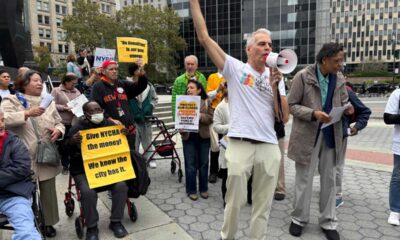
Judge Considers Dismissal of Chelsea Housing Case Citing AI Flaws
-
 Health2 months ago
Top Hyaluronic Acid Serums for Radiant Skin in 2025
-

 Sports2 months ago
Yamamoto’s Mastery Leads Dodgers to 5-1 Victory in NLCS Game 2
-

 Science2 months ago
Arizona State University Transforms Programming Education Approach
-

 Sports2 months ago
Mel Kiper Jr. Reveals Top 25 Prospects for 2026 NFL Draft