
Politics
Johnson Sworn in as President; Supreme Court Faces Change

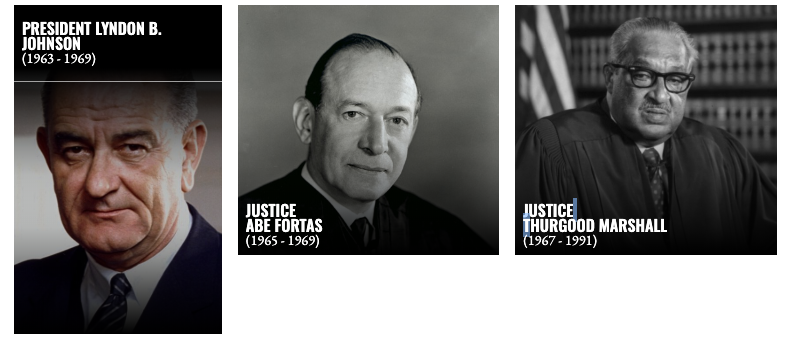
On November 22, 1963, Lyndon B. Johnson was sworn in as President of the United States following the assassination of John F. Kennedy. This pivotal moment not only marked a significant transition in national leadership but also set the stage for changes within the United States Supreme Court. Over his tenure, President Johnson would appoint two influential Justices: Abe Fortas and Thurgood Marshall.
The events of that day unfolded in the backdrop of a national tragedy. As the country mourned the loss of President Kennedy, Johnson’s ascension to the presidency came with the immediate need for stability and direction. His first actions included not only addressing the nation but also contemplating crucial appointments to the Supreme Court, which plays a vital role in interpreting the Constitution and shaping American law.
Impact on the Supreme Court
Johnson’s appointments would have lasting implications for the judicial landscape of the United States. Abe Fortas, a former law partner of Johnson and a close adviser, was appointed to the Supreme Court in 1965. His judicial philosophy leaned towards a more liberal interpretation of the law, particularly in matters concerning civil rights and individual liberties.
The appointment of Thurgood Marshall in 1967 marked a historic milestone. Marshall became the first African American Justice on the Supreme Court. His appointment symbolized a significant step towards racial equality in the United States, reflecting the broader civil rights movement of the era. Johnson’s decision to appoint Marshall was as much about justice as it was about representation, showcasing a commitment to diversity within the highest court.
These appointments occurred during a period of profound social change in the United States. The Supreme Court, under the influence of Johnson’s choices, would later deliver landmark rulings that addressed civil rights, voting rights, and the rights of the accused.
Legacy of Johnson’s Presidency
President Johnson’s legacy is often intertwined with his domestic agenda known as the “Great Society,” which aimed to eliminate poverty and racial injustice. His Supreme Court appointments were a crucial part of this vision, as they helped to solidify a judiciary that reflected the values of equality and justice.
As the nation reflects on the events of November 22, 1963, it is essential to recognize the profound impact of Johnson’s presidency on the Supreme Court. The appointments of Abe Fortas and Thurgood Marshall not only altered the composition of the Court but also influenced the trajectory of American law and civil rights for decades to come.
In conclusion, the swearing-in of Lyndon B. Johnson on that fateful day marked a critical juncture in American history, setting into motion a series of changes that would shape the future of the Supreme Court and the nation itself.

Tottenville Falls Short in PSAL 4A Title Bid Against Erasmus Hall

Urgent Study Reveals Shark Teeth Insights to Combat Extinction

Church Members Rally Together After Thanksgiving Day Fire

Trump Promises to Release MRI Results from October Scan

U.S. Investors Boost Canadian Oil Firms Despite Falling Prices

Nick Jonas Unveils Solo Album Title and Release Date at Las Vegas Brunch

Researchers Call for Low-Alcohol Drink Label Changes for Pregnant Women

Community Aims for Record in World’s Largest Christmas Cookie Exchange

Mayor Appoints Alan Wong to District 4 Supervisor Position

University of Hawaiʻi at Mānoa Joins $25.6M AI Initiative for Disaster Monitoring

IROS 2025 to Showcase Cutting-Edge Robotics Innovations in China

ALMA Discovers Companion Orbiting Red Giant Star π 1 Gruis

Stone Island’s Logo Worn by Extremists Sparks Brand Dilemma

Startup Liberate Bio Secures $31 Million for Next-Gen Therapies

Bravo Company Veterans Honored with Bronze Medals After 56 Years

Mary Morgan Jackson Crowned Little Miss National Peanut Festival 2025

Judge Considers Dismissal of Chelsea Housing Case Citing AI Flaws

Top Hyaluronic Acid Serums for Radiant Skin in 2025
-
Science4 weeks ago
University of Hawaiʻi at Mānoa Joins $25.6M AI Initiative for Disaster Monitoring
-
 Science2 months ago
IROS 2025 to Showcase Cutting-Edge Robotics Innovations in China
-
 Science2 weeks ago
ALMA Discovers Companion Orbiting Red Giant Star π 1 Gruis
-
 Lifestyle2 months ago
Stone Island’s Logo Worn by Extremists Sparks Brand Dilemma
-
 Health2 months ago
Startup Liberate Bio Secures $31 Million for Next-Gen Therapies
-
 World2 months ago
Bravo Company Veterans Honored with Bronze Medals After 56 Years
-
 Lifestyle2 months ago
Mary Morgan Jackson Crowned Little Miss National Peanut Festival 2025
-
 Politics2 months ago
Judge Considers Dismissal of Chelsea Housing Case Citing AI Flaws
-
 Health2 months ago
Top Hyaluronic Acid Serums for Radiant Skin in 2025
-

 Sports2 months ago
Yamamoto’s Mastery Leads Dodgers to 5-1 Victory in NLCS Game 2
-

 Science2 months ago
Arizona State University Transforms Programming Education Approach
-

 Sports2 months ago
Mel Kiper Jr. Reveals Top 25 Prospects for 2026 NFL Draft