
Science
Enhanced Machine Learning Method Boosts RFI Mitigation in SETI Efforts

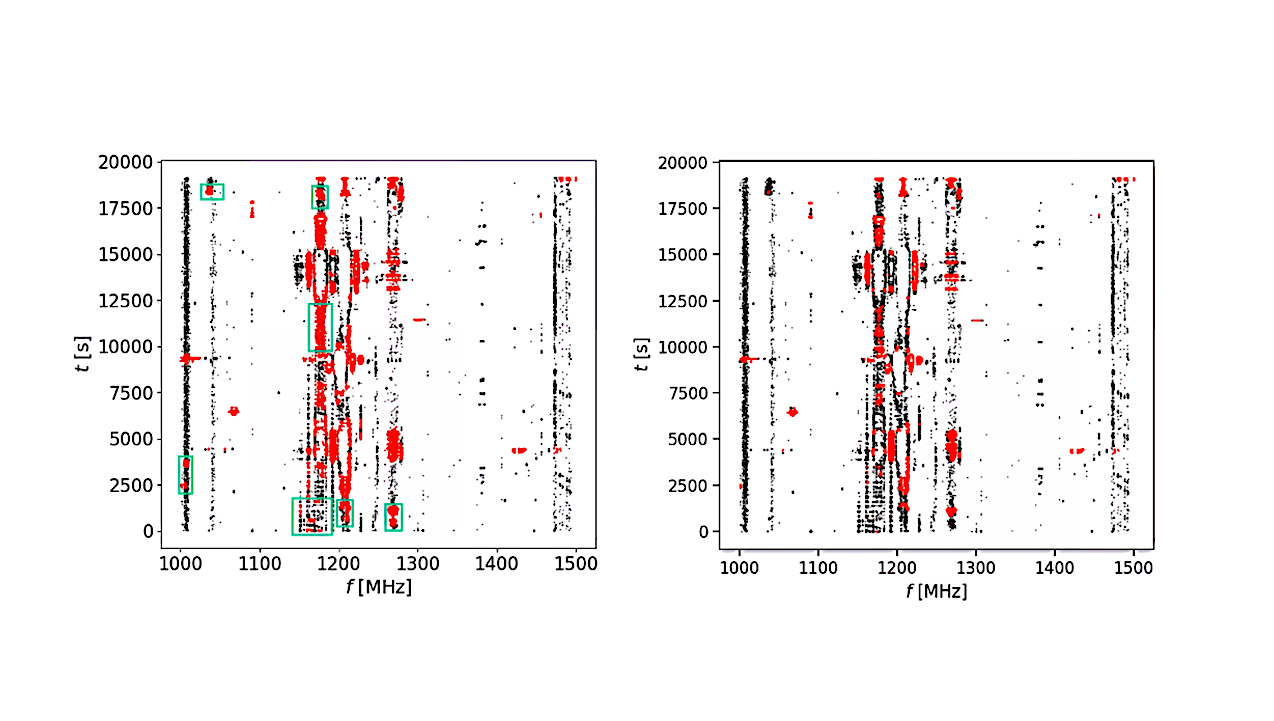
The search for extraterrestrial intelligence (SETI) is advancing with a new machine learning approach designed to enhance the mitigation of radio frequency interference (RFI). Researchers have successfully applied the Density-Based Spatial Clustering of Applications with Noise (DBSCAN) algorithm to archival data from the FAST (Five-hundred-meter Aperture Spherical radio Telescope) SETI commensal survey conducted in July 2019. This improved method aims to address the persistent challenge of residual RFI, a significant barrier to accurately identifying potential technosignatures from extraterrestrial life.
Effective RFI mitigation is crucial for sensitive instruments like FAST, which are designed to detect faint signals from space. Initial mitigation efforts typically focus on removing persistent and drifting narrowband RFI. However, residual interference often remains, complicating the analysis of data. The new study, led by researchers including Li-Li Zhao and Xiao-Hang Luan, reports a significant breakthrough in this area.
Utilizing the DBSCAN algorithm, the team identified and eliminated 36,977 instances of residual RFI, which accounts for approximately 77.87% of the interference detected. This achievement not only marks a 7.44% improvement over previous machine learning techniques but also results in a 24.85% decrease in execution time, processing the data in roughly 1.678 seconds. Such efficiency suggests that machine learning can play a critical role in future SETI efforts.
The study also highlights the ability of the DBSCAN algorithm to maintain the integrity of candidate signals of interest. Following further analysis, the team identified several intriguing candidate signals consistent with previous findings, ultimately retaining one for further investigation. This highlights the potential of DBSCAN to mitigate residual RFI while preserving valuable data for analysis.
The findings, which have been accepted for publication in The Astronomical Journal, demonstrate the promise of machine learning in enhancing the effectiveness of SETI surveys. As researchers continue to refine these techniques, the possibility of discovering signs of extraterrestrial life becomes increasingly attainable.
This research not only contributes to the field of astrobiology but also underscores the importance of advanced computational methods in tackling complex scientific challenges. The full details of the study can be accessed through arXiv with the identifier arXiv:2512.15809.

Urgent Discovery: 400+ Victorian-Era Shoes Wash Ashore in Wales

Houston’s Foucault Pendulum Stops Swinging for First Time Since 1970s

Arizona High School Football 2025: Top Passing Leaders Revealed

Former Teacher Reveals Disturbing Allegations Against Farage

TAZARA Railway Marks 50 Years Amid Promises of Revitalization

Creator Jacob Tierney Unveils Season 2 Plans for Heated Rivalry

Discover Hidden Added Sugars in Everyday Foods

Urgent Debate Sparks Over Wedding Gift Registries for Remarriages

Urgent Weather Update: Fog Clears for Afternoon Sunshine in NorCal

University of Hawaiʻi at Mānoa Joins $25.6M AI Initiative for Disaster Monitoring

New Gel Offers Hope for Regrowing Tooth Enamel in Dentistry

ALMA Discovers Companion Orbiting Red Giant Star π 1 Gruis

Park Jung Min’s Endearing Moment with Hwasa Steals Show at Awards

IROS 2025 to Showcase Cutting-Edge Robotics Innovations in China

Stone Island’s Logo Worn by Extremists Sparks Brand Dilemma

Sampson County Celebrates Susie Faison’s 100th Birthday Milestone

Mary Morgan Jackson Crowned Little Miss National Peanut Festival 2025

Startup Liberate Bio Secures $31 Million for Next-Gen Therapies
-
Science2 months ago
University of Hawaiʻi at Mānoa Joins $25.6M AI Initiative for Disaster Monitoring
-
 Health2 months ago
New Gel Offers Hope for Regrowing Tooth Enamel in Dentistry
-
 Science1 month ago
ALMA Discovers Companion Orbiting Red Giant Star π 1 Gruis
-
 Lifestyle1 month ago
Park Jung Min’s Endearing Moment with Hwasa Steals Show at Awards
-
 Science2 months ago
IROS 2025 to Showcase Cutting-Edge Robotics Innovations in China
-
 Lifestyle2 months ago
Stone Island’s Logo Worn by Extremists Sparks Brand Dilemma
-
 Lifestyle2 months ago
Sampson County Celebrates Susie Faison’s 100th Birthday Milestone
-
 Lifestyle2 months ago
Mary Morgan Jackson Crowned Little Miss National Peanut Festival 2025
-
 Health2 months ago
Startup Liberate Bio Secures $31 Million for Next-Gen Therapies
-

 Health2 months ago
Top Hyaluronic Acid Serums for Radiant Skin in 2025
-

 Science2 months ago
Arizona State University Transforms Programming Education Approach
-

 Politics2 months ago
Judge Considers Dismissal of Chelsea Housing Case Citing AI Flaws