
Science
Interstellar Comet 3I/ATLAS Reveals Secrets of Water Production

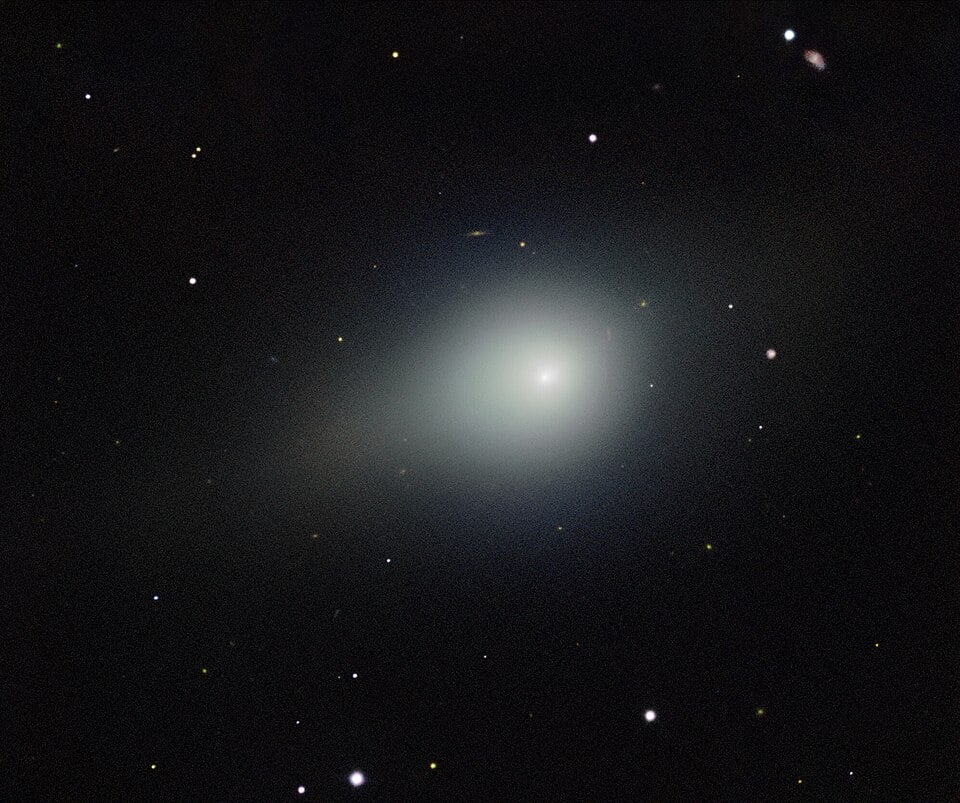
When the interstellar comet 3I/ATLAS passed close to the Sun on October 30, 2025, it marked a significant event in astronomical research. This comet became only the third confirmed visitor from interstellar space detected by scientists. Unlike its predecessors, the mysterious ‘Oumuamua’ and 2I/Borisov, which provided limited data during their flybys, 3I/ATLAS presented an opportunity for extensive observation.
An unexpected ally in this research was the Solar and Heliosphere Observatory (SOHO), which has been monitoring the Sun from its position 1.5 million kilometers from Earth for nearly three decades. Notably, SOHO houses a camera called SWAN, designed not to observe the Sun but to detect specific wavelengths of ultraviolet light emitted by hydrogen atoms. This capability allowed for a unique study of the comet’s hydrogen emissions shortly after its closest approach.
Nine days after reaching perihelion, SWAN began to record a distinctive glow of hydrogen around the comet. This emission occurs when sunlight interacts with water molecules released from the comet’s nucleus, breaking them apart and producing hydrogen atoms that emit ultraviolet light. By analyzing this glow, astronomers could estimate the comet’s water production.
The findings were astounding. On November 6, when the comet was about 1.4 astronomical units from the Sun, it was releasing water at a staggering rate of 3.17 × 1029 molecules per second. To visualize this, the rate is akin to filling an Olympic swimming pool every few seconds, showcasing the remarkable activity of this relatively small icy body.
What makes these observations particularly valuable is their timing. Most research on 3I/ATLAS took place before perihelion, as the comet approached the Sun and began to heat up. The SWAN observations captured the subsequent decline in activity as the comet moved away from the Sun. Over the following weeks, water production decreased steadily, dropping to between 10 and 20 trillion trillion molecules per second by early December, approximately 40 days post-perihelion.
This decrease follows a well-known pattern observed in other comets within our Solar System. As a comet travels farther from the Sun, reduced heating leads to less ice sublimating from its nucleus, resulting in diminished activity. The behavior of 3I/ATLAS suggests that despite its long journey through interstellar space, it has not fundamentally altered from the icy bodies formed in the early Solar System.
The method used to measure this water production has a proven track record. Developed over two decades ago and refined through observations of more than 90 different comet apparitions, it combines SWAN’s hydrogen measurements with daily readings of solar ultraviolet output and adjustments for the Sun’s rotation. Each element of the calculation is critical, as the fluorescence rate directly correlates to the Sun’s ultraviolet emissions at any moment.
The significance of 3I/ATLAS extends beyond mere curiosity about a single comet. Formed potentially billions of years ago in a planetary system around another star, studying its composition and behavior offers insights into conditions in that distant stellar neighborhood. This comparison can enhance our understanding of the diversity of planetary systems across the Galaxy and their similarities to our own Solar System.
Additionally, the substantial water production raises intriguing questions regarding the size and surface activity of the comet’s nucleus. Based on observations from the Hubble Space Telescope, the nucleus diameter is estimated to be between 440 meters and 5.6 kilometers. If water is indeed sublimating directly from the surface, a significant portion of it—potentially around 20 percent—would need to be active, which is substantially higher than the typical 3 to 5 percent seen in most Solar System comets.
As 3I/ATLAS continues its journey away from our Solar System, traveling for millennia before approaching another star, the detailed observations captured by SWAN and other instruments provide a remarkable snapshot of this interstellar traveler. Scientists now have the opportunity to analyze this comet’s secrets, enriching our understanding of the formation and evolution of celestial bodies both within and beyond our own Solar System.

Dallas City Council Urgently Debates New Winter Shelter Plan

Lamar Jackson Responds to Critics Ahead of Crucial Steelers Clash

New Express Lanes Open on US 183, Tolls Increase Starting Today

Experts Urge Realistic Goals for New Year’s Resolutions Now

Urgent Update: Immigrants Face Health Care Gamble in California

ACA Subsidies Expire; Insurance Premiums Set to Surge 26%

Urgent Update: ACA Premium Subsidies Expire for 300,000 Oklahomans

Vintage Stoplight Stolen in Guthrie, Homeowner Urges Public Help

Neuralink Plans Automated Surgery and Mass Production for 2026

University of Hawaiʻi at Mānoa Joins $25.6M AI Initiative for Disaster Monitoring

New Gel Offers Hope for Regrowing Tooth Enamel in Dentistry

ALMA Discovers Companion Orbiting Red Giant Star π 1 Gruis

Park Jung Min’s Endearing Moment with Hwasa Steals Show at Awards

IROS 2025 to Showcase Cutting-Edge Robotics Innovations in China

Stone Island’s Logo Worn by Extremists Sparks Brand Dilemma

Sampson County Celebrates Susie Faison’s 100th Birthday Milestone

Startup Liberate Bio Secures $31 Million for Next-Gen Therapies

Mary Morgan Jackson Crowned Little Miss National Peanut Festival 2025
-
Science2 months ago
University of Hawaiʻi at Mānoa Joins $25.6M AI Initiative for Disaster Monitoring
-
 Health2 months ago
New Gel Offers Hope for Regrowing Tooth Enamel in Dentistry
-
 Science2 months ago
ALMA Discovers Companion Orbiting Red Giant Star π 1 Gruis
-
 Lifestyle1 month ago
Park Jung Min’s Endearing Moment with Hwasa Steals Show at Awards
-
 Science3 months ago
IROS 2025 to Showcase Cutting-Edge Robotics Innovations in China
-
 Lifestyle3 months ago
Stone Island’s Logo Worn by Extremists Sparks Brand Dilemma
-
 Lifestyle2 months ago
Sampson County Celebrates Susie Faison’s 100th Birthday Milestone
-
 Health3 months ago
Startup Liberate Bio Secures $31 Million for Next-Gen Therapies
-
 Lifestyle3 months ago
Mary Morgan Jackson Crowned Little Miss National Peanut Festival 2025
-

 Science3 months ago
Arizona State University Transforms Programming Education Approach
-

 Health3 months ago
Top Hyaluronic Acid Serums for Radiant Skin in 2025
-
 Science2 months ago
Interstellar Comet 3I/ATLAS Approaches Sun, No Threat to Earth