
Science
Neanderthals’ Diet Revealed: They Ate Maggots, Not Just Meat

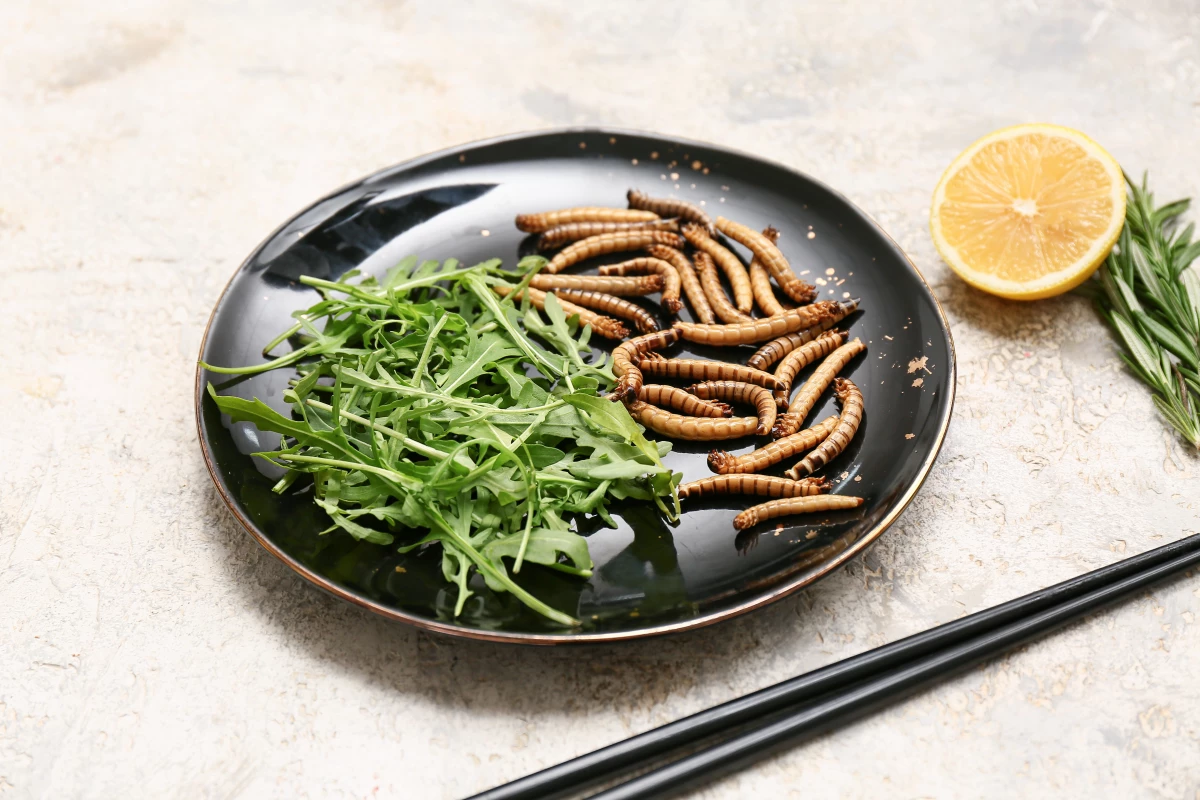
Research has unveiled that Neanderthals were not only adept hunters but also consumed maggots, adding an unexpected twist to their dietary habits. A study led by anthropologist Melanie Beasley from Purdue University indicates that these ancient humans feasted on maggots, significantly influencing their nutritional profile and nitrogen isotope levels.
Using chemical analysis of Neanderthal bones, researchers found that these hominins occupied a position at the top of the prehistoric food chain, sharing this status with apex predators like lions. They primarily hunted large animals such as mammoths and bison. However, the team identified a crucial and previously overlooked aspect of their diet—maggots, which are rich in fat and easy to collect.
The research team utilized stable nitrogen isotopes, specifically Nitrogen-14 and Nitrogen-15, as biological markers to trace the dietary habits of Neanderthals. Nitrogen-15, being heavier and less common, accumulates in higher concentrations as one moves up the food chain. Plants display low levels of this isotope, while herbivores, and consequently carnivores, have progressively higher amounts. The findings revealed that Neanderthals exhibited high levels of Nitrogen-15, comparable to those of wolves and hyenas, suggesting their diet was primarily meat-based.
This discovery raised questions for the research team. Unlike other apex predators, Neanderthals and modern humans cannot metabolize excessive protein without adverse effects, such as a condition historically known as “rabbit starvation.” The researchers hypothesized that the nitrogen levels in Neanderthal bones might be inflated due to a consumption of maggots alongside their meat.
Interestingly, Homo sapiens from the same period displayed similar nitrogen isotope patterns, prompting researchers to consider cultural dietary practices. Indigenous communities in the Arctic and subarctic regions have been documented consuming maggots from decomposing meat, providing a contemporary parallel to the Neanderthal diet.
In a surprising twist, the analysis showed that maggots feeding on rotting flesh possess exceptionally high levels of Nitrogen-15, nearly four times that found in lions. To further investigate this, the team examined fly larvae consuming decomposing human muscle tissue. Their findings indicated that as tissue breaks down, lighter nitrogen atoms escape as gas, leaving heavier isotopes behind. Consequently, maggots feeding on this tissue become enriched with Nitrogen-15.
The team also noted that larvae collected during winter exhibited even higher isotope values, likely due to the slower decomposition process in colder temperatures. This suggests that Neanderthals may have integrated maggots into their diet, consuming them alongside spoiled meat, which could explain the elevated nitrogen levels without relying solely on a hypercarnivore diet.
The research team concluded, “In the particular case considered here of Eurasian Late Pleistocene hominins, we suspect that the high Nitrogen-15 values reflect routine consumption of stored decomposing fatty animal substrates laced with highly-enriched maggots.” This study, which adds a new dimension to our understanding of Neanderthal nutrition, has been published in the journal Science Advances.
This revelation not only enhances our knowledge of Neanderthal dietary practices but also highlights the adaptability of early human species in utilizing available resources for survival.

U.S. Postal Service Changes Spark Urgent Concerns Over Mail Reliability

Richard A. Weiherer Passes Away: Community Mourns Loss

Schaumburg Family Fights Urgently for Access to Medical Marijuana

Dallas City Council Urgently Debates New Winter Shelter Plan

Lamar Jackson Responds to Critics Ahead of Crucial Steelers Clash

New Express Lanes Open on US 183, Tolls Increase Starting Today

Experts Urge Realistic Goals for New Year’s Resolutions Now

Urgent Update: Immigrants Face Health Care Gamble in California

ACA Subsidies Expire; Insurance Premiums Set to Surge 26%

University of Hawaiʻi at Mānoa Joins $25.6M AI Initiative for Disaster Monitoring

New Gel Offers Hope for Regrowing Tooth Enamel in Dentistry

ALMA Discovers Companion Orbiting Red Giant Star π 1 Gruis

Park Jung Min’s Endearing Moment with Hwasa Steals Show at Awards

IROS 2025 to Showcase Cutting-Edge Robotics Innovations in China

Stone Island’s Logo Worn by Extremists Sparks Brand Dilemma

Sampson County Celebrates Susie Faison’s 100th Birthday Milestone

Startup Liberate Bio Secures $31 Million for Next-Gen Therapies

Mary Morgan Jackson Crowned Little Miss National Peanut Festival 2025
-
Science2 months ago
University of Hawaiʻi at Mānoa Joins $25.6M AI Initiative for Disaster Monitoring
-
 Health2 months ago
New Gel Offers Hope for Regrowing Tooth Enamel in Dentistry
-
 Science2 months ago
ALMA Discovers Companion Orbiting Red Giant Star π 1 Gruis
-
 Lifestyle1 month ago
Park Jung Min’s Endearing Moment with Hwasa Steals Show at Awards
-
 Science3 months ago
IROS 2025 to Showcase Cutting-Edge Robotics Innovations in China
-
 Lifestyle3 months ago
Stone Island’s Logo Worn by Extremists Sparks Brand Dilemma
-
 Lifestyle2 months ago
Sampson County Celebrates Susie Faison’s 100th Birthday Milestone
-
 Health3 months ago
Startup Liberate Bio Secures $31 Million for Next-Gen Therapies
-
 Lifestyle3 months ago
Mary Morgan Jackson Crowned Little Miss National Peanut Festival 2025
-

 Science3 months ago
Arizona State University Transforms Programming Education Approach
-

 Science2 months ago
Interstellar Comet 3I/ATLAS Approaches Sun, No Threat to Earth
-

 Health3 months ago
Top Hyaluronic Acid Serums for Radiant Skin in 2025