
Sports
Davis Cup’s Future in Question as Players Demand Changes

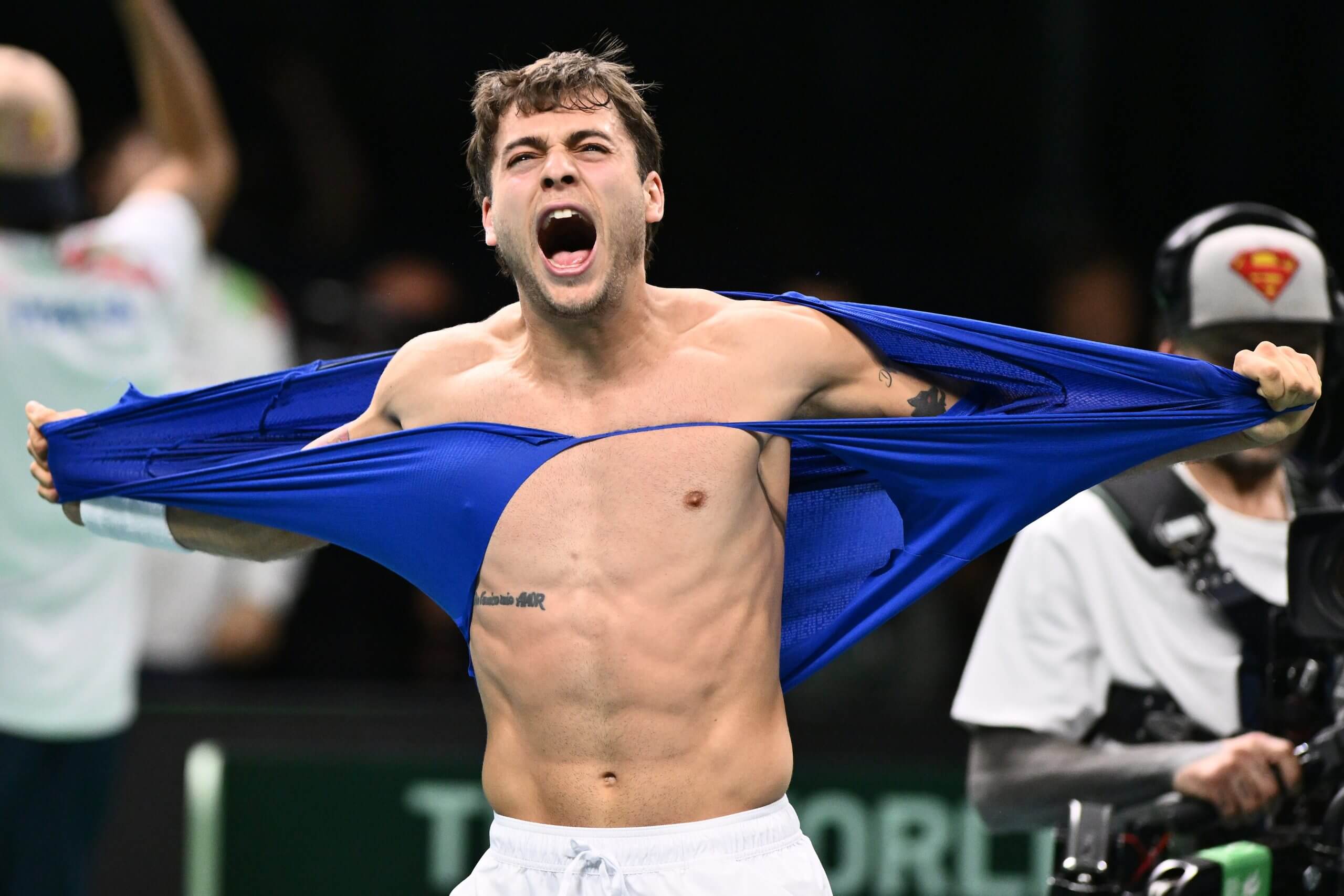
Flavio Cobolli propelled Italy into its third consecutive Davis Cup final with a thrilling victory over Belgium’s Zizou Bergs in Bologna, Italy. The match, marked by a tense 17-15 third-set tiebreak, captivated over 10,000 spectators and showcased the tournament’s allure. Yet, as excitement builds for the final against Spain, leading players are raising significant concerns about the future of the Davis Cup, the sport’s premier team competition.
The Davis Cup, often referred to as the “World Cup of Tennis,” is facing scrutiny regarding its frequency and format. Top-ranked players, including Carlos Alcaraz, Jannik Sinner, and Alexander Zverev, have expressed the belief that reducing the tournament’s frequency could enhance its stature and excitement. Alcaraz, who had to withdraw due to a hamstring injury, stated, “I think playing every year is not as good as it might be if you’re playing every two or three years.”
Sinner, who led Italy to victory in the past two years, echoed this sentiment, arguing that a less frequent Davis Cup could create a more unique and compelling atmosphere. Zverev went further, suggesting that the current finals format, which features eight teams at a single venue, lacks the authenticity of the traditional home-and-away ties. “I never played the real Davis Cup,” he remarked during a press conference, highlighting a desire for a return to the tournament’s roots.
The Italian Tennis Federation has secured the hosting rights for the finals from 2025 to 2027, leveraging its success in men’s tennis. Yet, many believe that the vibrancy of the competition is hindered by its annual schedule.
Calls for Reform and the Future of the Davis Cup
The current structure of the Davis Cup has evolved significantly over the years. In 2019, the International Tennis Federation (ITF) signed a 25-year contract with Kosmos, a sports and media company founded by former footballer Gerard Piqué, which promised a $3 billion investment. This led to the introduction of a week-long finals format. However, after a series of disappointing editions marred by logistical issues, the partnership ended in January 2023, with Piqué filing a lawsuit that was dismissed in March 2025.
Many players, including legends like Roger Federer and Novak Djokovic, have critiqued the current format since its inception. The consensus among top players is that the annual nature of the event diminishes its prestige. As Pete Sampras noted in his 2008 autobiography, the comparison with golf’s Ryder Cup, held every two years, underscores the challenges faced by the Davis Cup in terms of exposure and public interest.
Recent editions have also faced challenges with crowd attendance and player engagement. Qualifying rounds held in neutral venues between 2022 and 2024 diluted the atmosphere, evidenced by a sparse crowd during a recent tie between Germany and the U.S. in China. The ITF is now considering a return to home-and-away qualifiers, which could help restore some of the traditional excitement and fan engagement associated with the tournament.
Acknowledging Player Perspectives
Ross Hutchins, the ITF’s chief executive, has emphasized his willingness to listen to player feedback. Appointed in August 2023, Hutchins understands the player experience, having been a professional player himself. He noted that “850 players are part of this competition,” and he values their opinions. Hutchins expressed a desire to make the Davis Cup “the biggest team competition across our sport,” indicating his openness to necessary adjustments.
The ongoing debate includes not just the frequency of the tournament but also its timing within the tennis calendar. Some suggest moving the finals to April, following the BNP Paribas Open and Miami Open, to avoid the end-of-season fatigue. Others advocate for a more integrated approach, potentially combining the Davis Cup with the Billie Jean King Cup, the women’s equivalent, to enhance visibility and excitement.
As Italy prepares to face Spain in the final, the atmosphere is electric, yet the underlying question remains: will reducing the frequency of the Davis Cup make it more meaningful? The outcome of this debate could shape the future of team tennis and influence how fans and players engage with this storied competition.

Japan’s PM Takaichi Confirms Ongoing Fiscal Management Strategy

Bitcoin Plummets Below $88K Amid Tether Concerns, Urgent Warning

Tottenville Falls Short in PSAL 4A Title Bid Against Erasmus Hall

Urgent Study Reveals Shark Teeth Insights to Combat Extinction

Church Members Rally Together After Thanksgiving Day Fire

Trump Promises to Release MRI Results from October Scan

U.S. Investors Boost Canadian Oil Firms Despite Falling Prices

Nick Jonas Unveils Solo Album Title and Release Date at Las Vegas Brunch

Researchers Call for Low-Alcohol Drink Label Changes for Pregnant Women

University of Hawaiʻi at Mānoa Joins $25.6M AI Initiative for Disaster Monitoring

IROS 2025 to Showcase Cutting-Edge Robotics Innovations in China

ALMA Discovers Companion Orbiting Red Giant Star π 1 Gruis

Stone Island’s Logo Worn by Extremists Sparks Brand Dilemma

Startup Liberate Bio Secures $31 Million for Next-Gen Therapies

Bravo Company Veterans Honored with Bronze Medals After 56 Years

Mary Morgan Jackson Crowned Little Miss National Peanut Festival 2025

Judge Considers Dismissal of Chelsea Housing Case Citing AI Flaws

Top Hyaluronic Acid Serums for Radiant Skin in 2025
-
Science4 weeks ago
University of Hawaiʻi at Mānoa Joins $25.6M AI Initiative for Disaster Monitoring
-
 Science2 months ago
IROS 2025 to Showcase Cutting-Edge Robotics Innovations in China
-
 Science2 weeks ago
ALMA Discovers Companion Orbiting Red Giant Star π 1 Gruis
-
 Lifestyle2 months ago
Stone Island’s Logo Worn by Extremists Sparks Brand Dilemma
-
 Health2 months ago
Startup Liberate Bio Secures $31 Million for Next-Gen Therapies
-
 World2 months ago
Bravo Company Veterans Honored with Bronze Medals After 56 Years
-
 Lifestyle2 months ago
Mary Morgan Jackson Crowned Little Miss National Peanut Festival 2025
-
 Politics2 months ago
Judge Considers Dismissal of Chelsea Housing Case Citing AI Flaws
-
 Health2 months ago
Top Hyaluronic Acid Serums for Radiant Skin in 2025
-

 Sports2 months ago
Yamamoto’s Mastery Leads Dodgers to 5-1 Victory in NLCS Game 2
-

 Science2 months ago
Arizona State University Transforms Programming Education Approach
-

 Sports2 months ago
Mel Kiper Jr. Reveals Top 25 Prospects for 2026 NFL Draft