
Politics
Election in Sabah Undermines Anwar Ibrahim’s Federal Authority

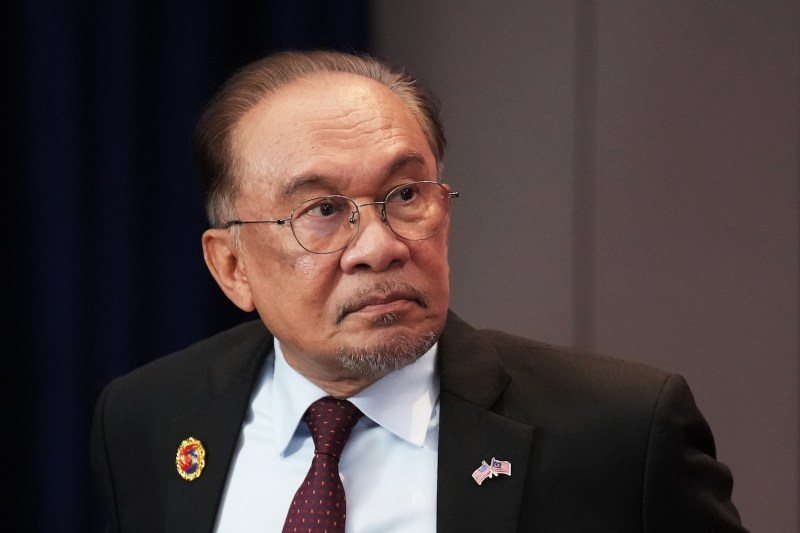
On November 29, elections in the Malaysian state of Sabah delivered a significant setback for Prime Minister Anwar Ibrahim. The local parties, which champion greater autonomy for the region, won a commanding 82 percent of the seats in the state parliament. This outcome raises critical questions about the stability of Anwar’s federal government and its tenuous grip on power as the nation prepares for general elections by 2028.
Shift in Political Landscape
The election results illustrate a growing sentiment of “Sabah for Sabahans,” reflecting the distinct identity and political aspirations of East Malaysia. While the local parties maintain a federal alliance with Anwar, the arrangement is contingent on the central government’s support for enhanced autonomy. The mainland parties, historically dominant in Malaysian politics, only secured one seat each, marking a stark decline in their influence.
Sabah and its neighbor, Sarawak, have long felt marginalized by the political dynamics dominated by the Malaysian Peninsula. The historical context is crucial; these states joined Malaysia in 1963 under unique terms that have often been overlooked. For decades, Sabah has faced economic challenges, including the highest poverty rate of any Malaysian state, further fueling local grievances against the central government.
The political landscape shifted dramatically following the fall of Barisan Nasional in 2018, leading to a period of instability. East Malaysian parties now hold significant sway, as evidenced by their crucial support to maintain the federal government’s slim majority of seven seats in parliament. This dependency raises the stakes for Anwar, who actively campaigned in Sabah, hoping for a positive outcome to bolster his leadership.
Implications for Governance and Autonomy
Central to the election discourse in Sabah was the demand for substantial federal revenue sharing. The Malaysian Constitution entitles Sabah to a 40 percent share of federal revenues collected within its borders, a commitment largely ignored from 1974 to 2021. A recent court ruling confirmed that the government owed Sabah decades of back payments, a fiscal burden the federal government has chosen not to contest, fearing backlash from the Sabahan electorate.
In addition to financial grievances, Sarawak has taken bold steps to assert its autonomy, including the establishment of a state oil company and plans for greater control over health and education policies. This momentum indicates a potential shift towards more significant demands for self-governance, which could further complicate the relationship between the federal government and East Malaysia.
As East Malaysia becomes increasingly assertive, questions arise about the federal government’s strategy to manage these demands. The political landscape is evolving, and the balance of power may tip further if the government continues to make concessions to maintain stability.
Meanwhile, the political scene in neighboring Myanmar is also undergoing changes. On November 27, the military junta announced clemency for nearly 10,000 political prisoners, a move interpreted as a strategy to ensure eligible voters can participate in the upcoming elections scheduled for December 28. Critics, however, have denounced these elections as lacking legitimacy.
Across Southeast Asia, the region is grappling with natural disasters as well. Recent floods have devastated parts of Thailand, Malaysia, and Indonesia, with a reported death toll exceeding 600. The severe weather has drawn criticism towards Thai Prime Minister Anutin Charnvirakul for his handling of the crisis, potentially impacting his political future.
As Malaysia navigates these complex political and environmental challenges, the outcomes of local elections may hold significant implications for governance and regional stability. The evolving dynamics in Sabah and Sarawak could redefine the relationship between East Malaysia and the federal government, setting the stage for a more assertive call for autonomy in the years to come.

Robinhood Stock Surges 2.5% Today Amid Tech Market Recovery

Philadelphia’s Earth Month Kicks Off with Free Events in Parks

GSK’s Inhaler Decision Sparks Health Concerns for Children

Bradford’s Fish Fry Fridays Offer Community Spirit and Flavor

Speculation Rises on Shutdowns During Trump’s Potential Presidency

Samsung Galaxy Watch 9 to Feature Larger Battery, Report Reveals

Inventors Find New Purpose Through Unconventional Paths

UConn Huskies Aim for Back-to-Back Titles in 2026 NCAA Tournament

U.S. Mine Countermeasure Ships Dock in Malaysia for Logistics Stop

University of Hawaiʻi at Mānoa Joins $25.6M AI Initiative for Disaster Monitoring

$2.2 Million Boost for Cancer Research and Training in Hawaiʻi

ALMA Discovers Companion Orbiting Red Giant Star π 1 Gruis

Sacituzumab Govitecan Shows Promise for HR+/HER2− Breast Cancer

币安人生 Sees $15.92 Million in Trading Volume Amid Market Fluctuations

New Gel Offers Hope for Regrowing Tooth Enamel in Dentistry

CAVA Group Shares Surge 5.1% Amid Mixed Analyst Ratings

Christian Bale in Talks to Join Leonardo DiCaprio in Heat 2

Supreme Court to Review Birthright Citizenship for Children of Immigrants
-
Science9 months ago
University of Hawaiʻi at Mānoa Joins $25.6M AI Initiative for Disaster Monitoring
-
 Health8 months ago
$2.2 Million Boost for Cancer Research and Training in Hawaiʻi
-
 Science9 months ago
ALMA Discovers Companion Orbiting Red Giant Star π 1 Gruis
-
 Health7 months ago
Sacituzumab Govitecan Shows Promise for HR+/HER2− Breast Cancer
-
Politics5 months ago
币安人生 Sees $15.92 Million in Trading Volume Amid Market Fluctuations
-
 Health9 months ago
New Gel Offers Hope for Regrowing Tooth Enamel in Dentistry
-
 Business8 months ago
CAVA Group Shares Surge 5.1% Amid Mixed Analyst Ratings
-
 Entertainment9 months ago
Christian Bale in Talks to Join Leonardo DiCaprio in Heat 2
-
 Politics8 months ago
Supreme Court to Review Birthright Citizenship for Children of Immigrants
-

 Lifestyle9 months ago
Art Deco and Traditional Designs Set to Transform Homes in 2026
-

 Lifestyle8 months ago
Fernando Mendoza Secures Maxwell and O’Brien Awards Ahead of Heisman
-

 World8 months ago
Swiss Residents Reject 50% Inheritance Tax on Wealthy