
World
US Air Force F-35: A Legacy of Innovation and Future Challenges

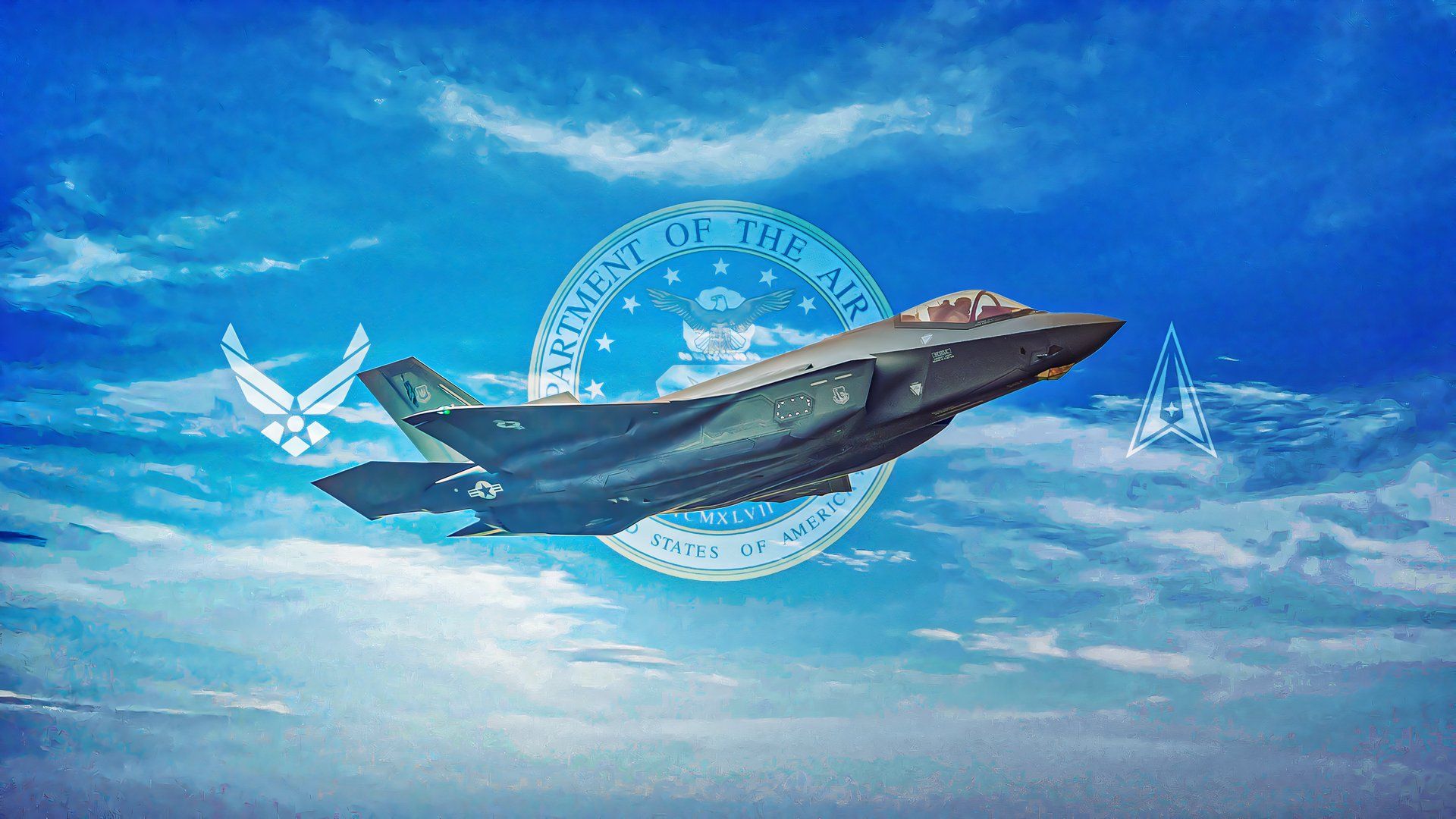
The US Air Force is at a pivotal moment in its aerial combat capabilities, with the F-35 Lightning II representing the forefront of military aviation. Since its operational debut in 2015, the F-35 has become integral to the Air Force’s strategy, but as global threats evolve and budgets tighten, its long-term relevance is under scrutiny. The introduction of advanced adversary air defense systems and rapid technological advancements necessitates a reevaluation of the F-35’s role within a changing landscape of aerial warfare.
The Evolution of the F-35 Lightning II
The F-35 is often regarded as one of the most ambitious combat aircraft programs in history, designed to serve multiple branches of the military while maintaining affordability and stealth capabilities. The origins of the F-35 can be traced back to the Joint Strike Fighter program initiated in the mid-1990s. Following a competitive selection process, Lockheed Martin’s X-35 was chosen for its ability to perform short takeoffs, supersonic flight, and vertical landings.
The first F-35 variants took to the skies in the mid-2000s, with the F-35A achieving its first flight in December 2006. Its formal entry into service began in the following decade, with the Marine Corps’ F-35B variant operational by July 2015 and the Air Force’s F-35A declared operational around August 2016. Designed as a multirole stealth aircraft, the F-35 integrates advanced sensor fusion, networked operations, and survivability features.
Despite its advancements, the program has encountered challenges, including cost overruns and software delays. The long-term sustainability of the fleet, projected to exceed $1.5 trillion through 2088, has raised concerns among lawmakers and defense analysts.
Current Role and Future Prospects of the F-35
The F-35 has solidified its position as the primary fighter for the USAF, US Marines, and US Navy, with its role extending beyond air-to-air combat to include strike missions, electronic warfare, intelligence, surveillance, reconnaissance, and command support. Its adaptability has proven essential, making it indispensable in modern conflict scenarios. Currently, the USAF operates over 400 F-35s, while Lockheed Martin has delivered more than 1,000 units worldwide.
Experts suggest that the F-35 could remain operational into the 2070s, thanks to its large fleet size, continuous upgrade potential, and the flexibility to integrate new technologies. However, the emergence of advanced adversary systems poses a critical challenge for the aircraft’s longevity.
The decision to retain the F-35 until 2070 hinges on strategic advantages such as the extensive existing supply chains and operational experience, making upgrades more feasible than developing new aircraft. The recently approved full-rate production by the US Department of Defense underscores a commitment to the program’s future.
As the Air Force looks ahead, it is simultaneously preparing for the next generation of air dominance with initiatives like the Next Generation Air Dominance (NGAD) program. The development of the F-47, a sixth-generation fighter, aims to enhance the United States’ air superiority capabilities significantly.
While details remain classified, initial reports about the F-47 indicate that it will feature advanced stealth capabilities, enhanced sensor integration, and an operational range exceeding 1,000 nautical miles. This platform is designed not only to operate independently but also to work alongside uncrewed systems, multiplying its effectiveness in combat scenarios.
The ongoing development of Collaborative Combat Aircraft (CCAs) further emphasizes the Air Force’s focus on integrating crewed and uncrewed platforms. These drones are expected to support the F-47 and F-35 in various roles, enhancing operational flexibility and reducing the risk to human pilots.
As the landscape of aerial combat evolves, the F-35’s legacy as a cornerstone of modern air power is secure, but its future will depend on how effectively it can adapt to new threats and technologies. The interplay between crewed and uncrewed systems will likely define the next era of air combat, ensuring that the F-35 remains a significant player in the evolving narrative of military aviation.
In conclusion, while the F-35 faces challenges and competition from new platforms, its established capabilities and ongoing modernization efforts position it as a critical component of the US Air Force’s strategy for decades to come.

Robinhood Stock Surges 2.5% Today Amid Tech Market Recovery

Philadelphia’s Earth Month Kicks Off with Free Events in Parks

GSK’s Inhaler Decision Sparks Health Concerns for Children

Bradford’s Fish Fry Fridays Offer Community Spirit and Flavor

Speculation Rises on Shutdowns During Trump’s Potential Presidency

Samsung Galaxy Watch 9 to Feature Larger Battery, Report Reveals

Inventors Find New Purpose Through Unconventional Paths

UConn Huskies Aim for Back-to-Back Titles in 2026 NCAA Tournament

U.S. Mine Countermeasure Ships Dock in Malaysia for Logistics Stop

University of Hawaiʻi at Mānoa Joins $25.6M AI Initiative for Disaster Monitoring

$2.2 Million Boost for Cancer Research and Training in Hawaiʻi

ALMA Discovers Companion Orbiting Red Giant Star π 1 Gruis

Sacituzumab Govitecan Shows Promise for HR+/HER2− Breast Cancer

币安人生 Sees $15.92 Million in Trading Volume Amid Market Fluctuations

New Gel Offers Hope for Regrowing Tooth Enamel in Dentistry

CAVA Group Shares Surge 5.1% Amid Mixed Analyst Ratings

Christian Bale in Talks to Join Leonardo DiCaprio in Heat 2

Supreme Court to Review Birthright Citizenship for Children of Immigrants
-
Science8 months ago
University of Hawaiʻi at Mānoa Joins $25.6M AI Initiative for Disaster Monitoring
-
 Health7 months ago
$2.2 Million Boost for Cancer Research and Training in Hawaiʻi
-
 Science8 months ago
ALMA Discovers Companion Orbiting Red Giant Star π 1 Gruis
-
 Health7 months ago
Sacituzumab Govitecan Shows Promise for HR+/HER2− Breast Cancer
-
Politics4 months ago
币安人生 Sees $15.92 Million in Trading Volume Amid Market Fluctuations
-
 Health8 months ago
New Gel Offers Hope for Regrowing Tooth Enamel in Dentistry
-
 Business7 months ago
CAVA Group Shares Surge 5.1% Amid Mixed Analyst Ratings
-
 Entertainment8 months ago
Christian Bale in Talks to Join Leonardo DiCaprio in Heat 2
-
 Politics7 months ago
Supreme Court to Review Birthright Citizenship for Children of Immigrants
-

 Lifestyle7 months ago
Fernando Mendoza Secures Maxwell and O’Brien Awards Ahead of Heisman
-

 Lifestyle8 months ago
Art Deco and Traditional Designs Set to Transform Homes in 2026
-

 World7 months ago
Swiss Residents Reject 50% Inheritance Tax on Wealthy