
Science
Inventors Find New Purpose Through Unconventional Paths

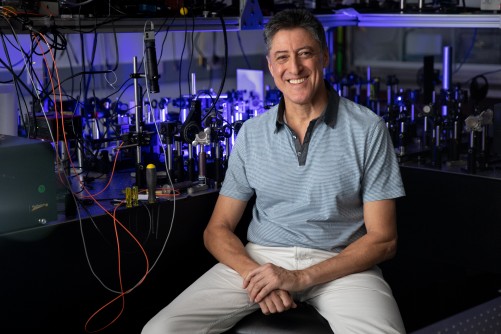
In December, two scientists from Sandia National Laboratories were elected as fellows of the National Academy of Inventors, marking a significant achievement in their careers. Their journeys to this honor highlight the value of adaptability and leadership in scientific innovation. While both have made substantial contributions in their respective fields, their career paths diverged from traditional trajectories, leading them to discover deeper professional fulfillment.
Igal Brener: From Chip Design to Collaborative Research
Igal Brener, a senior scientist at Sandia, has established himself as a leading figure in the field of nanophotonics. Originally from Uruguay, Brener’s career began as a chip designer in Israel, where he contributed to technologies still present in products today. Despite his early success, he yearned for a research-focused career. “I craved the research path,” Brener shared, which prompted him to pursue a doctoral degree and later work at prestigious institutions such as Bell Labs.
Brener’s transition to Sandia allowed him to engage in groundbreaking research in optoelectronics and photonics. He has been instrumental in developing 30 patents, including advancements in terahertz detectors that have significantly impacted industries, such as aerospace and automotive. For over a decade, he has led a project funded by the Department of Energy, emphasizing the importance of collaboration in scientific endeavors.
“Collaboration doesn’t mean everybody works on everything, but having a collaborative community is incredibly important,” Brener remarked. He is particularly excited about his current project focused on innovative lighting technologies that could transform user interaction with their environments. Encouraging young scientists to follow their passions, he emphasized the importance of finding what excites them, even if it means deviating from a clear career path.
Hongyou Fan: Leadership and Mentorship in Science
Hongyou Fan, a program manager at Sandia, has made significant advancements in materials science and nanotechnology, holding over 20 patents and co-founding two startups. His work includes developing nanoparticles that can combat harmful microbes like SARS-CoV-2 and initiating technology transfer processes for critical mineral extraction. Yet, Fan found his true passion lay not only in innovation but also in mentoring future scientists.
“For 25 years, I have benefited from all the people around me that supported me,” Fan said. He now dedicates his time to empowering researchers to gain recognition for their innovations. His impressive accolades include seven R&D 100 Awards and a commendation from the New Mexico state Legislature. Fan believes in fostering visibility for scientific achievements, stating, “It’s not just about winning the award, but helping make them visible at the national level.”
One notable success was the recognition of his microbe-killing nanoparticles, which attracted investor interest and led to the establishment of Lunano LLC. He now teaches young researchers how to commercialize their technologies effectively, emphasizing the importance of engaging with Sandia’s patent and technology transfer offices to enhance their visibility and marketability.
Reflecting on his career shift, Fan expressed a new sense of fulfillment through mentoring others. “Now I measure accomplishment by how many people I have helped,” he stated, underscoring his commitment to nurturing the next generation of innovators.
The recognition received by both Brener and Fan as fellows of the National Academy of Inventors highlights not only their individual accomplishments but also the impact of their unconventional paths. Their stories serve as an inspiration for aspiring scientists and innovators, showcasing the importance of curiosity, collaboration, and mentorship in achieving success.

Robinhood Stock Surges 2.5% Today Amid Tech Market Recovery

Philadelphia’s Earth Month Kicks Off with Free Events in Parks

GSK’s Inhaler Decision Sparks Health Concerns for Children

Bradford’s Fish Fry Fridays Offer Community Spirit and Flavor

Speculation Rises on Shutdowns During Trump’s Potential Presidency

Samsung Galaxy Watch 9 to Feature Larger Battery, Report Reveals

Inventors Find New Purpose Through Unconventional Paths

UConn Huskies Aim for Back-to-Back Titles in 2026 NCAA Tournament

U.S. Mine Countermeasure Ships Dock in Malaysia for Logistics Stop

University of Hawaiʻi at Mānoa Joins $25.6M AI Initiative for Disaster Monitoring

$2.2 Million Boost for Cancer Research and Training in Hawaiʻi

ALMA Discovers Companion Orbiting Red Giant Star π 1 Gruis

Sacituzumab Govitecan Shows Promise for HR+/HER2− Breast Cancer

币安人生 Sees $15.92 Million in Trading Volume Amid Market Fluctuations

New Gel Offers Hope for Regrowing Tooth Enamel in Dentistry

CAVA Group Shares Surge 5.1% Amid Mixed Analyst Ratings

Christian Bale in Talks to Join Leonardo DiCaprio in Heat 2

Supreme Court to Review Birthright Citizenship for Children of Immigrants
-
Science8 months ago
University of Hawaiʻi at Mānoa Joins $25.6M AI Initiative for Disaster Monitoring
-
 Health7 months ago
$2.2 Million Boost for Cancer Research and Training in Hawaiʻi
-
 Science8 months ago
ALMA Discovers Companion Orbiting Red Giant Star π 1 Gruis
-
 Health7 months ago
Sacituzumab Govitecan Shows Promise for HR+/HER2− Breast Cancer
-
Politics4 months ago
币安人生 Sees $15.92 Million in Trading Volume Amid Market Fluctuations
-
 Health8 months ago
New Gel Offers Hope for Regrowing Tooth Enamel in Dentistry
-
 Business7 months ago
CAVA Group Shares Surge 5.1% Amid Mixed Analyst Ratings
-
 Entertainment8 months ago
Christian Bale in Talks to Join Leonardo DiCaprio in Heat 2
-
 Politics7 months ago
Supreme Court to Review Birthright Citizenship for Children of Immigrants
-

 Lifestyle7 months ago
Fernando Mendoza Secures Maxwell and O’Brien Awards Ahead of Heisman
-

 Lifestyle8 months ago
Art Deco and Traditional Designs Set to Transform Homes in 2026
-

 World7 months ago
Swiss Residents Reject 50% Inheritance Tax on Wealthy