
Politics
Paraguay and U.S. Forge Military Agreement to Combat Crime

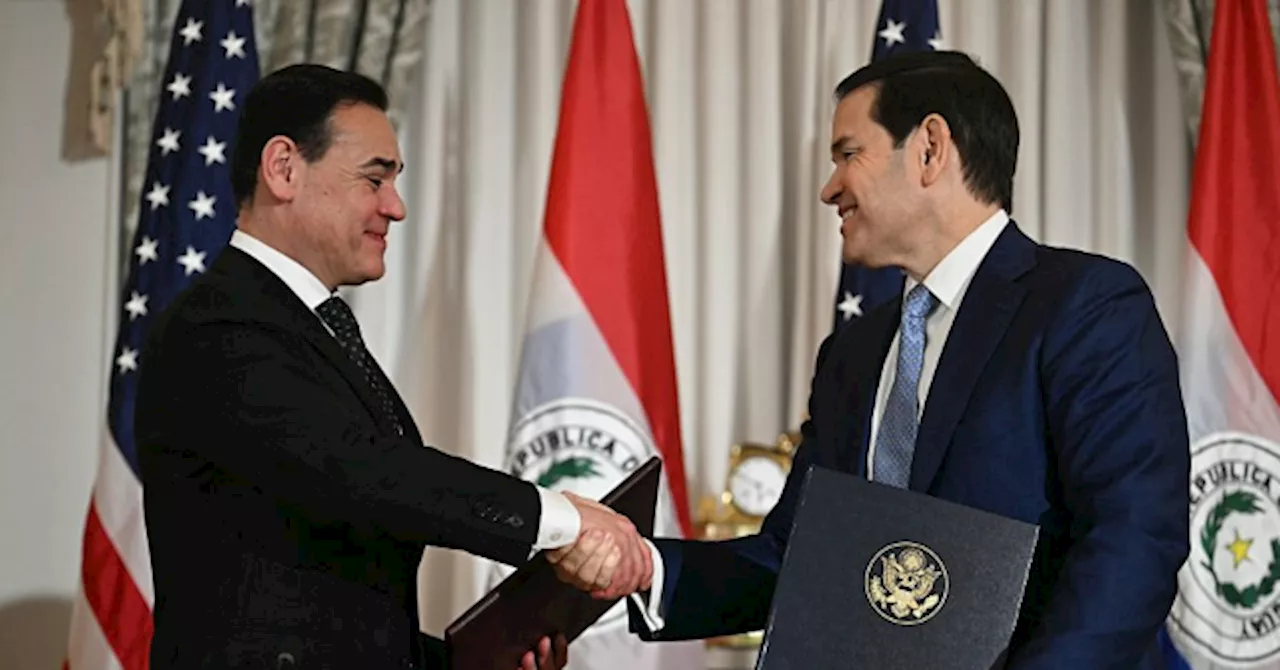
On March 11, 2024, the United States and Paraguay signed a significant Status of Forces Agreement (SOFA) aimed at enhancing cooperation in military and security operations. This landmark deal allows for the presence of U.S. military personnel and civilian staff in Paraguay, marking a pivotal step in the countries’ collaborative efforts to address pressing security challenges.
The agreement was signed by U.S. Secretary of State Marco Rubio and Paraguayan Foreign Minister Rubén Ramírez Lezcano during an official visit to Washington. The signing underscores both nations’ commitment to combatting transnational crime and drug trafficking, issues that have increasingly threatened regional stability.
Framework for Enhanced Cooperation
The SOFA establishes a comprehensive framework for U.S. military presence in Paraguay, facilitating bilateral and multinational training, humanitarian assistance, and disaster response. Secretary Rubio emphasized that this agreement “opens new doors for our collective efforts to advance security and stability in our hemisphere.”
According to the U.S. State Department, the agreement strengthens a longstanding partnership between the two countries. It is designed not only to enhance military collaboration but also to support broader economic ties. Rubio highlighted the importance of this multifaceted approach, stating, “This agreement is about security, but we also want to extend and expand our cooperation on the economic front.”
During the ceremony, Rubio described Paraguay as one of America’s strongest allies. He noted the potential to further bolster the economic relationship, emphasizing that the partnership could lead to a more prosperous future for both nations. “There’s a tremendous potential to make Paraguay a richer country and do so in partnership with American economic interests,” he added.
Addressing Regional Threats
Rubio also addressed the growing concern of transnational terrorist organizations, which he described as a major threat to the hemisphere. He pointed out that these groups pose not only ideological dangers but also significant financial and economic challenges, undermining the region’s security. “We need strong partners to confront them,” he stated, reinforcing the necessity for collaboration.
The agreement formalizes existing partnerships, allowing both countries to train together, expedite the transfer of security equipment, and share intelligence in real-time. This collaborative framework is set to enhance operational readiness in the face of potential contingencies.
Foreign Minister Ramírez Lezcano reiterated Paraguay’s commitment to combating terrorism and transnational crime. He emphasized the importance of freedom, human rights, and the rule of law in this context. “Fighting against terrorism is allowing our people to have a better life and freedom,” he said, highlighting the human impact of the agreement.
In his remarks, Ramírez Lezcano reflected on the 160 years of diplomatic relations between Paraguay and the United States. He expressed optimism about the agreement’s potential to strengthen bilateral ties not only in security but also in capacity building for Paraguay’s security forces. “This is an agreement that will strengthen our relation not only on security… but also on strategy and development of security,” he concluded.
The Paraguayan Foreign Ministry further noted that discussions included the delivery of radar systems to enhance national airspace coverage. The meeting also touched upon ongoing initiatives, such as the Safe Third Country Agreement, aimed at addressing regional immigration challenges.
As both nations look forward to implementing the SOFA, the agreement is expected to play a crucial role in fostering greater stability and prosperity in the region, marking a new chapter in U.S.-Paraguayan relations.

Robinhood Stock Surges 2.5% Today Amid Tech Market Recovery

Philadelphia’s Earth Month Kicks Off with Free Events in Parks

GSK’s Inhaler Decision Sparks Health Concerns for Children

Bradford’s Fish Fry Fridays Offer Community Spirit and Flavor

Speculation Rises on Shutdowns During Trump’s Potential Presidency

Samsung Galaxy Watch 9 to Feature Larger Battery, Report Reveals

Inventors Find New Purpose Through Unconventional Paths

UConn Huskies Aim for Back-to-Back Titles in 2026 NCAA Tournament

U.S. Mine Countermeasure Ships Dock in Malaysia for Logistics Stop

University of Hawaiʻi at Mānoa Joins $25.6M AI Initiative for Disaster Monitoring

$2.2 Million Boost for Cancer Research and Training in Hawaiʻi

ALMA Discovers Companion Orbiting Red Giant Star π 1 Gruis

Sacituzumab Govitecan Shows Promise for HR+/HER2− Breast Cancer

币安人生 Sees $15.92 Million in Trading Volume Amid Market Fluctuations

New Gel Offers Hope for Regrowing Tooth Enamel in Dentistry

CAVA Group Shares Surge 5.1% Amid Mixed Analyst Ratings

Christian Bale in Talks to Join Leonardo DiCaprio in Heat 2

Supreme Court to Review Birthright Citizenship for Children of Immigrants
-
Science9 months ago
University of Hawaiʻi at Mānoa Joins $25.6M AI Initiative for Disaster Monitoring
-
 Health8 months ago
$2.2 Million Boost for Cancer Research and Training in Hawaiʻi
-
 Science9 months ago
ALMA Discovers Companion Orbiting Red Giant Star π 1 Gruis
-
 Health7 months ago
Sacituzumab Govitecan Shows Promise for HR+/HER2− Breast Cancer
-
Politics5 months ago
币安人生 Sees $15.92 Million in Trading Volume Amid Market Fluctuations
-
 Health9 months ago
New Gel Offers Hope for Regrowing Tooth Enamel in Dentistry
-
 Business8 months ago
CAVA Group Shares Surge 5.1% Amid Mixed Analyst Ratings
-
 Entertainment9 months ago
Christian Bale in Talks to Join Leonardo DiCaprio in Heat 2
-
 Politics8 months ago
Supreme Court to Review Birthright Citizenship for Children of Immigrants
-

 Lifestyle9 months ago
Art Deco and Traditional Designs Set to Transform Homes in 2026
-

 Lifestyle8 months ago
Fernando Mendoza Secures Maxwell and O’Brien Awards Ahead of Heisman
-

 World8 months ago
Swiss Residents Reject 50% Inheritance Tax on Wealthy