
Health
Innovative Pilot Program Connects Kidney Patients with Donors

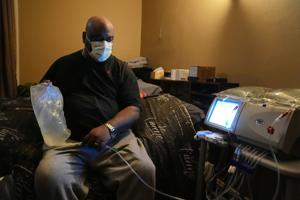
In a groundbreaking initiative to find living kidney donors, a pilot program has emerged in Pennsylvania, connecting patients in need with “angel advocates” who utilize their social networks. This innovative approach seeks to support individuals like Fernando Moreno, a 50-year-old dialysis patient, who has faced a prolonged wait for a kidney transplant. For two years, Moreno’s life has revolved around his limited social contacts, which left him relying on the national transplant waiting list.
Earlier this year, Moreno was introduced to the pilot program, which pairs him with volunteer advocates who share his story across various social media platforms. The initiative, termed the Great Social Experiment by its founder, David Krissman, aims to enhance the chances of finding living donors, particularly for those with restricted social networks. Although Moreno has not yet found a donor, he remains hopeful, stating, “This process is great. I’m just hoping there will be somebody out there that’s willing to take a chance.”
Program Overview and Early Outcomes
Launched in May 2023, the pilot program is being conducted at three hospitals in Pennsylvania, including Temple University Hospital and UPMC-Harrisburg. It has enrolled 15 patients, testing whether motivated volunteers can successfully connect them with potential living donors. The program is backed by a grant of over $100,000 from the Gift of Life Donor Program, which serves as the organ procurement network for eastern Pennsylvania, southern New Jersey, and Delaware.
So far, the initiative has yielded promising results. According to Ryan Ihlenfeldt, director of clinical transplant services at Temple University Hospital, two out of the five participating patients have secured kidney donors, with one patient already preparing for surgery. Additionally, one patient from the University of Pittsburgh Medical Center has undergone a successful transplant.
Krissman’s approach combines social media outreach with compelling storytelling to mobilize support for patients. “Most patients are too sick to do this on their own — many don’t have the skills to do it on their own,” he explained. Richard Hasz Jr., CEO of Gift of Life, noted that this program is pioneering in its method, aiming to create a blueprint for future donor initiatives.
The Need for Living Kidney Donations
The urgency of this program is underscored by the statistics surrounding kidney transplants in the United States. Approximately 90,000 individuals are currently on waiting lists for a kidney transplant, yet only about 6,400 living kidney donations occurred last year out of around 28,000 total transplants. Thousands of patients die annually while waiting for an organ transplant.
Living donor kidneys often provide better matches and longer-lasting results compared to those from deceased donors. The National Kidney Foundation stipulates that living donors must be at least 18 years old and undergo thorough health screenings to ensure their suitability.
The pilot program also aims to reach a broader audience of potential donors through videos and other multimedia storytelling techniques. Krissman’s previous efforts have already shown success; a pilot program in North Carolina matched all three patients with living donors.
Supporters of the program, like Becca Brown, director of transplant services at UPMC-Harrisburg, view this as a potential turning point in addressing the kidney donation crisis. “There’s potential for this to really snowball,” she said. “I’m anxious to see what happens and if we can roll it out to other patients.”
As Moreno and others like him participate in this innovative program, the hope is that more individuals will step forward to become living donors, transforming lives in the process. During a recent event in Harrisburg, kidney patient Ahmad Collins expressed his optimism, stating, “They can be a superhero, so to speak. They can have the opportunity to save somebody’s life, and not too many times in life do you have that opportunity.”
With ongoing efforts to engage potential donors and enhance awareness, this pilot program stands as a promising model for the future of kidney transplantation.

Robinhood Stock Surges 2.5% Today Amid Tech Market Recovery

Philadelphia’s Earth Month Kicks Off with Free Events in Parks

GSK’s Inhaler Decision Sparks Health Concerns for Children

Bradford’s Fish Fry Fridays Offer Community Spirit and Flavor

Speculation Rises on Shutdowns During Trump’s Potential Presidency

Samsung Galaxy Watch 9 to Feature Larger Battery, Report Reveals

Inventors Find New Purpose Through Unconventional Paths

UConn Huskies Aim for Back-to-Back Titles in 2026 NCAA Tournament

U.S. Mine Countermeasure Ships Dock in Malaysia for Logistics Stop

University of Hawaiʻi at Mānoa Joins $25.6M AI Initiative for Disaster Monitoring

$2.2 Million Boost for Cancer Research and Training in Hawaiʻi

ALMA Discovers Companion Orbiting Red Giant Star π 1 Gruis

Sacituzumab Govitecan Shows Promise for HR+/HER2− Breast Cancer

币安人生 Sees $15.92 Million in Trading Volume Amid Market Fluctuations

New Gel Offers Hope for Regrowing Tooth Enamel in Dentistry

CAVA Group Shares Surge 5.1% Amid Mixed Analyst Ratings

Christian Bale in Talks to Join Leonardo DiCaprio in Heat 2

Supreme Court to Review Birthright Citizenship for Children of Immigrants
-
Science9 months ago
University of Hawaiʻi at Mānoa Joins $25.6M AI Initiative for Disaster Monitoring
-
 Health8 months ago
$2.2 Million Boost for Cancer Research and Training in Hawaiʻi
-
 Science9 months ago
ALMA Discovers Companion Orbiting Red Giant Star π 1 Gruis
-
 Health7 months ago
Sacituzumab Govitecan Shows Promise for HR+/HER2− Breast Cancer
-
Politics5 months ago
币安人生 Sees $15.92 Million in Trading Volume Amid Market Fluctuations
-
 Health9 months ago
New Gel Offers Hope for Regrowing Tooth Enamel in Dentistry
-
 Business8 months ago
CAVA Group Shares Surge 5.1% Amid Mixed Analyst Ratings
-
 Entertainment9 months ago
Christian Bale in Talks to Join Leonardo DiCaprio in Heat 2
-
 Politics8 months ago
Supreme Court to Review Birthright Citizenship for Children of Immigrants
-

 Lifestyle9 months ago
Art Deco and Traditional Designs Set to Transform Homes in 2026
-

 Lifestyle8 months ago
Fernando Mendoza Secures Maxwell and O’Brien Awards Ahead of Heisman
-

 World8 months ago
Swiss Residents Reject 50% Inheritance Tax on Wealthy