
Politics
Texas Lawmaker Bob Hall Discusses Toll Road Reform Failures

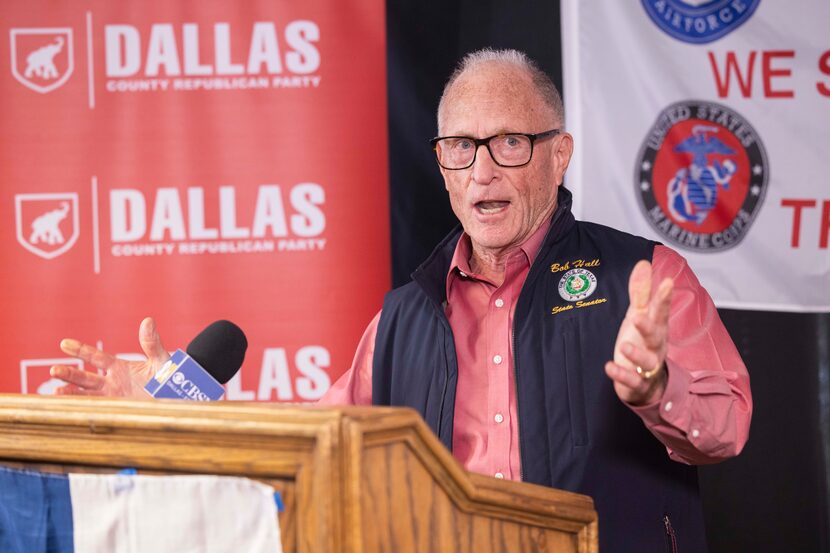
Toll road reforms in Texas faced significant setbacks during the recent legislative session, according to State Senator Bob Hall, a Republican representing parts of North Texas. Hall, an outspoken critic of the state’s toll road policies, expressed concerns regarding the influence of private-public partnerships in the construction and management of these toll facilities.
From 2001 to 2021, Texas constructed more toll road miles than nearly all other states combined, as detailed in an investigation by The Dallas Morning News. This expansion was largely driven by state leaders’ reluctance to impose higher taxes, which led to the proliferation of toll roads to accommodate rapid population growth. North Texas, particularly, contains the highest concentration of toll facilities in the state, with toll roads comprising nearly one-third of major thoroughfares in Dallas County and significant percentages in Collin, Denton, and Tarrant counties.
In a recent discussion, Hall highlighted his priorities during the legislative session, notably a bill aimed at ensuring that tolls would be removed once roads were paid off. “There are some folks who seem to think that these toll companies have the right to continue a toll indefinitely because they built the road. They feel it’s a private road, and I don’t agree with that,” Hall stated.
Despite the introduction of more than 20 bills targeting toll road impacts on motorists, many of these proposals failed to advance. Hall attributed this to the protective stance that toll roads enjoy from local and state governments, which often label such projects as beneficial for the public, eliminating the need for taxpayer funding. He asserted, “There are a number of us who believe that we never needed toll roads in the first place, and when we did, there is no reason to continue to toll the road after it’s paid off.”
The lack of consumer feedback further complicates the situation, Hall noted. “People don’t really understand that legislation is usually thought of by a few people,” he explained, emphasizing that without significant public opposition, legislation benefiting toll companies is likely to proceed.
One of Hall’s more controversial bills aimed to decriminalize fines for unpaid tolls in North Texas. Toll supporters argue that such penalties are necessary to ensure drivers contribute to the upkeep of a toll road system burdened with a $9 billion debt. Hall countered that the penalties imposed on motorists are unjustifiable, stating, “The interest is not anywhere close to what they’re charging people for late fees.”
The senator criticized the fragmented tolling system in Texas, where different agencies implement varying policies, leading to widespread confusion among motorists. He remarked, “There is no common policy. It’s unfortunate… the state abdicated its responsibility to build roads and turned to private road builders.”
Looking ahead, Hall sees potential for legislative change, particularly as long-standing defenders of toll roads prepare to retire. He expressed skepticism about the need for more toll roads, arguing that the state could effectively manage road construction without relying on private enterprises. “Tolls are just a form of taxation. If taxes are needed, we need to get a backbone and say we’re not charging tolls. A toll fee is a tax fee,” Hall asserted, underscoring his position on the broader implications of toll road financing.
As the conversation around toll roads continues, Hall’s insights reflect ongoing tensions between public interest and private profit in Texas’s infrastructure development. The outcome of future legislative sessions may well depend on the public’s willingness to voice their concerns regarding toll road policies and the influence of lobbyists in the political landscape.

Robinhood Stock Surges 2.5% Today Amid Tech Market Recovery

Philadelphia’s Earth Month Kicks Off with Free Events in Parks

GSK’s Inhaler Decision Sparks Health Concerns for Children

Bradford’s Fish Fry Fridays Offer Community Spirit and Flavor

Speculation Rises on Shutdowns During Trump’s Potential Presidency

Samsung Galaxy Watch 9 to Feature Larger Battery, Report Reveals

Inventors Find New Purpose Through Unconventional Paths

UConn Huskies Aim for Back-to-Back Titles in 2026 NCAA Tournament

U.S. Mine Countermeasure Ships Dock in Malaysia for Logistics Stop

University of Hawaiʻi at Mānoa Joins $25.6M AI Initiative for Disaster Monitoring

$2.2 Million Boost for Cancer Research and Training in Hawaiʻi

ALMA Discovers Companion Orbiting Red Giant Star π 1 Gruis

Sacituzumab Govitecan Shows Promise for HR+/HER2− Breast Cancer

币安人生 Sees $15.92 Million in Trading Volume Amid Market Fluctuations

New Gel Offers Hope for Regrowing Tooth Enamel in Dentistry

CAVA Group Shares Surge 5.1% Amid Mixed Analyst Ratings

Christian Bale in Talks to Join Leonardo DiCaprio in Heat 2

Supreme Court to Review Birthright Citizenship for Children of Immigrants
-
Science9 months ago
University of Hawaiʻi at Mānoa Joins $25.6M AI Initiative for Disaster Monitoring
-
 Health8 months ago
$2.2 Million Boost for Cancer Research and Training in Hawaiʻi
-
 Science9 months ago
ALMA Discovers Companion Orbiting Red Giant Star π 1 Gruis
-
 Health7 months ago
Sacituzumab Govitecan Shows Promise for HR+/HER2− Breast Cancer
-
Politics5 months ago
币安人生 Sees $15.92 Million in Trading Volume Amid Market Fluctuations
-
 Health9 months ago
New Gel Offers Hope for Regrowing Tooth Enamel in Dentistry
-
 Business8 months ago
CAVA Group Shares Surge 5.1% Amid Mixed Analyst Ratings
-
 Entertainment9 months ago
Christian Bale in Talks to Join Leonardo DiCaprio in Heat 2
-
 Politics8 months ago
Supreme Court to Review Birthright Citizenship for Children of Immigrants
-

 Lifestyle9 months ago
Art Deco and Traditional Designs Set to Transform Homes in 2026
-

 Lifestyle8 months ago
Fernando Mendoza Secures Maxwell and O’Brien Awards Ahead of Heisman
-

 World8 months ago
Swiss Residents Reject 50% Inheritance Tax on Wealthy