
World
Venezuela’s Economic Crisis Deepens Despite Vast Oil Wealth

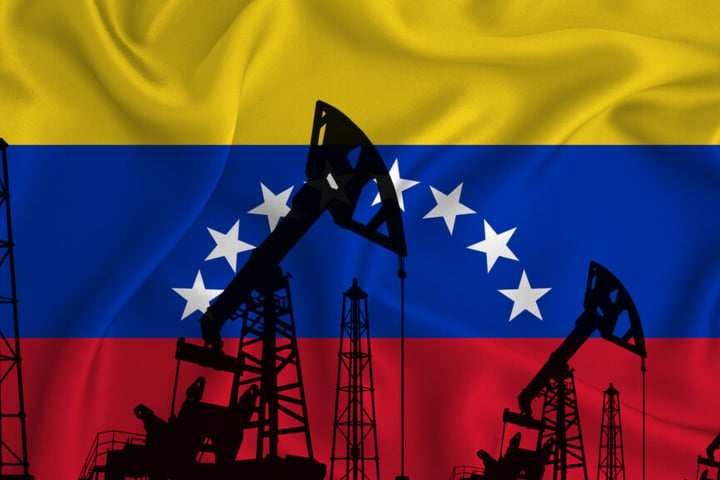
Venezuela, home to the world’s largest proven oil reserves at approximately 303 billion barrels, continues to grapple with profound economic challenges. Despite this abundance, the nation generates only a fraction of the revenue from oil exports compared to other major producers. In 2023, Venezuela’s oil exports brought in about $4 billion, while Saudi Arabia’s earnings from oil were around $181 billion, as reported by Al Jazeera. This stark contrast highlights the underlying issues contributing to Venezuela’s persistent poverty.
Structural Deficiencies Behind Economic Struggles
Venezuela’s oil is primarily extra-heavy crude from the Orinoco Belt, which is more costly to extract and refine, often resulting in discounted sales. The state oil company, PDVSA, has suffered from years of mismanagement, underinvestment, and deteriorating infrastructure. Government policies have kept gasoline prices artificially low, discouraging exports and limiting fiscal revenues.
Experts attribute Venezuela’s economic turmoil to decades of policy failures that have undermined both the oil sector and the wider economy. Under the leadership of Presidents Hugo Chávez and Nicolas Maduro, significant oil revenues were allocated to social programs and subsidies rather than reinvested in critical sectors such as technology and maintenance. This diversion has weakened the oil industry and reduced the nation’s capacity to manage its vast resources effectively.
The extreme reliance on oil has left Venezuela vulnerable to market fluctuations. At its peak, oil comprised more than 90% of the country’s export earnings, according to World Bank data. This overwhelming dependence on crude exports exemplifies the “resource curse,” a situation where countries rich in natural resources fail to achieve sustainable economic growth.
External Pressures and Sanctions Intensify Crisis
Venezuela’s economic challenges are further exacerbated by international sanctions, particularly those imposed by the United States. These sanctions target Venezuelan oil exports and financial transactions, severely limiting the country’s access to global markets and investment opportunities. Renewed pressure in the 2020s has led to significant reductions in export volumes and logistical complications. Reports from Reuters indicate that stringent U.S. enforcement has restricted PDVSA’s ability to sell oil internationally, resulting in unsold oil accumulating in storage tanks.
Contrastingly, countries like Saudi Arabia have successfully managed their oil wealth. Saudi Arabia nationalized its oil sector but maintained a separation between politics and oil management. The country has implemented a long-term economic reform initiative known as Vision 2030, which emphasizes professional management and investment of oil revenues. This approach has allowed non-oil economic activities to rise significantly, now accounting for nearly half of the economy.
Norway serves as another contrasting example, having effectively avoided the resource curse by treating oil revenues as an inheritance. The country channels petroleum income into the Government Pension Fund Global, the world’s largest sovereign wealth fund. Strict fiscal rules limit government spending to around 3% of the fund’s expected return, ensuring long-term economic stability.
Venezuela’s ongoing crisis highlights the complex interplay of mismanagement, structural deficiencies, and external pressures. Despite its vast oil reserves, the country faces a challenging path toward recovery, and its future remains uncertain.

Robinhood Stock Surges 2.5% Today Amid Tech Market Recovery

Philadelphia’s Earth Month Kicks Off with Free Events in Parks

GSK’s Inhaler Decision Sparks Health Concerns for Children

Bradford’s Fish Fry Fridays Offer Community Spirit and Flavor

Speculation Rises on Shutdowns During Trump’s Potential Presidency

Samsung Galaxy Watch 9 to Feature Larger Battery, Report Reveals

Inventors Find New Purpose Through Unconventional Paths

UConn Huskies Aim for Back-to-Back Titles in 2026 NCAA Tournament

U.S. Mine Countermeasure Ships Dock in Malaysia for Logistics Stop

University of Hawaiʻi at Mānoa Joins $25.6M AI Initiative for Disaster Monitoring

$2.2 Million Boost for Cancer Research and Training in Hawaiʻi

ALMA Discovers Companion Orbiting Red Giant Star π 1 Gruis

Sacituzumab Govitecan Shows Promise for HR+/HER2− Breast Cancer

币安人生 Sees $15.92 Million in Trading Volume Amid Market Fluctuations

New Gel Offers Hope for Regrowing Tooth Enamel in Dentistry

CAVA Group Shares Surge 5.1% Amid Mixed Analyst Ratings

Christian Bale in Talks to Join Leonardo DiCaprio in Heat 2

Supreme Court to Review Birthright Citizenship for Children of Immigrants
-
Science9 months ago
University of Hawaiʻi at Mānoa Joins $25.6M AI Initiative for Disaster Monitoring
-
 Health7 months ago
$2.2 Million Boost for Cancer Research and Training in Hawaiʻi
-
 Science9 months ago
ALMA Discovers Companion Orbiting Red Giant Star π 1 Gruis
-
 Health7 months ago
Sacituzumab Govitecan Shows Promise for HR+/HER2− Breast Cancer
-
Politics5 months ago
币安人生 Sees $15.92 Million in Trading Volume Amid Market Fluctuations
-
 Health9 months ago
New Gel Offers Hope for Regrowing Tooth Enamel in Dentistry
-
 Business8 months ago
CAVA Group Shares Surge 5.1% Amid Mixed Analyst Ratings
-
 Entertainment8 months ago
Christian Bale in Talks to Join Leonardo DiCaprio in Heat 2
-
 Politics8 months ago
Supreme Court to Review Birthright Citizenship for Children of Immigrants
-

 Lifestyle8 months ago
Art Deco and Traditional Designs Set to Transform Homes in 2026
-

 Lifestyle8 months ago
Fernando Mendoza Secures Maxwell and O’Brien Awards Ahead of Heisman
-

 World8 months ago
Swiss Residents Reject 50% Inheritance Tax on Wealthy