
Business
Rubio Outlines U.S. Strategy for Venezuela Amid Ongoing Crisis

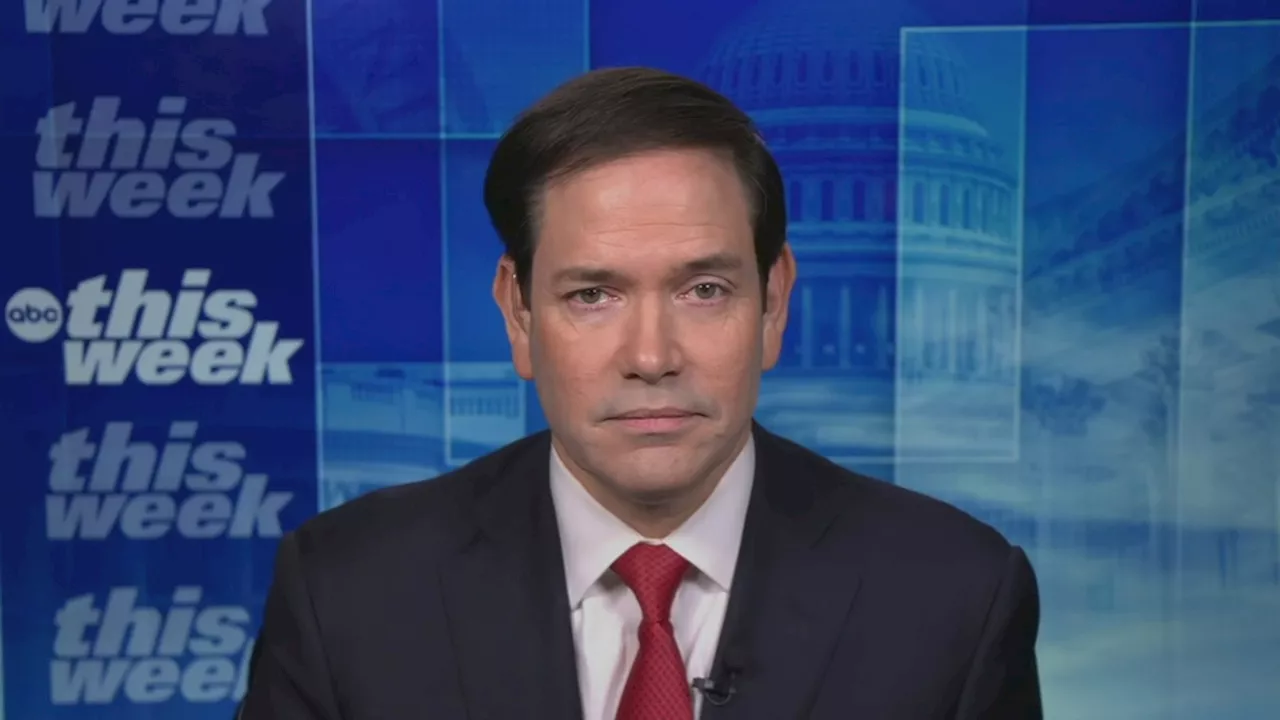
Secretary of State Marco Rubio emphasized the United States’ pivotal role in shaping the ongoing situation in Venezuela, during an interview on ABC News’ “This Week” on March 15, 2024. His remarks came following comments made by President Donald Trump regarding U.S. involvement. Rubio elaborated on the administration’s strategy, focusing on economic sanctions that include an oil quarantine designed to constrain Venezuela’s economic capabilities until conditions favorable to both U.S. interests and the well-being of the Venezuelan people are established.
When pressed by anchor George Stephanopoulos about the U.S.’s control over the situation, Rubio clarified that while the U.S. does not control Venezuela, it is “running the direction of the situation.” He underscored the significance of the economic leverage gained through the oil quarantine, which he argued enables various operational capabilities, including law enforcement actions by the Department of War.
Rubio stated that the U.S. administration does not recognize Delcy Rodríguez, the Venezuelan Vice President, as a legitimate leader. He argued that a transition and free elections are essential for establishing legitimacy within the Venezuelan government. The Secretary of State reinforced that all options remain available, including enforcement measures against vessels involved in sanctioned activities related to Venezuela’s oil exports.
The legal implications of U.S. actions against the Maduro administration were also addressed. Rubio contended that congressional authorization was not required, as the situation does not constitute an invasion. He cited concerns about potential leaks and the urgent nature of the circumstances as reasons for not notifying Congress prior to taking action. According to Rubio, the involvement of the Department of War was necessary due to the “unfriendliness of the territory.”
In a separate discussion, Rubio distanced himself from Trump’s recent pardon of former Honduran President Juan Orlando Hernández, who was convicted on drug trafficking charges. He clarified that his role as Secretary of State and national security adviser focused on foreign policy, and he was not involved in the pardon process.
The U.S. government’s approach to the Venezuelan crisis is multifaceted, involving economic sanctions, diplomatic pressure, and potential enforcement actions. The emphasis on the oil quarantine reflects the administration’s belief in leveraging economic measures to influence political outcomes in Venezuela. Rubio’s explanations regarding the legal justifications for such actions highlight a strategy aimed at applying pressure to facilitate a political change in the country.
The ongoing debate surrounding the legitimacy of the Venezuelan government and the role of the United States continues to impact international relations and the political landscape in Venezuela. With actions aimed at creating pressure for a governmental transition, the U.S. remains focused on shaping the future of Venezuela amid a complex and evolving crisis.

Robinhood Stock Surges 2.5% Today Amid Tech Market Recovery

Philadelphia’s Earth Month Kicks Off with Free Events in Parks

GSK’s Inhaler Decision Sparks Health Concerns for Children

Bradford’s Fish Fry Fridays Offer Community Spirit and Flavor

Speculation Rises on Shutdowns During Trump’s Potential Presidency

Samsung Galaxy Watch 9 to Feature Larger Battery, Report Reveals

Inventors Find New Purpose Through Unconventional Paths

UConn Huskies Aim for Back-to-Back Titles in 2026 NCAA Tournament

U.S. Mine Countermeasure Ships Dock in Malaysia for Logistics Stop

University of Hawaiʻi at Mānoa Joins $25.6M AI Initiative for Disaster Monitoring

$2.2 Million Boost for Cancer Research and Training in Hawaiʻi

ALMA Discovers Companion Orbiting Red Giant Star π 1 Gruis

Sacituzumab Govitecan Shows Promise for HR+/HER2− Breast Cancer

币安人生 Sees $15.92 Million in Trading Volume Amid Market Fluctuations

New Gel Offers Hope for Regrowing Tooth Enamel in Dentistry

CAVA Group Shares Surge 5.1% Amid Mixed Analyst Ratings

Christian Bale in Talks to Join Leonardo DiCaprio in Heat 2

Supreme Court to Review Birthright Citizenship for Children of Immigrants
-
Science9 months ago
University of Hawaiʻi at Mānoa Joins $25.6M AI Initiative for Disaster Monitoring
-
 Health7 months ago
$2.2 Million Boost for Cancer Research and Training in Hawaiʻi
-
 Science9 months ago
ALMA Discovers Companion Orbiting Red Giant Star π 1 Gruis
-
 Health7 months ago
Sacituzumab Govitecan Shows Promise for HR+/HER2− Breast Cancer
-
Politics5 months ago
币安人生 Sees $15.92 Million in Trading Volume Amid Market Fluctuations
-
 Health9 months ago
New Gel Offers Hope for Regrowing Tooth Enamel in Dentistry
-
 Business8 months ago
CAVA Group Shares Surge 5.1% Amid Mixed Analyst Ratings
-
 Entertainment8 months ago
Christian Bale in Talks to Join Leonardo DiCaprio in Heat 2
-
 Politics8 months ago
Supreme Court to Review Birthright Citizenship for Children of Immigrants
-

 Lifestyle8 months ago
Art Deco and Traditional Designs Set to Transform Homes in 2026
-

 Lifestyle8 months ago
Fernando Mendoza Secures Maxwell and O’Brien Awards Ahead of Heisman
-

 World8 months ago
Swiss Residents Reject 50% Inheritance Tax on Wealthy