
Business
Iran’s Oil Production Faces New Challenges Amid U.S. Actions

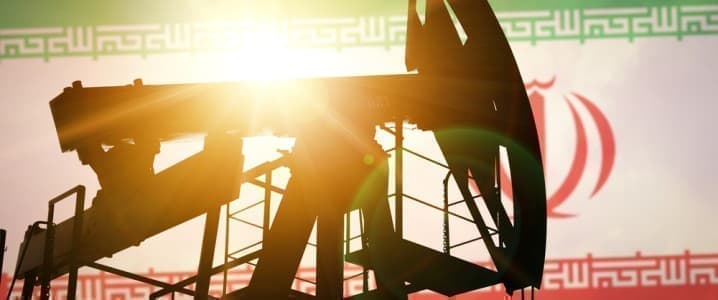
Iran’s oil production is encountering fresh challenges following recent military actions by the United States in Venezuela. Despite record oil output levels, Iran’s energy sector faces increased scrutiny and potential repercussions from U.S. sanctions. The ongoing geopolitical landscape, particularly the U.S. intervention in Venezuela, raises concerns about the future of Iran’s crude exports and its trading relationships.
Iran has recently seen significant growth in oil production, reaching levels between 3.2 million and 4 million barrels per day (bpd) in 2024, up from approximately 2.9 million bpd in 2019. These gains come despite stringent sanctions imposed by the U.S. since 2018, when President Donald Trump reinstated measures targeting Iran’s energy sector. Iran, which boasts the world’s fourth-largest proven oil reserves—accounting for about 9 percent of the global total—has sought to counter these restrictions through partnerships with countries like China.
The U.S. military’s intervention in Venezuela on January 3, 2024, captured President Nicolás Maduro and raised alarms within the Iranian government. Iranian officials have expressed concerns that similar actions could occur in Iran, potentially destabilizing the region further. Tensions have escalated as U.S. rhetoric suggests that military actions may extend to Colombia and Mexico. In response, Iran has warned that U.S. troops could be targeted if they intervene in domestic protests.
Although Iran continues to be a significant player in the oil market, its influence has waned due to years of sanctions, ongoing conflicts, and a tarnished reputation within the global energy industry. During its peak in 1974, Iran produced over 6 million bpd of crude oil. Nowadays, the country ranks as the third-largest crude producer and fourth-largest exporter in the Organization of the Petroleum Exporting Countries (OPEC).
China has emerged as Iran’s primary trading partner, purchasing around 90 percent of Iran’s crude exports. In the first half of 2025, Iranian crude accounted for approximately 13.6 percent of China’s oil purchases, with an average of 1.38 million bpd imported during that period. This partnership has been bolstered by Iran’s competitive pricing, offering discounts of up to $7 to $8 per barrel below global benchmarks.
Despite its increasing production, Iran’s economy remains vulnerable. A former senior Iranian oil official highlighted that the key issue lies not in production volumes but in the repatriation of oil revenues, which face numerous obstacles. The Iranian rial has plummeted, and the country is grappling with an inflation rate of 42.2 percent as of December 2023. The government has been compelled to raise gasoline prices for certain vehicles due to unsustainable subsidies, leading to widespread protests across the nation.
The implications of the U.S. military’s actions in Venezuela could lead to a shift in oil trade dynamics in the coming years. There is speculation that Chinese refiners may reassess their reliance on Iranian crude in light of increased geopolitical uncertainty. While the full impact of these developments remains to be seen, the situation underscores the fragility of Iran’s position in the global oil market.
As tensions continue to mount, the international community watches closely to gauge the potential consequences for Iran’s oil exports and the broader implications for global energy markets.

Robinhood Stock Surges 2.5% Today Amid Tech Market Recovery

Philadelphia’s Earth Month Kicks Off with Free Events in Parks

GSK’s Inhaler Decision Sparks Health Concerns for Children

Bradford’s Fish Fry Fridays Offer Community Spirit and Flavor

Speculation Rises on Shutdowns During Trump’s Potential Presidency

Samsung Galaxy Watch 9 to Feature Larger Battery, Report Reveals

Inventors Find New Purpose Through Unconventional Paths

UConn Huskies Aim for Back-to-Back Titles in 2026 NCAA Tournament

U.S. Mine Countermeasure Ships Dock in Malaysia for Logistics Stop

University of Hawaiʻi at Mānoa Joins $25.6M AI Initiative for Disaster Monitoring

$2.2 Million Boost for Cancer Research and Training in Hawaiʻi

ALMA Discovers Companion Orbiting Red Giant Star π 1 Gruis

Sacituzumab Govitecan Shows Promise for HR+/HER2− Breast Cancer

币安人生 Sees $15.92 Million in Trading Volume Amid Market Fluctuations

New Gel Offers Hope for Regrowing Tooth Enamel in Dentistry

CAVA Group Shares Surge 5.1% Amid Mixed Analyst Ratings

Christian Bale in Talks to Join Leonardo DiCaprio in Heat 2

Supreme Court to Review Birthright Citizenship for Children of Immigrants
-
Science9 months ago
University of Hawaiʻi at Mānoa Joins $25.6M AI Initiative for Disaster Monitoring
-
 Health7 months ago
$2.2 Million Boost for Cancer Research and Training in Hawaiʻi
-
 Science9 months ago
ALMA Discovers Companion Orbiting Red Giant Star π 1 Gruis
-
 Health7 months ago
Sacituzumab Govitecan Shows Promise for HR+/HER2− Breast Cancer
-
Politics5 months ago
币安人生 Sees $15.92 Million in Trading Volume Amid Market Fluctuations
-
 Health9 months ago
New Gel Offers Hope for Regrowing Tooth Enamel in Dentistry
-
 Business8 months ago
CAVA Group Shares Surge 5.1% Amid Mixed Analyst Ratings
-
 Entertainment8 months ago
Christian Bale in Talks to Join Leonardo DiCaprio in Heat 2
-
 Politics8 months ago
Supreme Court to Review Birthright Citizenship for Children of Immigrants
-

 Lifestyle8 months ago
Art Deco and Traditional Designs Set to Transform Homes in 2026
-

 Lifestyle8 months ago
Fernando Mendoza Secures Maxwell and O’Brien Awards Ahead of Heisman
-

 World8 months ago
Swiss Residents Reject 50% Inheritance Tax on Wealthy