
Top Stories
Michael Burry Warns AI Could Burst Big Tech’s Profit Bubble

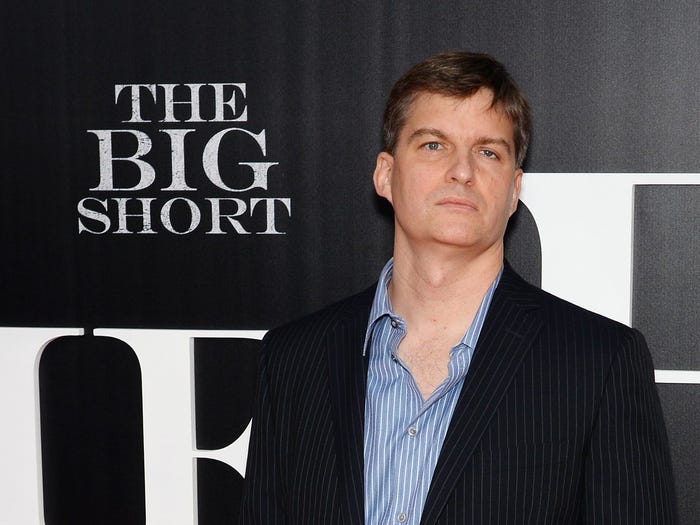
URGENT UPDATE: Investor Michael Burry, famous for predicting the 2008 financial crisis, has issued a stark warning about the future of Big Tech in light of the AI boom. In a recent Substack post, Burry argues that investment returns in major tech companies are rapidly declining due to the shift towards capital-intensive AI technologies.
Burry’s insights come as he analyzes the impact of artificial intelligence on traditional business models. He stated that the most critical metric for investors is not revenue growth or market size, but return on invested capital (ROIC). Historically high ROIC figures in software companies are expected to plummet as firms like Microsoft, Google, and Meta pivot towards more capital-heavy operations, including data centers and energy consumption.
In his post, Burry wrote, “The measure to beat all measures is return on invested capital (ROIC). Now that they are becoming capital-intensive hardware companies, ROIC is sure to fall, and this will pressure shares in the long run.” This shift, he argues, could lead to significant stock price declines for years.
The implications of Burry’s analysis are profound. Despite the potential for AI to expand market opportunities, he warns that falling ROIC may overshadow these gains, raising concerns among investors. His caution mirrors sentiments from the late 1990s dot-com bubble, where initial excitement led to a dramatic crash. Burry even likened OpenAI to the “Netscape of our time,” suggesting the current AI craze could end similarly.
Burry’s hedge fund, Scion Asset Management, has already made significant bets against AI frontrunners Nvidia and Palantir Technologies, as reported in a regulatory filing from September 2023. According to Burry, leading AI companies are investing heavily to create the infrastructure necessary for their AI applications, but so far, these investments have not yielded substantial profits.
He emphasized the urgent need for AI investments to generate returns that exceed their costs, warning, “At some point, this spending on the AI buildout has to have a return on investment higher than the cost of that investment, or there is just no economic value added.”
As the tech landscape evolves, the financial pressure could lead to a widespread reckoning in the AI sector. Burry’s predictions raise critical questions about the sustainability of current AI spending patterns and the potential for a market correction.
Investors are now keenly watching these developments as Burry’s insights gain traction. As AI continues to reshape the tech industry, the financial community is on alert for potential shifts that could redefine investment strategies.
Stay tuned for more updates on this developing story, as the consequences of Burry’s analysis could reverberate throughout the tech industry and impact global markets.

Robinhood Stock Surges 2.5% Today Amid Tech Market Recovery

Philadelphia’s Earth Month Kicks Off with Free Events in Parks

GSK’s Inhaler Decision Sparks Health Concerns for Children

Bradford’s Fish Fry Fridays Offer Community Spirit and Flavor

Speculation Rises on Shutdowns During Trump’s Potential Presidency

Samsung Galaxy Watch 9 to Feature Larger Battery, Report Reveals

Inventors Find New Purpose Through Unconventional Paths

UConn Huskies Aim for Back-to-Back Titles in 2026 NCAA Tournament

U.S. Mine Countermeasure Ships Dock in Malaysia for Logistics Stop

University of Hawaiʻi at Mānoa Joins $25.6M AI Initiative for Disaster Monitoring

$2.2 Million Boost for Cancer Research and Training in Hawaiʻi

ALMA Discovers Companion Orbiting Red Giant Star π 1 Gruis

Sacituzumab Govitecan Shows Promise for HR+/HER2− Breast Cancer

币安人生 Sees $15.92 Million in Trading Volume Amid Market Fluctuations

New Gel Offers Hope for Regrowing Tooth Enamel in Dentistry

CAVA Group Shares Surge 5.1% Amid Mixed Analyst Ratings

Christian Bale in Talks to Join Leonardo DiCaprio in Heat 2

Supreme Court to Review Birthright Citizenship for Children of Immigrants
-
Science9 months ago
University of Hawaiʻi at Mānoa Joins $25.6M AI Initiative for Disaster Monitoring
-
 Health7 months ago
$2.2 Million Boost for Cancer Research and Training in Hawaiʻi
-
 Science9 months ago
ALMA Discovers Companion Orbiting Red Giant Star π 1 Gruis
-
 Health7 months ago
Sacituzumab Govitecan Shows Promise for HR+/HER2− Breast Cancer
-
Politics5 months ago
币安人生 Sees $15.92 Million in Trading Volume Amid Market Fluctuations
-
 Health9 months ago
New Gel Offers Hope for Regrowing Tooth Enamel in Dentistry
-
 Business8 months ago
CAVA Group Shares Surge 5.1% Amid Mixed Analyst Ratings
-
 Entertainment8 months ago
Christian Bale in Talks to Join Leonardo DiCaprio in Heat 2
-
 Politics8 months ago
Supreme Court to Review Birthright Citizenship for Children of Immigrants
-

 Lifestyle8 months ago
Art Deco and Traditional Designs Set to Transform Homes in 2026
-

 Lifestyle8 months ago
Fernando Mendoza Secures Maxwell and O’Brien Awards Ahead of Heisman
-

 World8 months ago
Swiss Residents Reject 50% Inheritance Tax on Wealthy