
Top Stories
China’s Controversial Scientist He Jiankui Speaks Out Post-Prison

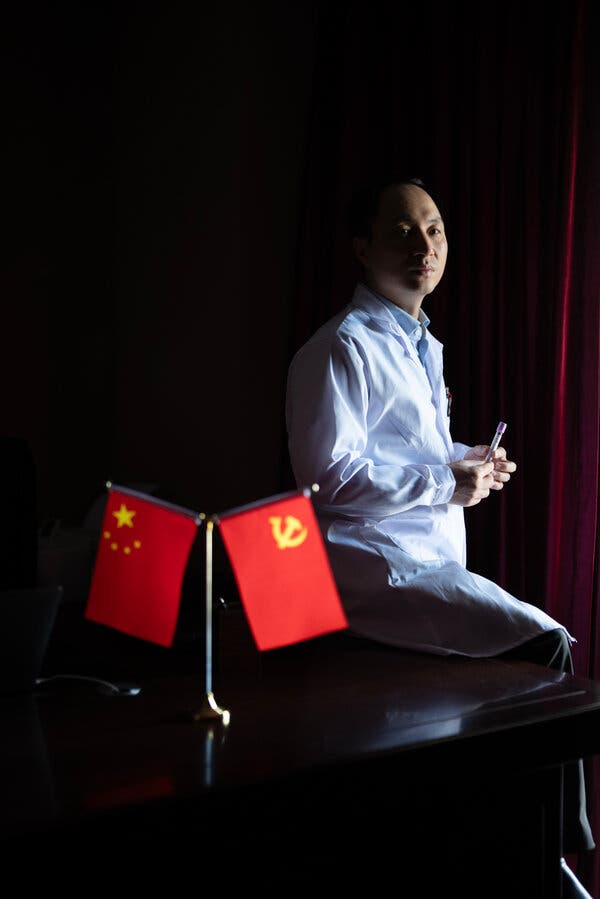
He Jiankui, the scientist known for creating the world’s first genetically edited babies, is emerging from the shadows of controversy. After serving a three-year prison sentence for deceiving medical authorities, He is now residing in a government-backed research hub north of Beijing. Rather than fading into obscurity, he has begun to speak openly about his work and the future of biotechnology in China.
In November 2018, He announced the birth of genetically modified twins, an event that sparked international outrage and ethical debates. His actions led to his conviction in December 2019, where he was found guilty of conducting illegal medical practices. Despite the backlash and the seizure of his passport, He maintains that he is ready to contribute to his country’s ambitions in the field of biotechnology.
The landscape for biotechnology in China is rapidly evolving. As the country seeks to establish itself as a global leader in the sector, He’s presence raises questions about how China balances innovation with ethical considerations. Benjamin Hurlbut, an associate professor at the University of Arizona, noted, “For a country that is adept at censorship and control, they are leaving him curiously unfettered.” He suggests that He is not viewed as a liability but rather as a potential asset amidst increasing tensions between China and the West.
Living in a spacious apartment, He is not alone. He has the support of a bodyguard and a financial sponsor, the identity of whom he has chosen to keep private. In interviews, he expresses confidence in the demand for researchers willing to push scientific boundaries. “There is a growing need for people who are not afraid to innovate,” he stated, emphasizing his commitment to advancing genetic research.
While He cannot travel abroad due to legal restrictions, his outspoken nature within China’s biotechnology sector is noteworthy. His situation reflects a broader trend within the country, where officials seem willing to embrace controversial figures if they align with national interests. This strategy may allow China to leverage He’s expertise while showcasing its commitment to pioneering advancements.
The implications of He’s work extend beyond national borders. As countries grapple with the ethical dimensions of genetic editing, He’s actions serve as a focal point for discussions about regulation, safety, and human rights in scientific research. His ongoing activities in China may influence how other nations approach similar technologies.
In summary, He Jiankui’s return to the public eye signifies a complex intersection of ethics, innovation, and national ambition. As China strives to become a biotechnology superpower, figures like He may play pivotal roles in shaping the future of genetic research, challenging established norms while igniting global debate.

Robinhood Stock Surges 2.5% Today Amid Tech Market Recovery

Philadelphia’s Earth Month Kicks Off with Free Events in Parks

GSK’s Inhaler Decision Sparks Health Concerns for Children

Bradford’s Fish Fry Fridays Offer Community Spirit and Flavor

Speculation Rises on Shutdowns During Trump’s Potential Presidency

Samsung Galaxy Watch 9 to Feature Larger Battery, Report Reveals

Inventors Find New Purpose Through Unconventional Paths

UConn Huskies Aim for Back-to-Back Titles in 2026 NCAA Tournament

U.S. Mine Countermeasure Ships Dock in Malaysia for Logistics Stop

University of Hawaiʻi at Mānoa Joins $25.6M AI Initiative for Disaster Monitoring

$2.2 Million Boost for Cancer Research and Training in Hawaiʻi

ALMA Discovers Companion Orbiting Red Giant Star π 1 Gruis

Sacituzumab Govitecan Shows Promise for HR+/HER2− Breast Cancer

币安人生 Sees $15.92 Million in Trading Volume Amid Market Fluctuations

New Gel Offers Hope for Regrowing Tooth Enamel in Dentistry

CAVA Group Shares Surge 5.1% Amid Mixed Analyst Ratings

Christian Bale in Talks to Join Leonardo DiCaprio in Heat 2

Supreme Court to Review Birthright Citizenship for Children of Immigrants
-
Science9 months ago
University of Hawaiʻi at Mānoa Joins $25.6M AI Initiative for Disaster Monitoring
-
 Health7 months ago
$2.2 Million Boost for Cancer Research and Training in Hawaiʻi
-
 Science8 months ago
ALMA Discovers Companion Orbiting Red Giant Star π 1 Gruis
-
 Health7 months ago
Sacituzumab Govitecan Shows Promise for HR+/HER2− Breast Cancer
-
Politics5 months ago
币安人生 Sees $15.92 Million in Trading Volume Amid Market Fluctuations
-
 Health9 months ago
New Gel Offers Hope for Regrowing Tooth Enamel in Dentistry
-
 Business7 months ago
CAVA Group Shares Surge 5.1% Amid Mixed Analyst Ratings
-
 Entertainment8 months ago
Christian Bale in Talks to Join Leonardo DiCaprio in Heat 2
-
 Politics7 months ago
Supreme Court to Review Birthright Citizenship for Children of Immigrants
-

 Lifestyle8 months ago
Art Deco and Traditional Designs Set to Transform Homes in 2026
-

 Lifestyle7 months ago
Fernando Mendoza Secures Maxwell and O’Brien Awards Ahead of Heisman
-

 World8 months ago
Swiss Residents Reject 50% Inheritance Tax on Wealthy