
Politics
Global Coalition Launches $80 Million Initiative to Feed 100 Million Children

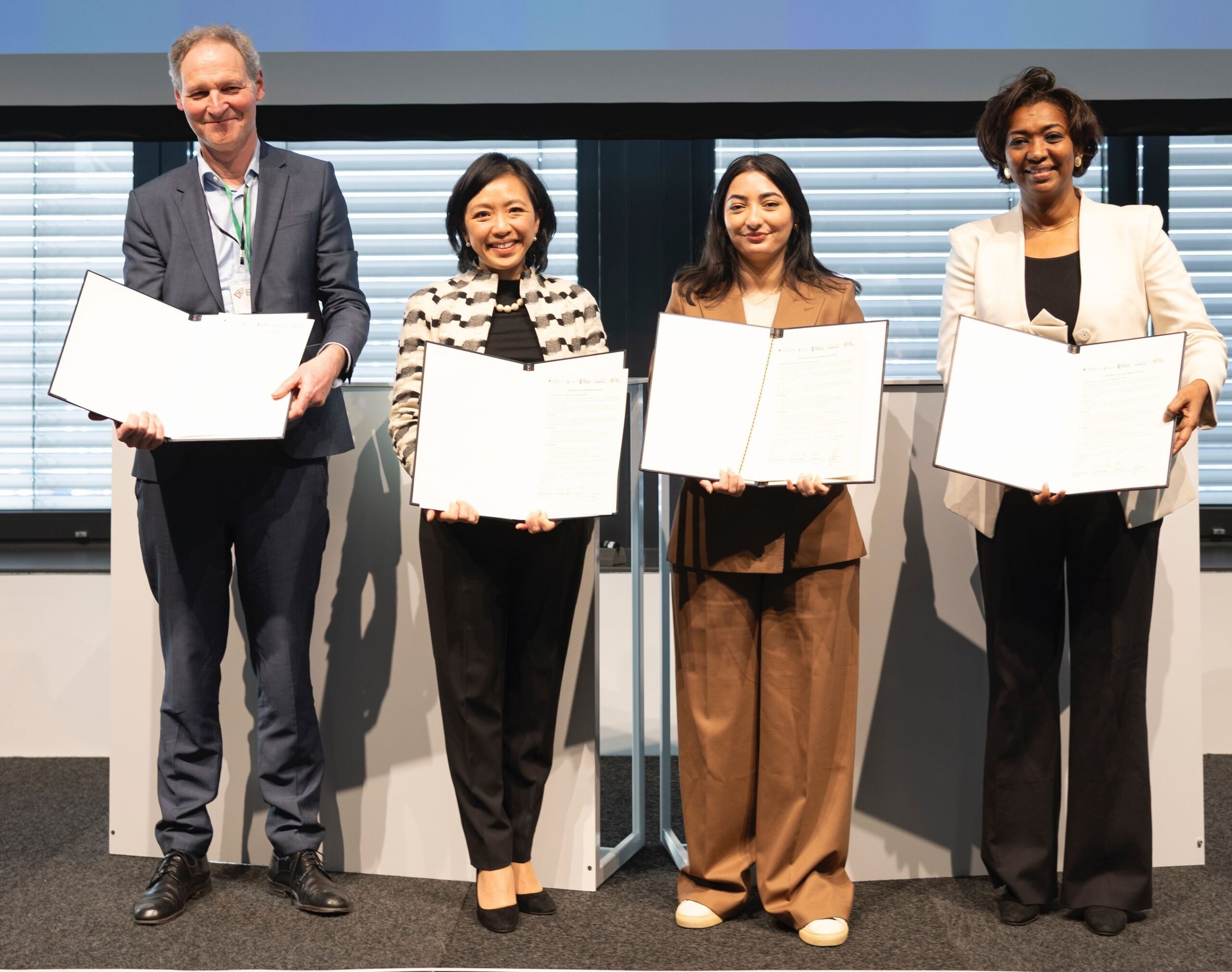
The Federal Ministry for Economic Cooperation and Development of Germany (BMZ), alongside the Novo Nordisk Foundation, The Rockefeller Foundation, and the World Food Programme (WFP), has launched the School Meals Accelerator with the ambitious goal of reaching an additional 100 million children by 2030. This initiative, announced on January 16, 2026, in Berlin, aims to combat hunger and poverty while enhancing food and nutrition security across Africa, Asia, and Latin America.
The School Meals Accelerator begins with an impressive commitment of over $80 million from the founding partners, with additional backing from France and the Global Partnership for Education. This funding will provide technical assistance to countries, allowing them to scale and strengthen their national school meal programmes. The initiative seeks to unlock the potential of these programmes to improve the lives of millions of children while simultaneously bolstering local food systems.
The announcement was made during the Global Forum for Food and Agriculture, highlighting Germany’s role in promoting innovative approaches to development cooperation. Federal Minister for Economic Cooperation and Development, Reem Alabali Radovan, emphasized the transformative power of school meals, stating, “School meals are more than just a plate of food. They are a significant change agent in our global fight for better education, empowerment, and health.”
The WFP’s Assistant Executive Director for Partnerships and Innovation, Rania Dagash-Kamara, noted the critical role governments play in transforming school meal programmes. She stated, “The Accelerator supports that ambition—working alongside WFP and other partners to help countries turn their commitments into sustainable systems that support children and communities.”
The initiative is set against the backdrop of a growing recognition of the importance of school meals as a global policy priority. Since 2020, funding for school meal programmes has almost doubled, increasing from $43 billion to $84 billion annually. Currently, approximately 466 million children benefit from school meals, marking an increase of 80 million since four years ago. Despite this progress, the integration of school meals into national systems and securing long-term financing remains a challenge.
The School Meals Accelerator originated from the School Meals Coalition, a network of over 110 governments and more than 150 non-profit, philanthropic, and research partners. This coalition prioritizes school meals as a strategic investment, with 60 countries already submitting national commitments with concrete targets.
This innovative collaboration will leverage the expertise of its founding partners along with support from co-chairs of the School Meals Coalition, including France, Finland, and Brazil. The initiative will also draw upon contributions from various organizations, such as the Global Alliance Against Hunger and Poverty and the Centre of Excellence Against Hunger in Brazil.
The goals of the School Meals Accelerator are clear. It aims to unite governments, non-profits, and philanthropic partners to integrate school meal programmes into broader strategies. This will help ensure these initiatives drive systemic change rather than operate as isolated efforts. By pooling expertise, resources, and innovations, the Accelerator seeks to advance implementation efforts and bolster national capabilities.
School meals have proven to be a reliable pathway out of poverty, equipping children with essential skills for future success. They represent one of the most cost-effective investments in education, resulting in measurable improvements in cognitive skills, mathematics, and literacy. Furthermore, these programmes enhance school participation and learning outcomes, ultimately supporting productivity and economic growth.
By sourcing locally and sustainably, school meal initiatives also strengthen food systems, create markets for farmers, and stimulate rural economies. They contribute to climate resilience and regenerative agriculture, aligning global sustainability goals with local livelihoods.
For further information on the opportunities provided by school meals programmes, interested parties can visit the School Meals Coalition’s website.
This initiative reflects a growing consensus on the need for coordinated efforts to ensure that no child goes hungry. The collaboration between BMZ, Novo Nordisk Foundation, The Rockefeller Foundation, and WFP underscores a commitment to nourishing the next generation and fostering a healthier, more equitable world.

Robinhood Stock Surges 2.5% Today Amid Tech Market Recovery

Philadelphia’s Earth Month Kicks Off with Free Events in Parks

GSK’s Inhaler Decision Sparks Health Concerns for Children

Bradford’s Fish Fry Fridays Offer Community Spirit and Flavor

Speculation Rises on Shutdowns During Trump’s Potential Presidency

Samsung Galaxy Watch 9 to Feature Larger Battery, Report Reveals

Inventors Find New Purpose Through Unconventional Paths

UConn Huskies Aim for Back-to-Back Titles in 2026 NCAA Tournament

U.S. Mine Countermeasure Ships Dock in Malaysia for Logistics Stop

University of Hawaiʻi at Mānoa Joins $25.6M AI Initiative for Disaster Monitoring

$2.2 Million Boost for Cancer Research and Training in Hawaiʻi

ALMA Discovers Companion Orbiting Red Giant Star π 1 Gruis

Sacituzumab Govitecan Shows Promise for HR+/HER2− Breast Cancer

币安人生 Sees $15.92 Million in Trading Volume Amid Market Fluctuations

New Gel Offers Hope for Regrowing Tooth Enamel in Dentistry

CAVA Group Shares Surge 5.1% Amid Mixed Analyst Ratings

Christian Bale in Talks to Join Leonardo DiCaprio in Heat 2

Supreme Court to Review Birthright Citizenship for Children of Immigrants
-
Science9 months ago
University of Hawaiʻi at Mānoa Joins $25.6M AI Initiative for Disaster Monitoring
-
 Health7 months ago
$2.2 Million Boost for Cancer Research and Training in Hawaiʻi
-
 Science8 months ago
ALMA Discovers Companion Orbiting Red Giant Star π 1 Gruis
-
 Health7 months ago
Sacituzumab Govitecan Shows Promise for HR+/HER2− Breast Cancer
-
Politics5 months ago
币安人生 Sees $15.92 Million in Trading Volume Amid Market Fluctuations
-
 Health9 months ago
New Gel Offers Hope for Regrowing Tooth Enamel in Dentistry
-
 Business7 months ago
CAVA Group Shares Surge 5.1% Amid Mixed Analyst Ratings
-
 Entertainment8 months ago
Christian Bale in Talks to Join Leonardo DiCaprio in Heat 2
-
 Politics7 months ago
Supreme Court to Review Birthright Citizenship for Children of Immigrants
-

 Lifestyle8 months ago
Art Deco and Traditional Designs Set to Transform Homes in 2026
-

 Lifestyle7 months ago
Fernando Mendoza Secures Maxwell and O’Brien Awards Ahead of Heisman
-

 World8 months ago
Swiss Residents Reject 50% Inheritance Tax on Wealthy