
Politics
Judge Restricts ICE Tactics Against Protesters in Minneapolis

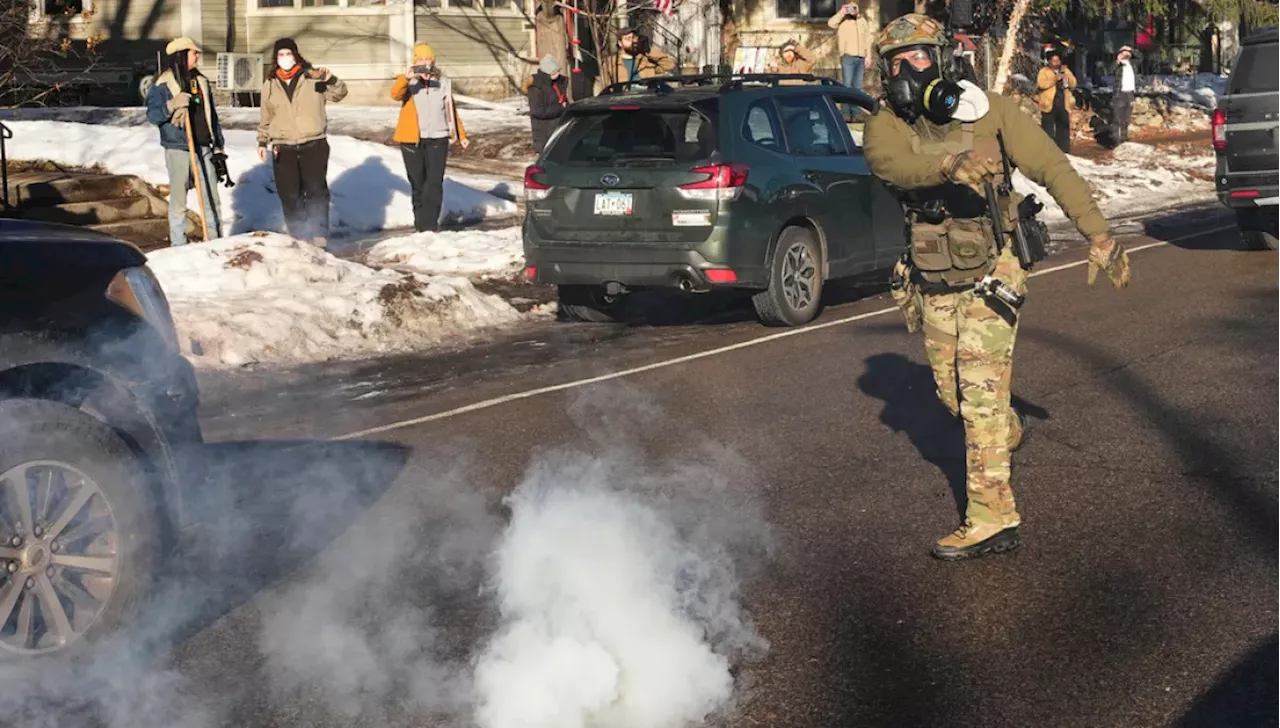
A U.S. District Judge has imposed limitations on the crowd-control measures employed by Immigration and Customs Enforcement (ICE) officers against protesters in Minneapolis. On March 15, 2024, Judge Katherine Menendez ruled that ICE agents could not arrest or use pepper spray against demonstrators unless they were directly involved in violent actions. This ruling reflects growing concerns over the treatment of protesters and the protection of First Amendment rights.
The judge’s decision specifically prohibits ICE from responding to actions such as the stalking of their vehicles or the mere presence of crowds around their operations. Judge Menendez stated that the order would remain effective until the operation concludes or if “conditions change such that it is no longer necessary.”
In her ruling, she noted that plaintiffs had reported experiencing retaliatory actions from ICE, including traffic stops, arrests, and the indiscriminate use of chemical irritants. She emphasized that such conduct can create a chilling effect on constitutional rights, stating, “These kinds of conduct are those that undoubtedly give rise to an objective chill of First Amendment rights.”
Legal representatives from the Department of Homeland Security (DHS) pointed to other behaviors that they argued should not be protected as free speech. This included allegations of assaulting federal officers and damaging property. Judge Menendez contested most of these claims, particularly dismissing the notion that pursuing a law enforcement vehicle would justify a response from ICE.
Tensions in the Twin Cities have escalated following recent protests, particularly after the death of Renee Good, who was shot by an ICE officer after allegedly hitting him with her vehicle. The situation intensified earlier this week when protesters reportedly broke into an FBI vehicle and stole a firearm. The individual involved in the theft was identified as an alleged member of the Latin Kings gang.
The case leading to this order was initiated by the American Civil Liberties Union (ACLU), representing six plaintiffs who claimed they were unjustly assaulted or arrested by ICE officers during recent protests. This legal action showcases the ongoing debate over immigration enforcement tactics and civil rights.
As protests continue in Minneapolis, the implications of Judge Menendez’s order may reverberate beyond the immediate context. Many are closely watching how federal and local authorities will respond as the situation evolves. The intersection of law enforcement and civil liberties remains a critical point of contention in the region, drawing attention from legal advocates and community leaders alike.
The discourse surrounding ICE activities in Minnesota has also sparked broader political discussions. Several Democratic-led states are advancing legislation aimed at curbing ICE’s practices, which some critics argue could infringe on federal supremacy. This tension reflects a larger national conversation about immigration policy and enforcement practices across the United States.
As the situation progresses, the outcomes of these legal battles and public protests will likely shape the landscape of immigration enforcement and civil rights in the coming months.

Robinhood Stock Surges 2.5% Today Amid Tech Market Recovery

Philadelphia’s Earth Month Kicks Off with Free Events in Parks

GSK’s Inhaler Decision Sparks Health Concerns for Children

Bradford’s Fish Fry Fridays Offer Community Spirit and Flavor

Speculation Rises on Shutdowns During Trump’s Potential Presidency

Samsung Galaxy Watch 9 to Feature Larger Battery, Report Reveals

Inventors Find New Purpose Through Unconventional Paths

UConn Huskies Aim for Back-to-Back Titles in 2026 NCAA Tournament

U.S. Mine Countermeasure Ships Dock in Malaysia for Logistics Stop

University of Hawaiʻi at Mānoa Joins $25.6M AI Initiative for Disaster Monitoring

$2.2 Million Boost for Cancer Research and Training in Hawaiʻi

ALMA Discovers Companion Orbiting Red Giant Star π 1 Gruis

Sacituzumab Govitecan Shows Promise for HR+/HER2− Breast Cancer

币安人生 Sees $15.92 Million in Trading Volume Amid Market Fluctuations

New Gel Offers Hope for Regrowing Tooth Enamel in Dentistry

CAVA Group Shares Surge 5.1% Amid Mixed Analyst Ratings

Christian Bale in Talks to Join Leonardo DiCaprio in Heat 2

Supreme Court to Review Birthright Citizenship for Children of Immigrants
-
Science9 months ago
University of Hawaiʻi at Mānoa Joins $25.6M AI Initiative for Disaster Monitoring
-
 Health7 months ago
$2.2 Million Boost for Cancer Research and Training in Hawaiʻi
-
 Science8 months ago
ALMA Discovers Companion Orbiting Red Giant Star π 1 Gruis
-
 Health7 months ago
Sacituzumab Govitecan Shows Promise for HR+/HER2− Breast Cancer
-
Politics5 months ago
币安人生 Sees $15.92 Million in Trading Volume Amid Market Fluctuations
-
 Health9 months ago
New Gel Offers Hope for Regrowing Tooth Enamel in Dentistry
-
 Business7 months ago
CAVA Group Shares Surge 5.1% Amid Mixed Analyst Ratings
-
 Entertainment8 months ago
Christian Bale in Talks to Join Leonardo DiCaprio in Heat 2
-
 Politics7 months ago
Supreme Court to Review Birthright Citizenship for Children of Immigrants
-

 Lifestyle8 months ago
Art Deco and Traditional Designs Set to Transform Homes in 2026
-

 Lifestyle7 months ago
Fernando Mendoza Secures Maxwell and O’Brien Awards Ahead of Heisman
-

 World8 months ago
Swiss Residents Reject 50% Inheritance Tax on Wealthy