
Business
USD/MXN Drops Over 3% as Greenland Tensions Ease and Bond Yields Rise

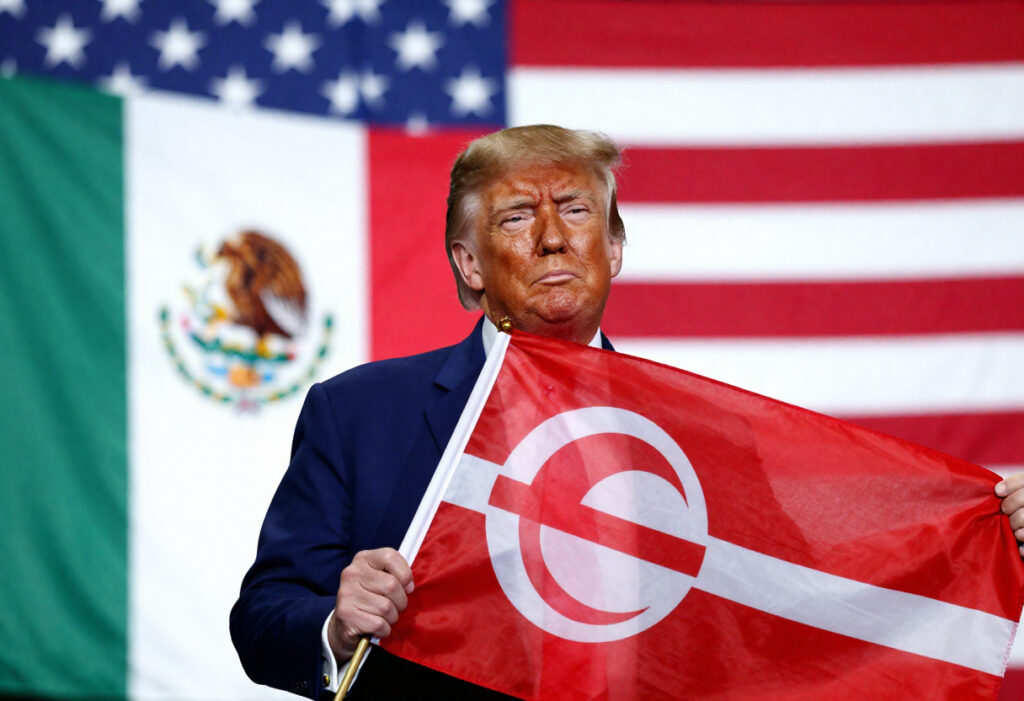
The USD/MXN currency pair has experienced a notable depreciation of more than 3% since the start of 2026, trading around 17.47 pesos per dollar as of January 22 at 17:27 GMT+2. This decline is attributed to easing tensions surrounding Greenland, which have contributed to a sustained weakness in the U.S. dollar. As a result of these geopolitical developments, the Mexican Peso has shown resilience and a steady recovery.
During the 2026 World Economic Forum held in Davos, U.S. President Donald Trump announced that he would refrain from using military force concerning Greenland, a move that has reduced immediate concerns over potential tariffs and military action. This announcement, which first appeared on Trump’s Truth Social platform, was followed by an agreement with NATO Secretary General Mark Rutte on a “framework for a future deal” regarding Greenland. Following these developments, the USD/MXN has traded sideways, with traders assessing the implications of the easing tensions.
Easing geopolitical risks have allowed the USD to regain some of its ground after the announcement. The absence of tariff threats and military action has lessened the immediate downside risks for the U.S. dollar, contributing to a more stable trading environment for the USD/MXN pair. Analysts expect this sideways trading to continue until a new market catalyst emerges.
On the domestic front, rising yields on Mexico’s 10-year government bonds have further supported the Peso. After surpassing the 9% mark, the yields are now approaching 9.5%, reflecting a positive trend that enhances the attractiveness of Mexican fixed-income assets. This increase is likely to drive foreign inflows, bolstering demand for the Peso and exerting additional selling pressure on the USD/MXN.
The technical outlook for the USD/MXN indicates continued bearish momentum, with the pair trading within a downward channel. As of January 22, technical analysis shows that USD/MXN is approaching a support area near 17.41–17.46. The Moving Average Convergence Divergence (MACD) remains below its signal line, confirming the ongoing downtrend. A slight contraction in the histogram suggests that selling momentum may be easing. The Relative Strength Index (RSI) is currently situated near 28–30, indicating oversold conditions that could signal a potential short-term corrective bounce.
Overall, while the USD/MXN remains under significant pressure, traders should monitor the current support levels for potential pullbacks before any further continuation of the downtrend. The interplay of geopolitical factors and domestic economic indicators will be crucial in shaping the future trajectory of this currency pair.

Robinhood Stock Surges 2.5% Today Amid Tech Market Recovery

Philadelphia’s Earth Month Kicks Off with Free Events in Parks

GSK’s Inhaler Decision Sparks Health Concerns for Children

Bradford’s Fish Fry Fridays Offer Community Spirit and Flavor

Speculation Rises on Shutdowns During Trump’s Potential Presidency

Samsung Galaxy Watch 9 to Feature Larger Battery, Report Reveals

Inventors Find New Purpose Through Unconventional Paths

UConn Huskies Aim for Back-to-Back Titles in 2026 NCAA Tournament

U.S. Mine Countermeasure Ships Dock in Malaysia for Logistics Stop

University of Hawaiʻi at Mānoa Joins $25.6M AI Initiative for Disaster Monitoring

$2.2 Million Boost for Cancer Research and Training in Hawaiʻi

ALMA Discovers Companion Orbiting Red Giant Star π 1 Gruis

Sacituzumab Govitecan Shows Promise for HR+/HER2− Breast Cancer

币安人生 Sees $15.92 Million in Trading Volume Amid Market Fluctuations

New Gel Offers Hope for Regrowing Tooth Enamel in Dentistry

CAVA Group Shares Surge 5.1% Amid Mixed Analyst Ratings

Christian Bale in Talks to Join Leonardo DiCaprio in Heat 2

Supreme Court to Review Birthright Citizenship for Children of Immigrants
-
Science9 months ago
University of Hawaiʻi at Mānoa Joins $25.6M AI Initiative for Disaster Monitoring
-
 Health7 months ago
$2.2 Million Boost for Cancer Research and Training in Hawaiʻi
-
 Science8 months ago
ALMA Discovers Companion Orbiting Red Giant Star π 1 Gruis
-
 Health7 months ago
Sacituzumab Govitecan Shows Promise for HR+/HER2− Breast Cancer
-
Politics5 months ago
币安人生 Sees $15.92 Million in Trading Volume Amid Market Fluctuations
-
 Health9 months ago
New Gel Offers Hope for Regrowing Tooth Enamel in Dentistry
-
 Business7 months ago
CAVA Group Shares Surge 5.1% Amid Mixed Analyst Ratings
-
 Entertainment8 months ago
Christian Bale in Talks to Join Leonardo DiCaprio in Heat 2
-
 Politics7 months ago
Supreme Court to Review Birthright Citizenship for Children of Immigrants
-

 Lifestyle8 months ago
Art Deco and Traditional Designs Set to Transform Homes in 2026
-

 Lifestyle7 months ago
Fernando Mendoza Secures Maxwell and O’Brien Awards Ahead of Heisman
-

 World8 months ago
Swiss Residents Reject 50% Inheritance Tax on Wealthy