
Entertainment
How Zenith Innovated TV Remotes Without Electronics or Batteries

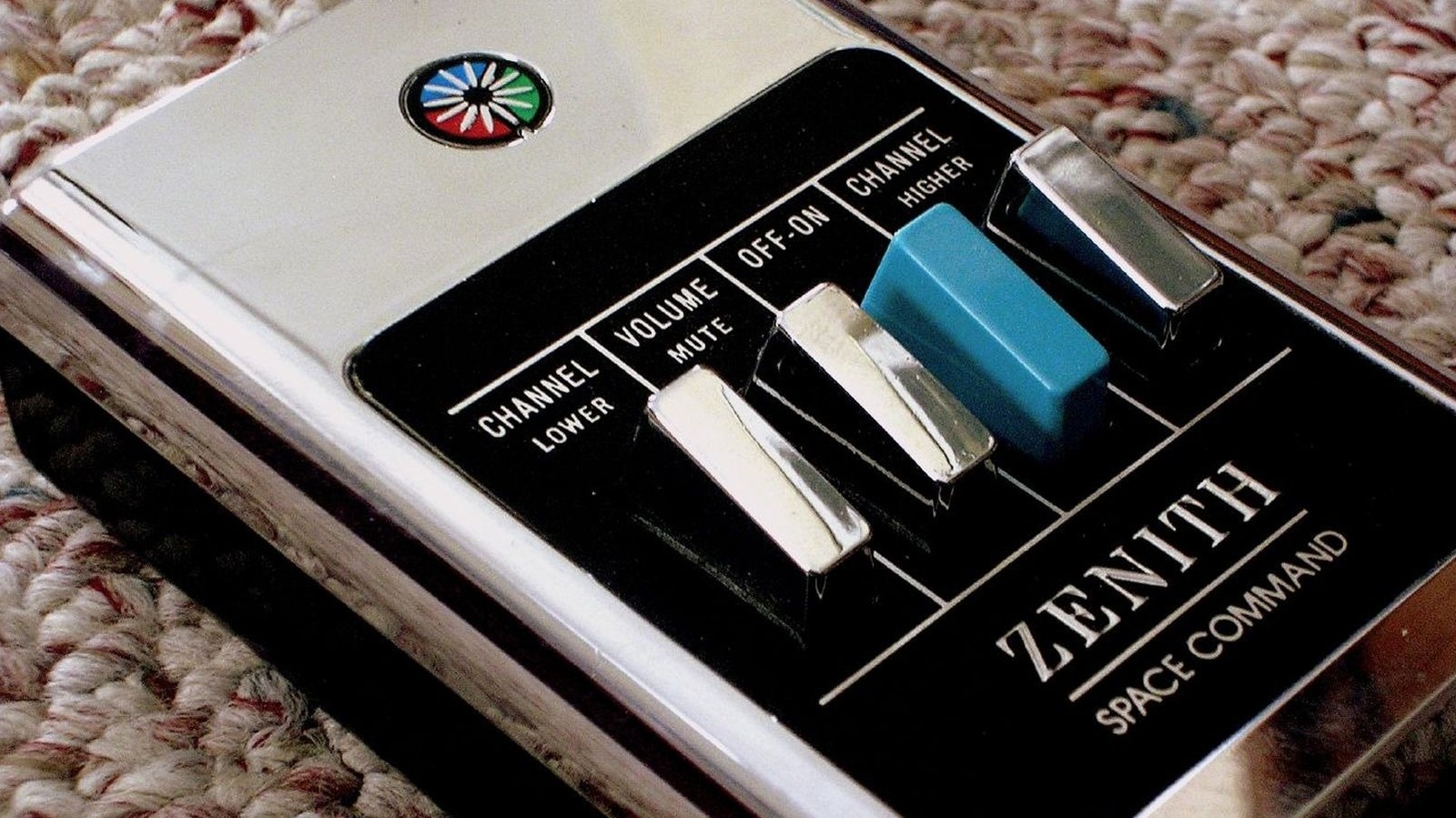
The history of television remote controls began in the mid-20th century with innovative designs that paved the way for the devices we use today. The first wireless remote control, known as the **Space Command**, was developed by **Zenith** in **1956** and operated without the use of electronics or batteries. This ingenious device changed the way viewers interacted with their televisions, eliminating the need to physically adjust settings on the set.
Before the introduction of remote controls, adjusting the volume or changing channels required viewers to rise from their seats and manually turn knobs. The **Space Command** was a groundbreaking invention that transformed this experience. It functioned through an all-mechanical system, utilizing a tiny hammer that struck one of four aluminum rods of varying lengths. Each rod produced a distinct high-frequency sound, akin to the resonance of a tuning fork. The television then converted these sounds into commands, enabling viewers to control functions such as “channel-up,” “channel-down,” “sound on or off,” and “power on or off.”
The remote control’s clicking sound was so pronounced that it earned the nickname “clicker,” a term that remained synonymous with remotes for decades. Despite its innovative design, the **Space Command** was relatively expensive, adding approximately **30%** to the retail price of the television, as it required six additional vacuum tubes for the receiver. This high cost did not deter consumers, as the technology quickly gained popularity and became an industry standard, until the transition to solid-state circuitry in the early **1960s**.
Predecessors and Early Innovations
Interestingly, the **Space Command** was not the first television remote control. That distinction belongs to a wired device called **The Lazy Bones**, created by Zenith in **1950**. Its inventor, **Commander Eugene F. McDonald Jr.**, was motivated by the desire to mute loud commercials, which he found intrusive. The **Lazy Bones** featured buttons for changing channels, powering the television on and off, and adjusting volume. However, the cord connecting the remote to the television became a nuisance and posed a tripping hazard for users.
The first true wireless remote came five years later, in **1955**, with the introduction of the **Flash-Matic**, designed by engineer **Eugene Polley**. This device resembled a flashlight more than a traditional remote control. Users could aim the flashlight at one of four photocells located at the corners of the television, allowing them to control the device. Despite its novelty, the **Flash-Matic** faced significant challenges. Ambient light could inadvertently trigger the photocells, leading to erratic behavior, such as the television turning on or off unexpectedly.
The cost of the **Flash-Matic** was substantial, with the television retailing at **$400** (approximately **$4,800** today) and the remote itself costing an additional **$100** (about **$1,200** today). Due to its limitations and high price, production was brief, resulting in an estimated **30,000** units manufactured exclusively in the United States.
The Shift to Infrared Technology
As technology progressed, the introduction of solid-state circuitry facilitated a major transition in remote control design. By the early **1980s**, infrared (IR) remote technology became the norm. IR remotes operate by emitting a low-frequency light beam, undetectable to the human eye, which the television interprets as commands. This advancement simplified the user experience and allowed for more reliable operation compared to earlier devices.
The evolution of the television remote reflects broader technological advancements over the decades. From the mechanical ingenuity of the **Space Command** to the convenience of infrared remotes, each step contributed to a more user-friendly viewing experience. As the television industry continues to innovate, the legacy of these early inventions remains a testament to human creativity and the quest for convenience in everyday life.

Robinhood Stock Surges 2.5% Today Amid Tech Market Recovery

Philadelphia’s Earth Month Kicks Off with Free Events in Parks

GSK’s Inhaler Decision Sparks Health Concerns for Children

Bradford’s Fish Fry Fridays Offer Community Spirit and Flavor

Speculation Rises on Shutdowns During Trump’s Potential Presidency

Samsung Galaxy Watch 9 to Feature Larger Battery, Report Reveals

Inventors Find New Purpose Through Unconventional Paths

UConn Huskies Aim for Back-to-Back Titles in 2026 NCAA Tournament

U.S. Mine Countermeasure Ships Dock in Malaysia for Logistics Stop

University of Hawaiʻi at Mānoa Joins $25.6M AI Initiative for Disaster Monitoring

$2.2 Million Boost for Cancer Research and Training in Hawaiʻi

ALMA Discovers Companion Orbiting Red Giant Star π 1 Gruis

Sacituzumab Govitecan Shows Promise for HR+/HER2− Breast Cancer

币安人生 Sees $15.92 Million in Trading Volume Amid Market Fluctuations

New Gel Offers Hope for Regrowing Tooth Enamel in Dentistry

CAVA Group Shares Surge 5.1% Amid Mixed Analyst Ratings

Christian Bale in Talks to Join Leonardo DiCaprio in Heat 2

Supreme Court to Review Birthright Citizenship for Children of Immigrants
-
Science9 months ago
University of Hawaiʻi at Mānoa Joins $25.6M AI Initiative for Disaster Monitoring
-
 Health7 months ago
$2.2 Million Boost for Cancer Research and Training in Hawaiʻi
-
 Science8 months ago
ALMA Discovers Companion Orbiting Red Giant Star π 1 Gruis
-
 Health7 months ago
Sacituzumab Govitecan Shows Promise for HR+/HER2− Breast Cancer
-
Politics5 months ago
币安人生 Sees $15.92 Million in Trading Volume Amid Market Fluctuations
-
 Health9 months ago
New Gel Offers Hope for Regrowing Tooth Enamel in Dentistry
-
 Business7 months ago
CAVA Group Shares Surge 5.1% Amid Mixed Analyst Ratings
-
 Entertainment8 months ago
Christian Bale in Talks to Join Leonardo DiCaprio in Heat 2
-
 Politics7 months ago
Supreme Court to Review Birthright Citizenship for Children of Immigrants
-

 Lifestyle8 months ago
Art Deco and Traditional Designs Set to Transform Homes in 2026
-

 Lifestyle7 months ago
Fernando Mendoza Secures Maxwell and O’Brien Awards Ahead of Heisman
-

 World8 months ago
Swiss Residents Reject 50% Inheritance Tax on Wealthy