
Top Stories
40 Years After Challenger Disaster: Spaceflight Risks Persist

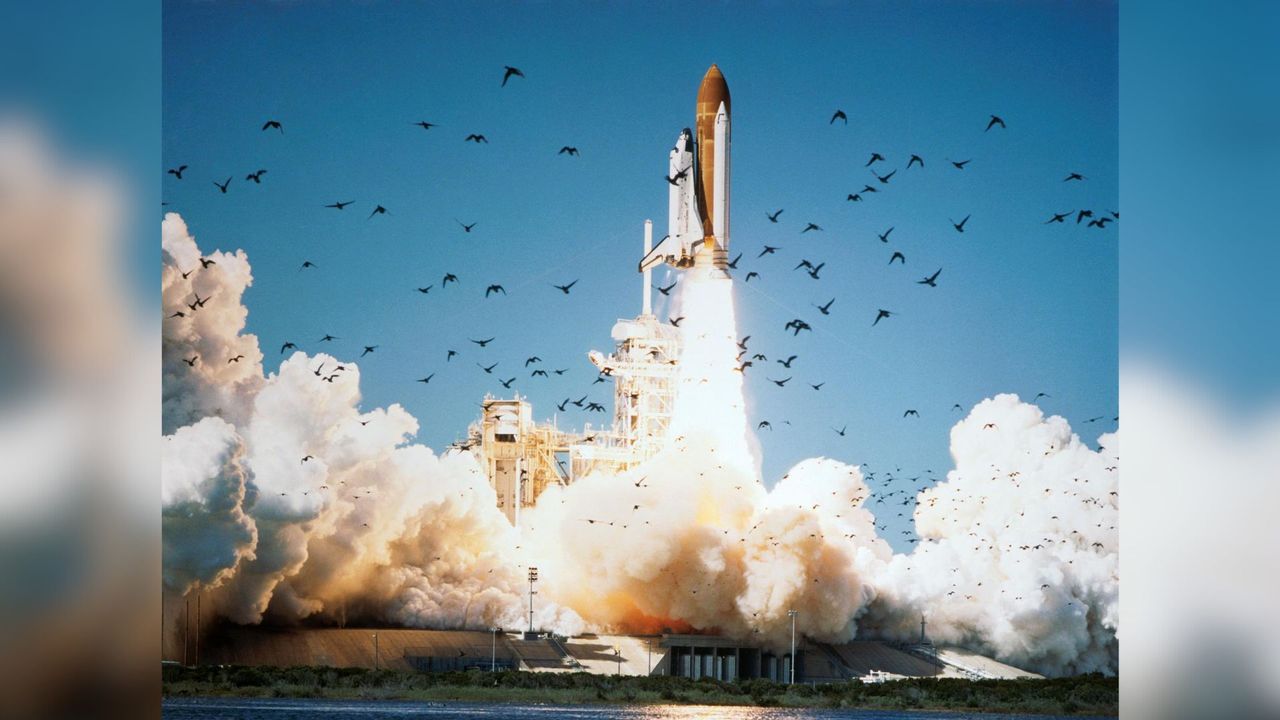
UPDATE: Today marks the 40th anniversary of the tragic space shuttle Challenger disaster, a moment that profoundly impacted human spaceflight and safety protocols. On January 28, 1986, Challenger exploded just 73 seconds after liftoff from NASA’s Kennedy Space Center, killing all seven crew members, including “Teacher in Space” participant Christa McAuliffe. As the space industry evolves, analysts stress that the risks of space travel remain alarmingly high.
The Challenger explosion remains a stark reminder of the dangers of spaceflight. Today, many experts reflect on the lessons learned from that fateful day, emphasizing that despite advancements in technology, the complexity of human spaceflight continues to pose significant challenges. Ron Doel, a history professor at Florida State University, recalls the visceral shock he felt while watching the launch unfold at NASA’s Jet Propulsion Laboratory. “The decision to launch the Challenger was flawed,” he stated, referencing findings from the Rogers Commission that investigated the disaster.
Following Challenger, another tragedy struck the space community when the Columbia shuttle disintegrated upon reentry on February 1, 2003, claiming another seven lives. Such incidents have led to rigorous investigations and a continuous push for improved safety standards, yet the frequency of launches increases, raising significant safety concerns.
NASA officials, in a recent press conference, emphasized their commitment to safety as they prepare for upcoming crewed missions, including the Artemis 2 mission scheduled for February 6, 2024. The agency is making strides to ensure that lessons learned from past tragedies shape current practices. “This is not a rush,” said Jeff Radigan, NASA’s lead flight director for Artemis 2. “We may run into an issue, and the last thing we want to do is make a decision too early and then lose an opportunity.”
As the landscape of spaceflight evolves, private companies like SpaceX, Boeing, and Blue Origin are taking on increasing responsibilities. While the advancements have made space more accessible, they have also introduced new challenges. For instance, Blue Origin faced a full failure of its New Shepard vehicle during uncrewed flights, and Virgin Galactic encountered a pilot fatality during a test flight in 2014.
Experts are keenly aware of these developments. With space missions happening more frequently than ever—sometimes on a daily basis—there’s an urgent need for stringent safety protocols. “The joke about space missions is, they don’t get launched until there’s a pile of paperwork that’s as high as the rocket,” noted Pauline Barmby, a department chair of physics and astronomy at Western University.
As we honor the memory of those lost in the Challenger disaster, the conversation around spaceflight safety is more critical than ever. The push for innovation must be matched with a commitment to learning from history. “Your first job is to not make things worse,” paraphrased Barmby from astronaut Chris Hadfield, reflecting a crucial mindset for decision-makers in the field.
The legacy of the Challenger disaster serves as a reminder that while human spaceflight is advancing, the path forward must be paved with caution and respect for the lives at stake. As the space industry embraces new opportunities, the lessons learned from past tragedies remain vital for ensuring the safety of future missions.
As we reflect on this significant anniversary, it’s clear that the work to make spaceflight routine and safe is ongoing, and the spirit of those who lost their lives continues to inspire rigorous safety protocols and a commitment to excellence.

Robinhood Stock Surges 2.5% Today Amid Tech Market Recovery

Philadelphia’s Earth Month Kicks Off with Free Events in Parks

GSK’s Inhaler Decision Sparks Health Concerns for Children

Bradford’s Fish Fry Fridays Offer Community Spirit and Flavor

Speculation Rises on Shutdowns During Trump’s Potential Presidency

Samsung Galaxy Watch 9 to Feature Larger Battery, Report Reveals

Inventors Find New Purpose Through Unconventional Paths

UConn Huskies Aim for Back-to-Back Titles in 2026 NCAA Tournament

U.S. Mine Countermeasure Ships Dock in Malaysia for Logistics Stop

University of Hawaiʻi at Mānoa Joins $25.6M AI Initiative for Disaster Monitoring

$2.2 Million Boost for Cancer Research and Training in Hawaiʻi

ALMA Discovers Companion Orbiting Red Giant Star π 1 Gruis

Sacituzumab Govitecan Shows Promise for HR+/HER2− Breast Cancer

币安人生 Sees $15.92 Million in Trading Volume Amid Market Fluctuations

New Gel Offers Hope for Regrowing Tooth Enamel in Dentistry

CAVA Group Shares Surge 5.1% Amid Mixed Analyst Ratings

Christian Bale in Talks to Join Leonardo DiCaprio in Heat 2

Supreme Court to Review Birthright Citizenship for Children of Immigrants
-
Science9 months ago
University of Hawaiʻi at Mānoa Joins $25.6M AI Initiative for Disaster Monitoring
-
 Health7 months ago
$2.2 Million Boost for Cancer Research and Training in Hawaiʻi
-
 Science8 months ago
ALMA Discovers Companion Orbiting Red Giant Star π 1 Gruis
-
 Health7 months ago
Sacituzumab Govitecan Shows Promise for HR+/HER2− Breast Cancer
-
Politics5 months ago
币安人生 Sees $15.92 Million in Trading Volume Amid Market Fluctuations
-
 Health9 months ago
New Gel Offers Hope for Regrowing Tooth Enamel in Dentistry
-
 Business7 months ago
CAVA Group Shares Surge 5.1% Amid Mixed Analyst Ratings
-
 Entertainment8 months ago
Christian Bale in Talks to Join Leonardo DiCaprio in Heat 2
-
 Politics7 months ago
Supreme Court to Review Birthright Citizenship for Children of Immigrants
-

 Lifestyle8 months ago
Art Deco and Traditional Designs Set to Transform Homes in 2026
-

 Lifestyle7 months ago
Fernando Mendoza Secures Maxwell and O’Brien Awards Ahead of Heisman
-

 World8 months ago
Swiss Residents Reject 50% Inheritance Tax on Wealthy