
Science
Researchers Map Sun’s Magnetic Interior Using 30 Years of Data

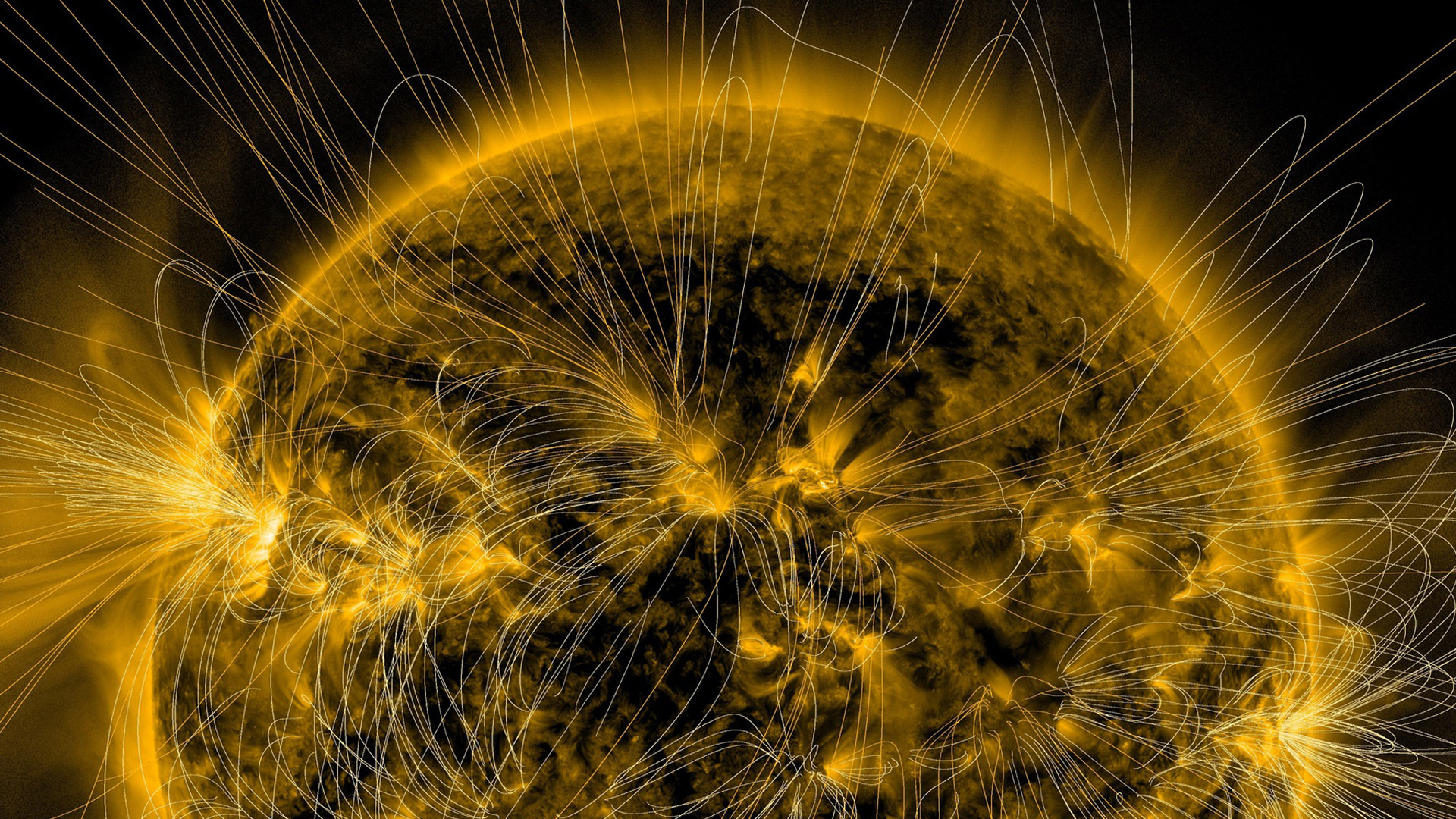
A groundbreaking study has successfully mapped the sun’s hidden magnetic interior for the first time, utilizing nearly three decades of satellite data. Researchers have reconstructed a three-dimensional model of the sun’s internal magnetic field, shedding light on how solar magnetism evolves beneath the surface. This achievement may enhance the understanding of solar activity and its effects on Earth.
Traditionally, the sun’s magnetic behavior—characterized by dark spots that appear and disappear, and energetic bursts that disrupt satellites and power systems—has been linked to magnetic forces operating deep within. These processes, known collectively as the solar dynamo, occur far beneath the glowing surface, making direct observation impossible. Until now, scientists have relied on indirect measurements, often leading to conjecture.
In this recent study, the team approached the problem with a fresh perspective. Instead of relying solely on models built on assumptions, they grounded their research in real observations. By analyzing daily magnetic field maps from solar satellites collected between 1996 and 2025, they tracked the appearance and changes of magnetic fields on the sun’s surface over time.
Utilizing this data, the researchers developed a sophisticated three-dimensional computer model that simulates the sun’s internal magnetic mechanisms. As new surface data was integrated, the model adjusted to maintain physical consistency, allowing the team to work backward and identify potential magnetic structures hidden beneath the surface.
To validate their model, the researchers tested it by reconstructing past solar cycles, which typically span around 11 years. Remarkably, the model was able to accurately reproduce multiple solar cycles observed during the satellite era, including the notable migration of sunspots from higher latitudes toward the solar equator—a key characteristic of solar cycle progression.
The study’s authors stated, “Our data-driven model successfully reproduces key observational features, such as the surface butterfly diagram, accurate polar field evolution, and axial dipole moment.” This validation strengthens confidence in their findings and the model’s predictive capabilities.
One of the study’s pivotal tests involved allowing the model to run independently without new data inputs. This predictive exercise demonstrated that the model could effectively forecast significant features of solar activity up to three or four years in advance. According to the researchers, “a strong correlation between the simulated toroidal field and sunspot number establishes our 3D magnetogram-driven model as a robust predictive model of the solar cycle.”
This research signifies a major shift in how scientists approach the study of the sun. Instead of viewing its interior as an enigmatic space, researchers can now monitor it indirectly and continuously. Enhanced forecasts of solar activity may lead to better protection for satellites, diminished risks to navigation systems, and timely alerts for power grid operators facing geomagnetic disturbances.
Despite the advancements, the model’s reliability hinges on the continuation of long-term satellite missions without interruption. Looking forward, the researchers aim to refine their techniques further, striving not only to predict when solar activity will peak but also to determine where on the sun’s surface new active regions are likely to emerge.
The findings of this innovative study are published in The Astrophysical Journal Letters, marking a significant leap in solar research and its implications for Earth and beyond.

Robinhood Stock Surges 2.5% Today Amid Tech Market Recovery

Philadelphia’s Earth Month Kicks Off with Free Events in Parks

GSK’s Inhaler Decision Sparks Health Concerns for Children

Bradford’s Fish Fry Fridays Offer Community Spirit and Flavor

Speculation Rises on Shutdowns During Trump’s Potential Presidency

Samsung Galaxy Watch 9 to Feature Larger Battery, Report Reveals

Inventors Find New Purpose Through Unconventional Paths

UConn Huskies Aim for Back-to-Back Titles in 2026 NCAA Tournament

U.S. Mine Countermeasure Ships Dock in Malaysia for Logistics Stop

University of Hawaiʻi at Mānoa Joins $25.6M AI Initiative for Disaster Monitoring

$2.2 Million Boost for Cancer Research and Training in Hawaiʻi

ALMA Discovers Companion Orbiting Red Giant Star π 1 Gruis

Sacituzumab Govitecan Shows Promise for HR+/HER2− Breast Cancer

币安人生 Sees $15.92 Million in Trading Volume Amid Market Fluctuations

New Gel Offers Hope for Regrowing Tooth Enamel in Dentistry

CAVA Group Shares Surge 5.1% Amid Mixed Analyst Ratings

Christian Bale in Talks to Join Leonardo DiCaprio in Heat 2

Supreme Court to Review Birthright Citizenship for Children of Immigrants
-
Science9 months ago
University of Hawaiʻi at Mānoa Joins $25.6M AI Initiative for Disaster Monitoring
-
 Health7 months ago
$2.2 Million Boost for Cancer Research and Training in Hawaiʻi
-
 Science8 months ago
ALMA Discovers Companion Orbiting Red Giant Star π 1 Gruis
-
 Health7 months ago
Sacituzumab Govitecan Shows Promise for HR+/HER2− Breast Cancer
-
Politics5 months ago
币安人生 Sees $15.92 Million in Trading Volume Amid Market Fluctuations
-
 Health9 months ago
New Gel Offers Hope for Regrowing Tooth Enamel in Dentistry
-
 Business7 months ago
CAVA Group Shares Surge 5.1% Amid Mixed Analyst Ratings
-
 Entertainment8 months ago
Christian Bale in Talks to Join Leonardo DiCaprio in Heat 2
-
 Politics7 months ago
Supreme Court to Review Birthright Citizenship for Children of Immigrants
-

 Lifestyle8 months ago
Art Deco and Traditional Designs Set to Transform Homes in 2026
-

 Lifestyle7 months ago
Fernando Mendoza Secures Maxwell and O’Brien Awards Ahead of Heisman
-

 World8 months ago
Swiss Residents Reject 50% Inheritance Tax on Wealthy