
Science
SpaceX Conducts Successful Static Fire Test for Crew-12 Launch

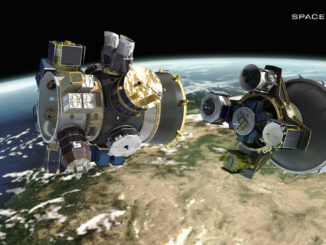
On February 8, 2026, SpaceX conducted a successful static fire test of its Falcon 9 rocket, a crucial step towards the launch of the Crew-12 mission to the International Space Station (ISS). The test took place at Cape Canaveral Space Force Station, where the nine Merlin 1D engines at the base of the rocket ignited for approximately 10 seconds at 3:16 a.m. EST (0816 UTC).
This static fire test aimed to validate the systems of the Falcon 9 before its scheduled launch. Following the ignition, teams will analyze the data collected to ensure all parameters are met for a safe launch. The upcoming mission marks a significant milestone for both NASA and SpaceX as they prepare for a long-duration mission aboard the ISS.
Preparations Underway for Crew-12 Mission
As part of the preparations, the Crew-12 team will undergo a dry dress rehearsal, simulating launch day operations. NASA astronauts Jessica Meir and Jack Hathaway, alongside European Space Agency (ESA) astronaut Sophie Adenot and Russian cosmonaut Andrey Fedyaev, will don their upgraded flight suits at the Neil Armstrong Operations and Checkouts building before heading to the launch pad.
These flight suits are similar to those worn by previous astronauts, including Mike Fincke, who piloted Crew-11. The Crew-12 mission is expected to last approximately eight months, during which the astronauts will contribute to various scientific research projects aboard the ISS.
This upcoming launch will be significant as it is the second human spaceflight mission to launch from Space Launch Complex 40 (SLC-40). On launch day, SpaceX plans to utilize its new landing pad, known as Landing Zone 40, to recover the booster, tail number 1101, less than eight minutes after liftoff.
Future Prospects for Space Exploration
SpaceX’s Crew-12 mission is part of a broader initiative to expand human presence in space and enhance scientific collaboration among international partners. With each successful launch, the partnership between NASA and SpaceX continues to pave the way for future missions, including potential explorations beyond low Earth orbit.
The successful execution of the static fire test demonstrates SpaceX’s readiness to advance toward its launch objectives. As the team evaluates the data from this test, anticipation grows for the Crew-12 mission, which promises to build on the achievements of previous missions and further humanity’s exploration of space.

Robinhood Stock Surges 2.5% Today Amid Tech Market Recovery

Philadelphia’s Earth Month Kicks Off with Free Events in Parks

GSK’s Inhaler Decision Sparks Health Concerns for Children

Bradford’s Fish Fry Fridays Offer Community Spirit and Flavor

Speculation Rises on Shutdowns During Trump’s Potential Presidency

Samsung Galaxy Watch 9 to Feature Larger Battery, Report Reveals

Inventors Find New Purpose Through Unconventional Paths

UConn Huskies Aim for Back-to-Back Titles in 2026 NCAA Tournament

U.S. Mine Countermeasure Ships Dock in Malaysia for Logistics Stop

University of Hawaiʻi at Mānoa Joins $25.6M AI Initiative for Disaster Monitoring

$2.2 Million Boost for Cancer Research and Training in Hawaiʻi

ALMA Discovers Companion Orbiting Red Giant Star π 1 Gruis

Sacituzumab Govitecan Shows Promise for HR+/HER2− Breast Cancer

币安人生 Sees $15.92 Million in Trading Volume Amid Market Fluctuations

New Gel Offers Hope for Regrowing Tooth Enamel in Dentistry

CAVA Group Shares Surge 5.1% Amid Mixed Analyst Ratings

Supreme Court to Review Birthright Citizenship for Children of Immigrants

Christian Bale in Talks to Join Leonardo DiCaprio in Heat 2
-
Science9 months ago
University of Hawaiʻi at Mānoa Joins $25.6M AI Initiative for Disaster Monitoring
-
 Health7 months ago
$2.2 Million Boost for Cancer Research and Training in Hawaiʻi
-
 Science8 months ago
ALMA Discovers Companion Orbiting Red Giant Star π 1 Gruis
-
 Health7 months ago
Sacituzumab Govitecan Shows Promise for HR+/HER2− Breast Cancer
-
Politics5 months ago
币安人生 Sees $15.92 Million in Trading Volume Amid Market Fluctuations
-
 Health8 months ago
New Gel Offers Hope for Regrowing Tooth Enamel in Dentistry
-
 Business7 months ago
CAVA Group Shares Surge 5.1% Amid Mixed Analyst Ratings
-
 Politics7 months ago
Supreme Court to Review Birthright Citizenship for Children of Immigrants
-
 Entertainment8 months ago
Christian Bale in Talks to Join Leonardo DiCaprio in Heat 2
-

 Lifestyle8 months ago
Art Deco and Traditional Designs Set to Transform Homes in 2026
-

 Lifestyle7 months ago
Fernando Mendoza Secures Maxwell and O’Brien Awards Ahead of Heisman
-

 World8 months ago
Swiss Residents Reject 50% Inheritance Tax on Wealthy