
Top Stories
Urgent Octopus Rescue on Texas Coast After Cold Front Strands Marine Life

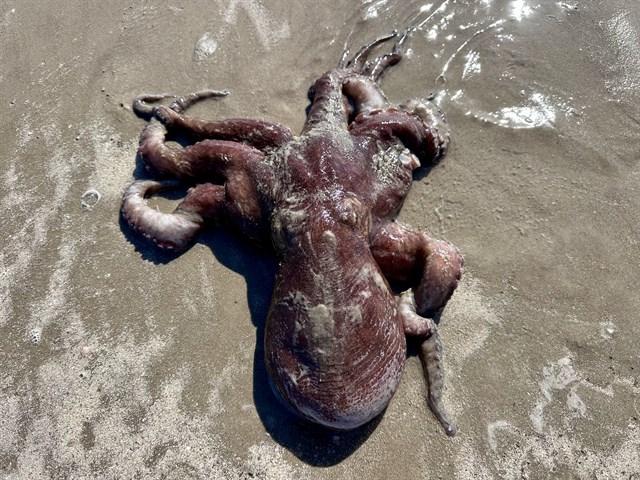
UPDATE: A remarkable octopus rescue unfolded along the Texas coast, where a sudden winter cold front led to numerous strandings, including several dead common octopus on North Padre Island. Jace Tunnell, the Director of Community Engagement for the Harte Research Institute at Texas A&M University-Corpus Christi, reported the live recovery of a common octopus on the beach just south of Bob Hall Pier.
With water temperatures plummeting over the past week, marine life has been severely impacted. The cold-stunned octopus, discovered stranded on the sand, was still alive but unable to swim or seek shelter. Tunnell quickly took action, placing the octopus in a bucket of seawater for a brief observation period, hoping that a slight warming might revive its movement.
After approximately 30 minutes, Tunnell transferred the octopus to a small, clear tub and positioned it in the sun for about five minutes. This careful approach aimed to raise the temperature just enough to help the creature regain its strength. The effort paid off as the octopus began to show increased movement, signaling a potential recovery.
Without wasting time, Tunnell returned the octopus to its natural habitat at the Packery Channel jetty, gently placing it among the rocks. Almost immediately, the octopus crawled into a crevice, disappearing from sight, hopefully finding a sheltered spot to endure the winter conditions.
The common octopus is an extraordinary creature with unique characteristics, including three hearts and the ability to change color instantly. Females can lay up to 500,000 eggs, and their intelligence is well-documented. This incident not only highlights the impact of environmental changes on marine life but also emphasizes the importance of community engagement in wildlife conservation.
As temperatures continue to fluctuate, local authorities urge beachgoers to remain vigilant and report any unusual marine strandings. The situation remains dynamic, and the community is encouraged to play a role in helping stranded wildlife whenever possible.
Stay tuned for more updates as this story develops. For ongoing coverage, follow Jace Tunnell’s Beachcombing series on YouTube and connect with the Harte Research Institute through their social media platforms.

Robinhood Stock Surges 2.5% Today Amid Tech Market Recovery

Philadelphia’s Earth Month Kicks Off with Free Events in Parks

GSK’s Inhaler Decision Sparks Health Concerns for Children

Bradford’s Fish Fry Fridays Offer Community Spirit and Flavor

Speculation Rises on Shutdowns During Trump’s Potential Presidency

Samsung Galaxy Watch 9 to Feature Larger Battery, Report Reveals

Inventors Find New Purpose Through Unconventional Paths

UConn Huskies Aim for Back-to-Back Titles in 2026 NCAA Tournament

U.S. Mine Countermeasure Ships Dock in Malaysia for Logistics Stop

University of Hawaiʻi at Mānoa Joins $25.6M AI Initiative for Disaster Monitoring

$2.2 Million Boost for Cancer Research and Training in Hawaiʻi

ALMA Discovers Companion Orbiting Red Giant Star π 1 Gruis

Sacituzumab Govitecan Shows Promise for HR+/HER2− Breast Cancer

币安人生 Sees $15.92 Million in Trading Volume Amid Market Fluctuations

New Gel Offers Hope for Regrowing Tooth Enamel in Dentistry

CAVA Group Shares Surge 5.1% Amid Mixed Analyst Ratings

Christian Bale in Talks to Join Leonardo DiCaprio in Heat 2

Supreme Court to Review Birthright Citizenship for Children of Immigrants
-
Science9 months ago
University of Hawaiʻi at Mānoa Joins $25.6M AI Initiative for Disaster Monitoring
-
 Health7 months ago
$2.2 Million Boost for Cancer Research and Training in Hawaiʻi
-
 Science8 months ago
ALMA Discovers Companion Orbiting Red Giant Star π 1 Gruis
-
 Health7 months ago
Sacituzumab Govitecan Shows Promise for HR+/HER2− Breast Cancer
-
Politics5 months ago
币安人生 Sees $15.92 Million in Trading Volume Amid Market Fluctuations
-
 Health8 months ago
New Gel Offers Hope for Regrowing Tooth Enamel in Dentistry
-
 Business7 months ago
CAVA Group Shares Surge 5.1% Amid Mixed Analyst Ratings
-
 Entertainment8 months ago
Christian Bale in Talks to Join Leonardo DiCaprio in Heat 2
-
 Politics7 months ago
Supreme Court to Review Birthright Citizenship for Children of Immigrants
-

 Lifestyle8 months ago
Art Deco and Traditional Designs Set to Transform Homes in 2026
-

 Lifestyle7 months ago
Fernando Mendoza Secures Maxwell and O’Brien Awards Ahead of Heisman
-

 World8 months ago
Swiss Residents Reject 50% Inheritance Tax on Wealthy