
Politics
Washington’s Farewell Address: A Timeless Call to Unity and Morality

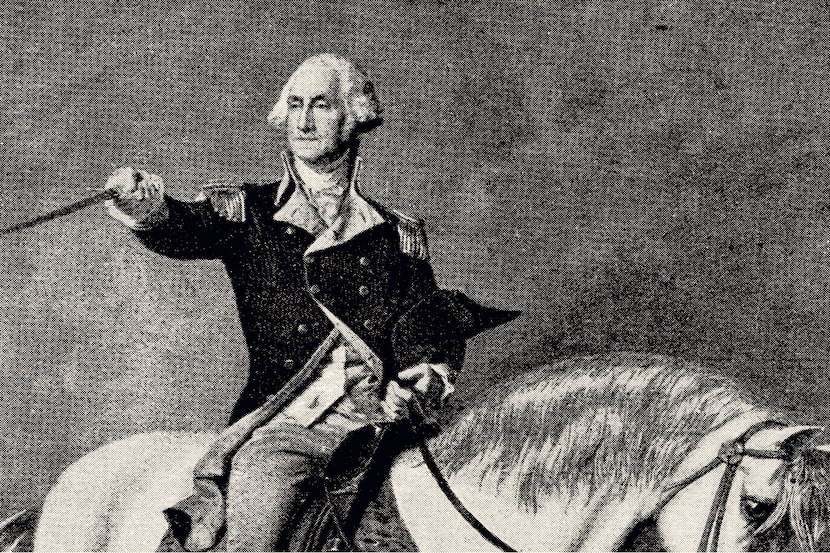
Every Presidents Day in the United States, citizens commemorate the birthdays of notable figures like George Washington and Abraham Lincoln. While many associate this holiday with sales and celebrations, a significant aspect of Washington’s legacy often goes overlooked: his Farewell Address delivered in 1796. Once a cornerstone of American education, this address was widely taught in schools, with students memorizing key passages and teachers discussing its profound warnings. Today, its teachings are largely absent from curricula, raising questions about what has been lost in this dismissal.
Washington’s Farewell Address was not merely a goodbye; it was a critical blueprint for maintaining the republic. By stepping away from the presidency after two terms, Washington set a precedent for future leaders, emphasizing the importance of limiting power. His address included urgent cautions regarding the dangers of political parties, which he described as “the alternate domination of one faction over another, sharpened by the spirit of revenge.” He warned that political parties could become “potent engines” for those seeking to undermine the will of the people.
The implications of Washington’s warnings resonate in contemporary politics. Rather than assessing policies on their merits, there is a tendency to evaluate them based on party affiliation. Ideas from the opposing side often face skepticism, regardless of their validity. Washington urged citizens to discourage the divisive spirit of party politics, emphasizing that a wise populace must prioritize the common good over factional loyalty.
Warnings on Unity and Morality
Washington’s vision for America encompassed more than just political alignment. He recognized that the strength of the republic rested on shared values. He stated, “Of all the dispositions and habits which lead to political prosperity, religion and morality are indispensable supports.” By linking morality to governance, Washington argued that a self-governing society requires a moral foundation. The principles of truthfulness, integrity, and prioritizing the greater good must transcend temporary political advantages.
His personal experiences, particularly during the Battle of Monongahela in 1755, shaped his understanding of divine providence. Surviving the battle against overwhelming odds, he perceived his survival as a sign of a greater purpose. This belief reinforced his conviction that national morality cannot thrive without religious and moral principles guiding citizens.
Washington’s appeal for unity extended beyond politics. He implored Americans to see themselves as one nation, stating, “The name of American, which belongs to you in your national capacity, must always exalt the just pride of patriotism more than any appellation derived from local discriminations.” This message is particularly relevant in today’s climate, where divisions often overshadow collective identity.
Addressing Debt, Foreign Alliances, and Education
In addition to warnings about political factions, Washington cautioned against permanent foreign alliances that could entangle the nation in external conflicts. His advice, followed for over a century, emphasized the importance of maintaining independence in foreign relations. He also highlighted the need for fiscal responsibility, urging the government to use peacetime to reduce public debt accumulated during war.
Washington stressed the necessity of maintaining public credit through honest dealings and warned against the concentration of power within any one branch of government. He noted that “the spirit of encroachment tends to consolidate the powers of all the departments in one, and thus to create whatever the form of government, a real despotism.” This underscores the importance of checks and balances, which are critical for preserving democratic governance.
The address concluded with a call for education, urging the promotion of institutions dedicated to the dissemination of knowledge. He stated that “in proportion as the structure of a government gives force to public opinion, it is essential that public opinion should be enlightened.” An informed citizenry is crucial for effective self-governance.
Washington’s Farewell Address remains relevant today, echoing concerns about political polarization, fiscal irresponsibility, foreign entanglements, and the need for moral integrity. His final message was one of hope, believing in the capacity of Americans to learn from their mistakes and to choose principle over convenience.
This Presidents Day, consider revisiting Washington’s Farewell Address. Reflect on its significance and ask: What does it truly mean to uphold a republic? In a time when divisions run deep, Washington’s wisdom offers a path toward unity and moral governance.
Dory Wiley, CEO of Commerce Street Holdings and a board member of the Dallas Historical Society, frequently discusses presidential history and its implications for contemporary society. Readers are encouraged to express their thoughts on this topic in letters to the editor.

Robinhood Stock Surges 2.5% Today Amid Tech Market Recovery

Philadelphia’s Earth Month Kicks Off with Free Events in Parks

GSK’s Inhaler Decision Sparks Health Concerns for Children

Bradford’s Fish Fry Fridays Offer Community Spirit and Flavor

Speculation Rises on Shutdowns During Trump’s Potential Presidency

Samsung Galaxy Watch 9 to Feature Larger Battery, Report Reveals

Inventors Find New Purpose Through Unconventional Paths

UConn Huskies Aim for Back-to-Back Titles in 2026 NCAA Tournament

U.S. Mine Countermeasure Ships Dock in Malaysia for Logistics Stop

University of Hawaiʻi at Mānoa Joins $25.6M AI Initiative for Disaster Monitoring

$2.2 Million Boost for Cancer Research and Training in Hawaiʻi

ALMA Discovers Companion Orbiting Red Giant Star π 1 Gruis

Sacituzumab Govitecan Shows Promise for HR+/HER2− Breast Cancer

币安人生 Sees $15.92 Million in Trading Volume Amid Market Fluctuations

New Gel Offers Hope for Regrowing Tooth Enamel in Dentistry

CAVA Group Shares Surge 5.1% Amid Mixed Analyst Ratings

Christian Bale in Talks to Join Leonardo DiCaprio in Heat 2

Supreme Court to Review Birthright Citizenship for Children of Immigrants
-
Science9 months ago
University of Hawaiʻi at Mānoa Joins $25.6M AI Initiative for Disaster Monitoring
-
 Health7 months ago
$2.2 Million Boost for Cancer Research and Training in Hawaiʻi
-
 Science8 months ago
ALMA Discovers Companion Orbiting Red Giant Star π 1 Gruis
-
 Health7 months ago
Sacituzumab Govitecan Shows Promise for HR+/HER2− Breast Cancer
-
Politics5 months ago
币安人生 Sees $15.92 Million in Trading Volume Amid Market Fluctuations
-
 Health8 months ago
New Gel Offers Hope for Regrowing Tooth Enamel in Dentistry
-
 Business7 months ago
CAVA Group Shares Surge 5.1% Amid Mixed Analyst Ratings
-
 Entertainment8 months ago
Christian Bale in Talks to Join Leonardo DiCaprio in Heat 2
-
 Politics7 months ago
Supreme Court to Review Birthright Citizenship for Children of Immigrants
-

 Lifestyle8 months ago
Art Deco and Traditional Designs Set to Transform Homes in 2026
-

 Lifestyle7 months ago
Fernando Mendoza Secures Maxwell and O’Brien Awards Ahead of Heisman
-

 World8 months ago
Swiss Residents Reject 50% Inheritance Tax on Wealthy