
Science
158 Giant Tortoises Released on Floreana in Conservation Push

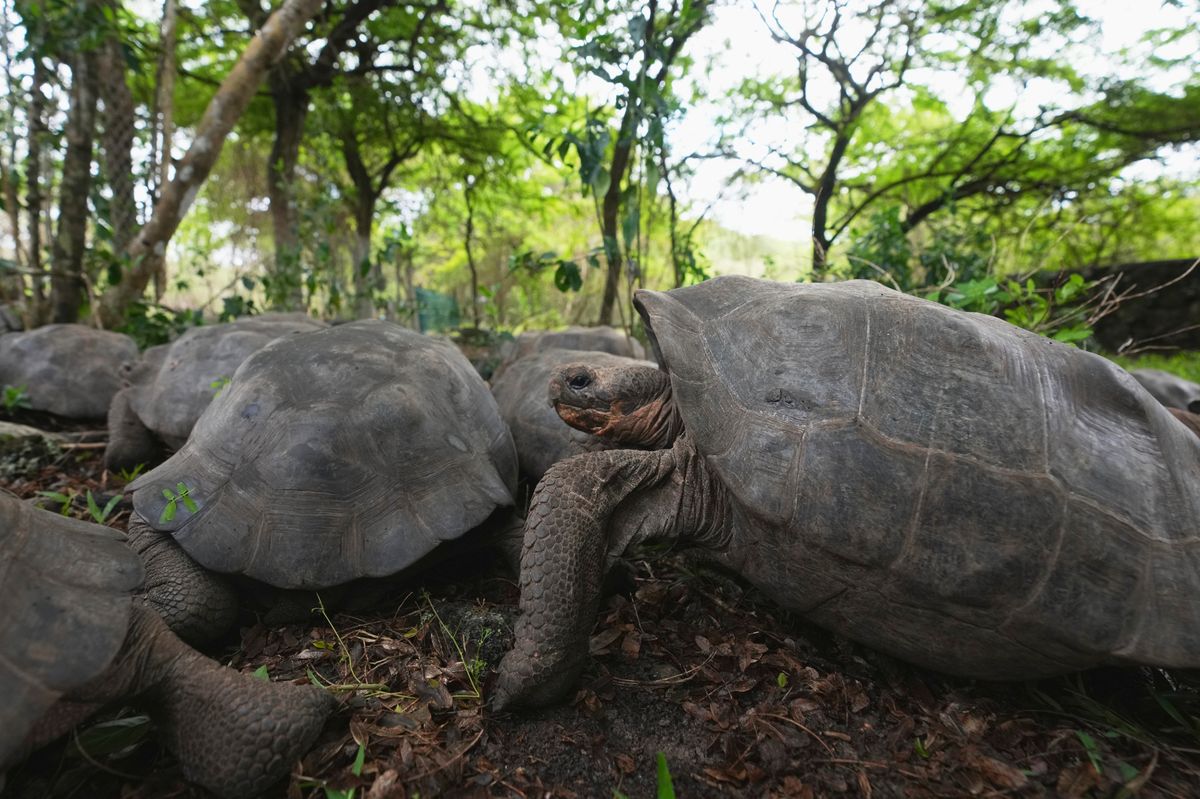
A significant conservation effort marked a pivotal moment on Floreana Island in Ecuador’s Galápagos archipelago, where 158 juvenile giant tortoises were released on November 3, 2023. This release comes nearly 150 years after the last giant tortoises were removed from the island, as conservationists work to restore its depleted ecosystem. The tortoises, aged between 8 and 13 years, began exploring their new habitat just as the first winter rains arrived, providing ideal conditions for their acclimatization.
Fredy Villalba, the director of the Galápagos National Park breeding center on Santa Cruz Island, stated that these tortoises are large enough to defend themselves against introduced predators such as rats and cats. The selection process emphasized the best specimens with the strongest lineage, specifically chosen for their introduction to Floreana.
The initiative aims to gradually reintroduce a total of 700 tortoises to the island. According to Christian Sevilla, the director of ecosystems for the Galapagos National Park, these tortoises possess between 40% and 80% of the genetic makeup of the Chelonoidis niger species, which has been extinct for the past 150 years. The hybrids trace their lineage back to Wolf Volcano on Isabela Island, a discovery that continues to intrigue scientists.
Restoration of a Lost Lineage
Historically, Floreana was home to approximately 20,000 giant tortoises before human activities led to their extinction. Factors such as whaling, fires, and exploitation devastated the population, making this reintroduction critical. Biologist Washington Tapia, who directs Biodiversa-Consultores, explained the importance of restoring this lost lineage: “In genetic terms, reintroducing a species to that island with a significant genetic component of the original species is vital.”
The newly introduced tortoises will coexist with nearly 200 residents and a variety of wildlife, including flamingos, iguanas, penguins, seagulls, and hawks. However, they will also face challenges from invasive plant species like blackberry and guava, as well as non-native animals such as rats, cats, pigs, and donkeys. These threats underscore the complexity of the reintroduction process and the necessity for ongoing conservation efforts.
Floreana Island spans about 67 square miles and is the southernmost point of the Galápagos archipelago, located approximately 621 miles from the Ecuadorian mainland. The unique ecological significance of the island was recognized by the U.N., which designated the Galápagos Islands as a Natural World Heritage Site in 1978. This status highlights the islands’ unparalleled diversity of terrestrial and marine species, many of which cannot be found anywhere else in the world.
As the giant tortoises begin their new life on Floreana, their presence symbolizes a hopeful step towards ecological recovery and the preservation of the unique biodiversity that defines the Galápagos Islands.

Robinhood Stock Surges 2.5% Today Amid Tech Market Recovery

Philadelphia’s Earth Month Kicks Off with Free Events in Parks

GSK’s Inhaler Decision Sparks Health Concerns for Children

Bradford’s Fish Fry Fridays Offer Community Spirit and Flavor

Speculation Rises on Shutdowns During Trump’s Potential Presidency

Samsung Galaxy Watch 9 to Feature Larger Battery, Report Reveals

Inventors Find New Purpose Through Unconventional Paths

UConn Huskies Aim for Back-to-Back Titles in 2026 NCAA Tournament

U.S. Mine Countermeasure Ships Dock in Malaysia for Logistics Stop

University of Hawaiʻi at Mānoa Joins $25.6M AI Initiative for Disaster Monitoring

$2.2 Million Boost for Cancer Research and Training in Hawaiʻi

ALMA Discovers Companion Orbiting Red Giant Star π 1 Gruis

Sacituzumab Govitecan Shows Promise for HR+/HER2− Breast Cancer

币安人生 Sees $15.92 Million in Trading Volume Amid Market Fluctuations

New Gel Offers Hope for Regrowing Tooth Enamel in Dentistry

CAVA Group Shares Surge 5.1% Amid Mixed Analyst Ratings

Christian Bale in Talks to Join Leonardo DiCaprio in Heat 2

Supreme Court to Review Birthright Citizenship for Children of Immigrants
-
Science8 months ago
University of Hawaiʻi at Mānoa Joins $25.6M AI Initiative for Disaster Monitoring
-
 Health7 months ago
$2.2 Million Boost for Cancer Research and Training in Hawaiʻi
-
 Science8 months ago
ALMA Discovers Companion Orbiting Red Giant Star π 1 Gruis
-
 Health7 months ago
Sacituzumab Govitecan Shows Promise for HR+/HER2− Breast Cancer
-
Politics4 months ago
币安人生 Sees $15.92 Million in Trading Volume Amid Market Fluctuations
-
 Health8 months ago
New Gel Offers Hope for Regrowing Tooth Enamel in Dentistry
-
 Business7 months ago
CAVA Group Shares Surge 5.1% Amid Mixed Analyst Ratings
-
 Entertainment8 months ago
Christian Bale in Talks to Join Leonardo DiCaprio in Heat 2
-
 Politics7 months ago
Supreme Court to Review Birthright Citizenship for Children of Immigrants
-

 Lifestyle8 months ago
Art Deco and Traditional Designs Set to Transform Homes in 2026
-

 Lifestyle7 months ago
Fernando Mendoza Secures Maxwell and O’Brien Awards Ahead of Heisman
-

 World8 months ago
Swiss Residents Reject 50% Inheritance Tax on Wealthy