
Science
Study Links Childhood Obesity to Reduced Economic Mobility

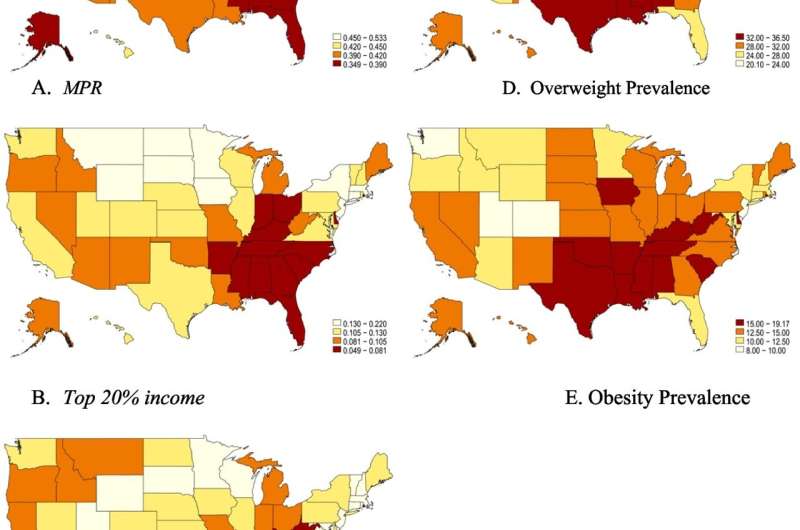
Research co-authored by economist Dr. Maoyong Fan from Ball State University indicates that childhood obesity may significantly hinder economic mobility, impacting what many refer to as the “American Dream.” The findings suggest that children who are obese face a lifelong “mobility penalty,” which reduces their chances of advancing economically and living in neighborhoods with greater opportunities as adults.
The study, titled “Weighing Down the Future: Long-term Effects of Childhood Obesity on Intergenerational Mobility,” has been accepted for publication in the Journal of Population Economics. The research utilized data from the National Longitudinal Study of Adolescent to Adult Health (Add Health), which tracked participants from adolescence into adulthood. By linking this data with the Opportunity Atlas, the researchers established a clear correlation between adolescent weight and future economic prosperity.
Adolescents classified as obese are likely to find themselves approximately 20 percentile points lower in adult income ranking compared to their normal-weight peers. Furthermore, the study reveals that childhood obesity correlates with a 17.6 percentage-point decrease in the likelihood of residing in low-poverty neighborhoods during adulthood.
Dr. Fan emphasizes that childhood obesity is not solely a health crisis but also poses a significant challenge to economic mobility. He notes that the evidence indicates lower educational attainment, persistent health issues, and disadvantages in the labor market, including heightened job discrimination and adverse occupational sorting.
Disparities in Economic Consequences
The economic effects of childhood obesity are not uniformly distributed. The researchers found that certain populations face greater mobility penalties. For example, females experience more severe penalties than males. Additionally, children from low-income families suffer more pronounced effects, with geography also playing a role. The study highlights that the repercussions are most severe in the South and Midwest, areas characterized as “obesity hotspots” and “opportunity deserts.”
Co-author Dr. Yanhong Jin from Rutgers University states, “For millions of American families, excess weight in childhood may be quietly closing doors to opportunity.” This situation creates a feedback loop that could exacerbate existing inequalities.
As discussions around strategies to reduce childhood obesity gain traction, the findings suggest that prevention should be framed not just as a health issue but as a crucial investment in economic opportunity. Dr. Man Zhang, an assistant professor at Renmin University in China, argues that interventions aimed at reducing childhood obesity could yield benefits beyond decreased medical expenses. Such measures might also foster higher educational attainment, improve job prospects, and enhance upward economic mobility for future generations.
The implications of this study are significant, prompting policymakers to recognize the broader societal impacts of childhood obesity. By addressing this health crisis, there is potential to create pathways for economic advancement and equity among vulnerable populations.
The full study, authored by Dr. Maoyong Fan and colleagues, is set to appear in the Journal of Population Economics in 2026, providing a deeper understanding of these critical issues.

Robinhood Stock Surges 2.5% Today Amid Tech Market Recovery

Philadelphia’s Earth Month Kicks Off with Free Events in Parks

GSK’s Inhaler Decision Sparks Health Concerns for Children

Bradford’s Fish Fry Fridays Offer Community Spirit and Flavor

Speculation Rises on Shutdowns During Trump’s Potential Presidency

Samsung Galaxy Watch 9 to Feature Larger Battery, Report Reveals

Inventors Find New Purpose Through Unconventional Paths

UConn Huskies Aim for Back-to-Back Titles in 2026 NCAA Tournament

U.S. Mine Countermeasure Ships Dock in Malaysia for Logistics Stop

University of Hawaiʻi at Mānoa Joins $25.6M AI Initiative for Disaster Monitoring

$2.2 Million Boost for Cancer Research and Training in Hawaiʻi

ALMA Discovers Companion Orbiting Red Giant Star π 1 Gruis

Sacituzumab Govitecan Shows Promise for HR+/HER2− Breast Cancer

币安人生 Sees $15.92 Million in Trading Volume Amid Market Fluctuations

New Gel Offers Hope for Regrowing Tooth Enamel in Dentistry

CAVA Group Shares Surge 5.1% Amid Mixed Analyst Ratings

Christian Bale in Talks to Join Leonardo DiCaprio in Heat 2

Supreme Court to Review Birthright Citizenship for Children of Immigrants
-
Science8 months ago
University of Hawaiʻi at Mānoa Joins $25.6M AI Initiative for Disaster Monitoring
-
 Health7 months ago
$2.2 Million Boost for Cancer Research and Training in Hawaiʻi
-
 Science8 months ago
ALMA Discovers Companion Orbiting Red Giant Star π 1 Gruis
-
 Health7 months ago
Sacituzumab Govitecan Shows Promise for HR+/HER2− Breast Cancer
-
Politics4 months ago
币安人生 Sees $15.92 Million in Trading Volume Amid Market Fluctuations
-
 Health8 months ago
New Gel Offers Hope for Regrowing Tooth Enamel in Dentistry
-
 Business7 months ago
CAVA Group Shares Surge 5.1% Amid Mixed Analyst Ratings
-
 Entertainment8 months ago
Christian Bale in Talks to Join Leonardo DiCaprio in Heat 2
-
 Politics7 months ago
Supreme Court to Review Birthright Citizenship for Children of Immigrants
-

 Lifestyle8 months ago
Art Deco and Traditional Designs Set to Transform Homes in 2026
-

 Lifestyle7 months ago
Fernando Mendoza Secures Maxwell and O’Brien Awards Ahead of Heisman
-

 World8 months ago
Swiss Residents Reject 50% Inheritance Tax on Wealthy