
Top Stories
US Air Force Faces Challenges with Boeing T-7A Red Hawk Program

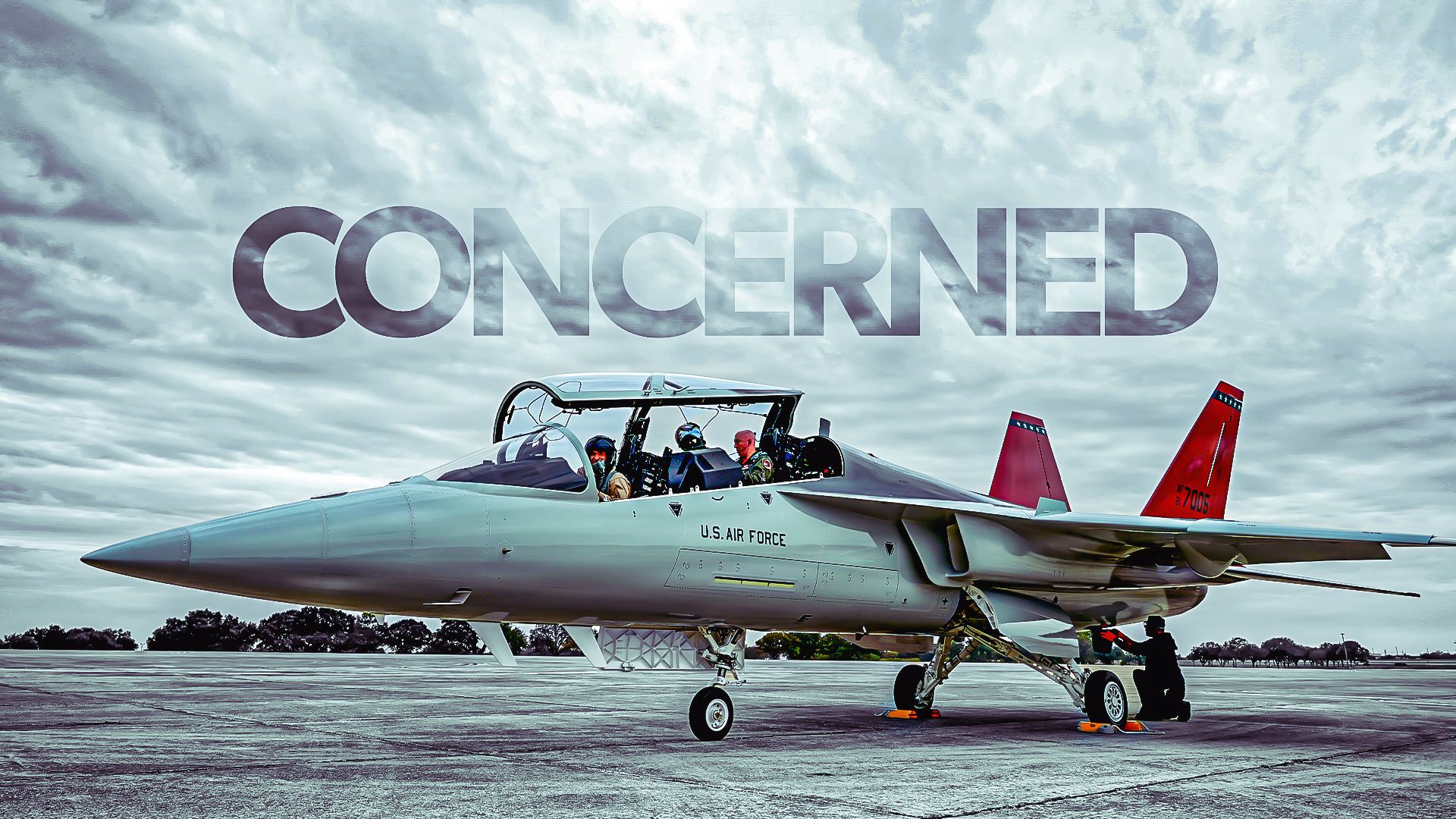
The United States Air Force (USAF) is grappling with significant challenges regarding the Boeing T-7A Red Hawk, a next-generation trainer aircraft. Originally designed to replace the aging Northrop T-38 Talon, the T-7A was intended to modernize pilot training efficiently and effectively. However, ongoing engineering delays, cost overruns, and regulatory hurdles have shifted the focus from optimism to concern.
The T-7A Red Hawk was selected as the Air Force’s Advanced Pilot Training (APT) solution in 2018. Developed in partnership with Saab, the aircraft was designed using cutting-edge digital engineering techniques. This approach aimed to streamline production and mitigate risks inherent in traditional development methods. Yet, as the program progresses through its testing phases, it has encountered unexpected challenges that have delayed timelines and led to increased scrutiny.
Engineering Delays and Cost Overruns
The T-7A was initially celebrated for its potential. However, structural testing revealed the need for reinforcements in the fuselage due to quality issues from suppliers. Additionally, revisions to the escape system, specifically the Collins Aerospace ACES 5 seats, were necessary to accommodate a wider range of pilot weights. Software integration issues have also surfaced, particularly concerning the embedded training system which simulates operational environments.
These engineering challenges have pushed the timeline for the T-7A’s initial operational capability to 2027, significantly later than earlier projections. As the program nears Milestone C, the acquisition checkpoint that will determine full-rate production, the financial implications have also become a pressing concern. Boeing has reportedly absorbed over $2 billion in losses associated with development and production challenges, raising questions about the sustainability of the program’s fixed-price contract.
The Air Force is now under pressure to balance funding for the T-7A with other modernization efforts, including the Northrop Grumman B-21 Raider and ongoing F-35 procurement. This situation complicates budget prioritization, as the T-7A is crucial for maintaining pilot production capacity, which directly impacts squadron readiness and operational effectiveness.
Training Doctrine Evolution and Environmental Compliance
The T-7A also represents a paradigm shift in pilot training, moving from traditional stick-and-rudder techniques to embracing software-defined combat operations. The embedded training system is designed to provide a realistic training environment that integrates various combat scenarios. However, if the system fails to deliver high-fidelity simulations, the effectiveness of training could be compromised, forcing reliance on ground-based simulators.
Beyond technical and financial issues, the program must navigate regulatory challenges under the National Environmental Policy Act (NEPA). The T-7A is scheduled to be introduced at several training bases, including Joint Base San Antonio and Columbus Air Force Base. Each installation requires a comprehensive environmental review, covering aspects like aircraft noise and infrastructure planning. The regulatory process must align with funding allocations and aircraft delivery timelines, adding another layer of complexity to the program.
As environmental reviews progress, the Air Force must ensure that infrastructure modifications and construction schedules sync with the T-7A’s production tempo. Delays in regulatory clearance could hinder the timely integration of the aircraft into the pilot training pipeline.
The T-7A Red Hawk is not just another trainer; it is foundational for the future of US combat airpower. The aircraft is designed to prepare pilots for advanced platforms like the F-35 and B-21. As the Air Force confronts these multifaceted challenges, the urgency to stabilize the T-7A program grows. Ensuring its successful deployment is vital not only for immediate training needs but also for the broader operational capability of the Air Force over the coming decade.

Robinhood Stock Surges 2.5% Today Amid Tech Market Recovery

Philadelphia’s Earth Month Kicks Off with Free Events in Parks

GSK’s Inhaler Decision Sparks Health Concerns for Children

Bradford’s Fish Fry Fridays Offer Community Spirit and Flavor

Speculation Rises on Shutdowns During Trump’s Potential Presidency

Samsung Galaxy Watch 9 to Feature Larger Battery, Report Reveals

Inventors Find New Purpose Through Unconventional Paths

UConn Huskies Aim for Back-to-Back Titles in 2026 NCAA Tournament

U.S. Mine Countermeasure Ships Dock in Malaysia for Logistics Stop

University of Hawaiʻi at Mānoa Joins $25.6M AI Initiative for Disaster Monitoring

$2.2 Million Boost for Cancer Research and Training in Hawaiʻi

ALMA Discovers Companion Orbiting Red Giant Star π 1 Gruis

Sacituzumab Govitecan Shows Promise for HR+/HER2− Breast Cancer

币安人生 Sees $15.92 Million in Trading Volume Amid Market Fluctuations

New Gel Offers Hope for Regrowing Tooth Enamel in Dentistry

CAVA Group Shares Surge 5.1% Amid Mixed Analyst Ratings

Christian Bale in Talks to Join Leonardo DiCaprio in Heat 2

Supreme Court to Review Birthright Citizenship for Children of Immigrants
-
Science8 months ago
University of Hawaiʻi at Mānoa Joins $25.6M AI Initiative for Disaster Monitoring
-
 Health7 months ago
$2.2 Million Boost for Cancer Research and Training in Hawaiʻi
-
 Science8 months ago
ALMA Discovers Companion Orbiting Red Giant Star π 1 Gruis
-
 Health7 months ago
Sacituzumab Govitecan Shows Promise for HR+/HER2− Breast Cancer
-
Politics4 months ago
币安人生 Sees $15.92 Million in Trading Volume Amid Market Fluctuations
-
 Health8 months ago
New Gel Offers Hope for Regrowing Tooth Enamel in Dentistry
-
 Business7 months ago
CAVA Group Shares Surge 5.1% Amid Mixed Analyst Ratings
-
 Entertainment8 months ago
Christian Bale in Talks to Join Leonardo DiCaprio in Heat 2
-
 Politics7 months ago
Supreme Court to Review Birthright Citizenship for Children of Immigrants
-

 Lifestyle8 months ago
Art Deco and Traditional Designs Set to Transform Homes in 2026
-

 Lifestyle7 months ago
Fernando Mendoza Secures Maxwell and O’Brien Awards Ahead of Heisman
-

 World8 months ago
Swiss Residents Reject 50% Inheritance Tax on Wealthy