
Health
New Study Explores Human Transmission Risks of Chronic Wasting Disease

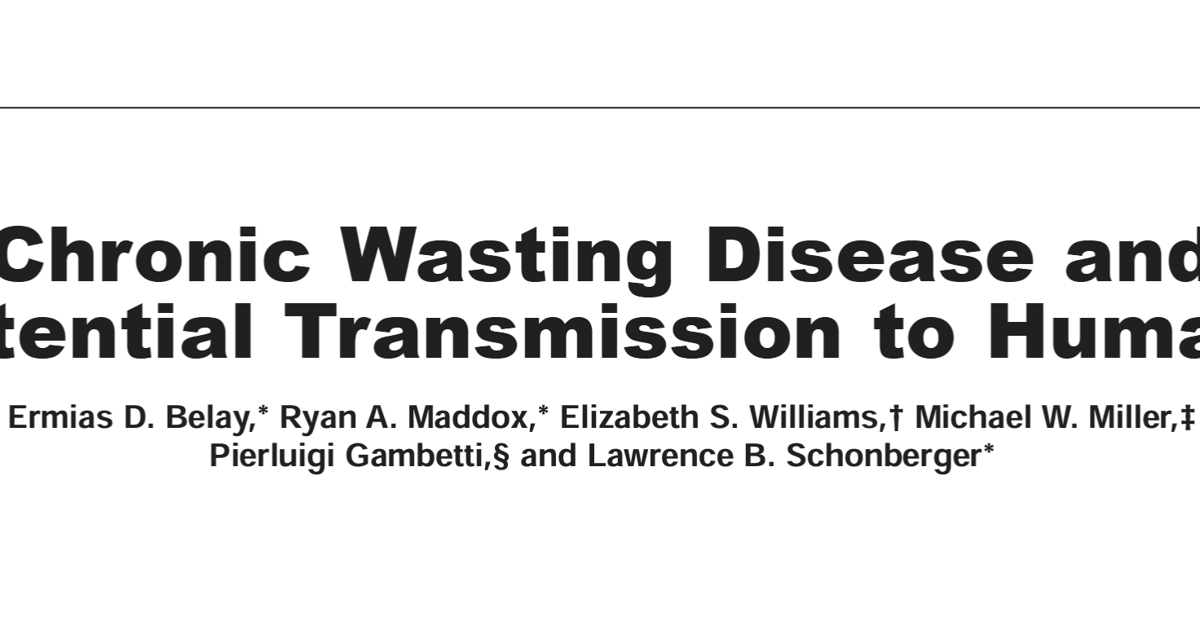
A recent report investigates the potential risks of Chronic Wasting Disease (CWD) to human health. This neurological disorder, primarily affecting deer and elk, has raised alarms regarding its possible transmission to humans. The study, conducted by researchers at the Centers for Disease Control and Prevention (CDC) and the National Institutes of Health (NIH), sheds light on this concerning link, emphasizing the need for further research.
CWD, a prion disease, leads to the degeneration of brain tissue in affected animals. As of 2023, cases have been reported in multiple states across the United States and provinces in Canada. The disease is characterized by symptoms such as drastic weight loss, behavioral changes, and eventually death. While there is no direct evidence of CWD transmitting to humans, researchers are keenly observing the situation.
The study highlights that prion diseases, including CWD, can be resistant to standard decontamination methods. This stability raises concerns about the potential for transmission through environmental exposure or consumption of infected animal products. The CDC advises hunters to take precautions when handling deer or elk, particularly in areas known for CWD prevalence.
Research indicates that, while there have been no confirmed human cases of CWD, laboratory studies have shown that some non-human primates can contract the disease. This finding is particularly alarming as it suggests a possible pathway for transmission to humans. The researchers stress that this does not equate to a guaranteed risk but emphasizes the need for vigilance and further studies.
Experts recommend that hunters test their game for CWD before consumption. The CDC urges those who may have been exposed to infected animals to follow safety guidelines, which include wearing gloves while field dressing and avoiding consuming the meat from animals that test positive for the disease.
As CWD continues to spread, the implications for wildlife management and public health are significant. The report calls for increased surveillance and monitoring of deer populations, along with public awareness campaigns to educate hunters and the general public about the risks associated with CWD.
In conclusion, while the direct transmission of CWD to humans remains unconfirmed, the potential risks cannot be ignored. Ongoing research and precautionary measures are essential to ensuring public health safety in relation to this emerging threat. The findings from the CDC and NIH study serve as a crucial reminder of the interconnectedness of wildlife health and human health.

Robinhood Stock Surges 2.5% Today Amid Tech Market Recovery

Philadelphia’s Earth Month Kicks Off with Free Events in Parks

GSK’s Inhaler Decision Sparks Health Concerns for Children

Bradford’s Fish Fry Fridays Offer Community Spirit and Flavor

Speculation Rises on Shutdowns During Trump’s Potential Presidency

Samsung Galaxy Watch 9 to Feature Larger Battery, Report Reveals

Inventors Find New Purpose Through Unconventional Paths

UConn Huskies Aim for Back-to-Back Titles in 2026 NCAA Tournament

U.S. Mine Countermeasure Ships Dock in Malaysia for Logistics Stop

University of Hawaiʻi at Mānoa Joins $25.6M AI Initiative for Disaster Monitoring

$2.2 Million Boost for Cancer Research and Training in Hawaiʻi

ALMA Discovers Companion Orbiting Red Giant Star π 1 Gruis

Sacituzumab Govitecan Shows Promise for HR+/HER2− Breast Cancer

币安人生 Sees $15.92 Million in Trading Volume Amid Market Fluctuations

New Gel Offers Hope for Regrowing Tooth Enamel in Dentistry

CAVA Group Shares Surge 5.1% Amid Mixed Analyst Ratings

Christian Bale in Talks to Join Leonardo DiCaprio in Heat 2

Supreme Court to Review Birthright Citizenship for Children of Immigrants
-
Science8 months ago
University of Hawaiʻi at Mānoa Joins $25.6M AI Initiative for Disaster Monitoring
-
 Health7 months ago
$2.2 Million Boost for Cancer Research and Training in Hawaiʻi
-
 Science8 months ago
ALMA Discovers Companion Orbiting Red Giant Star π 1 Gruis
-
 Health7 months ago
Sacituzumab Govitecan Shows Promise for HR+/HER2− Breast Cancer
-
Politics4 months ago
币安人生 Sees $15.92 Million in Trading Volume Amid Market Fluctuations
-
 Health8 months ago
New Gel Offers Hope for Regrowing Tooth Enamel in Dentistry
-
 Business7 months ago
CAVA Group Shares Surge 5.1% Amid Mixed Analyst Ratings
-
 Entertainment8 months ago
Christian Bale in Talks to Join Leonardo DiCaprio in Heat 2
-
 Politics7 months ago
Supreme Court to Review Birthright Citizenship for Children of Immigrants
-

 Lifestyle7 months ago
Fernando Mendoza Secures Maxwell and O’Brien Awards Ahead of Heisman
-

 Lifestyle8 months ago
Art Deco and Traditional Designs Set to Transform Homes in 2026
-

 World7 months ago
Swiss Residents Reject 50% Inheritance Tax on Wealthy